The Driving Forces Behind Economic Growth in Webster, NY
Webster, NY: A Model for Small-Town Revitalization Through Infrastructure Investment
Webster, New York, stands out as a prime example of how targeted municipal infrastructure spending can ignite both industrial and real estate expansion in smaller American communities. In recent years, the town has utilized a $9.8 million FAST NY grant to redevelop a 300-acre former Xerox brownfield, turning it into a thriving center for advanced industry. This initiative highlights the significant impact that collaboration between public and private sectors can have on local economies. The transformation has not only breathed new life into previously neglected land but has also established Webster as a key player in advanced manufacturing and logistics, offering valuable insights for similar markets across the country.
Transforming the Xerox Site: The Role of the FAST NY Grant
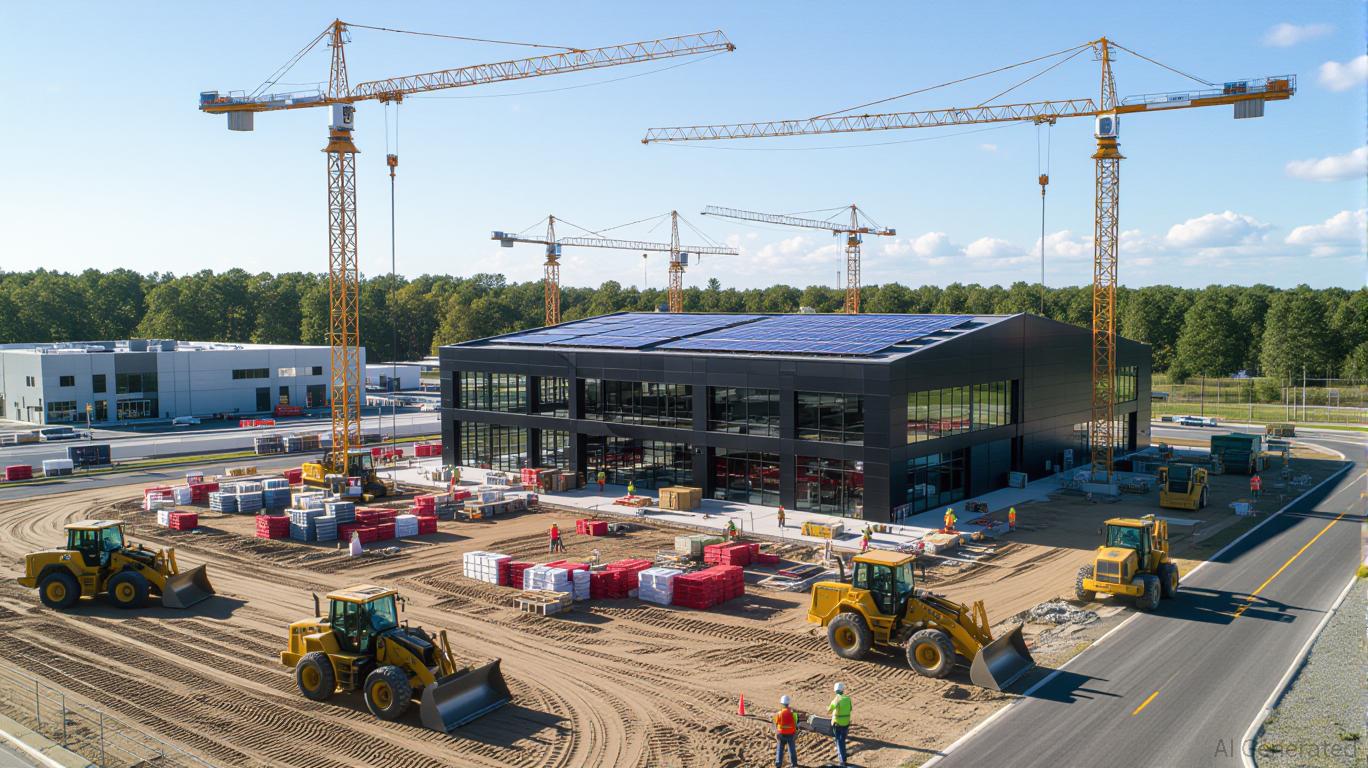
At the heart of Webster’s economic resurgence is the FAST NY grant, which provided essential funding for upgrades at the old Xerox campus. The improvements—ranging from rebuilding roads and modernizing the electrical grid to enhancing sewer systems—laid the groundwork for the Northeast Area for Technology (NEAT) industrial park. By addressing longstanding infrastructure needs, Webster made the site attractive to industries such as food processing, semiconductor manufacturing, and logistics.
A standout achievement in this redevelopment is the upcoming $650 million fairlife® dairy facility, expected to bring 250 well-paying jobs to the area by 2025. This project illustrates how strategic public investment can unlock significant private sector funding, generating widespread economic benefits for the community.
Webster’s advantageous location further strengthens its appeal. Its proximity to Rochester International Airport and major highways has positioned the town as an attractive destination for logistics and manufacturing operations. National research indicates that such connectivity is a crucial factor in drawing industrial investment, especially in secondary markets where affordable land and lower costs can outweigh the drawbacks of older infrastructure.
Economic Growth and Real Estate Upswing
The infrastructure improvements in Webster have led to tangible economic gains. Industrial vacancy rates at the NEAT site have dropped to just 2%, a sharp contrast to the national average of 8.5% projected for 2025. This surge in demand is largely driven by the arrival of advanced manufacturing companies and a nationwide movement to bring manufacturing back to the U.S., particularly benefiting properties under 100,000 square feet.
Webster’s residential real estate market has also experienced robust growth, with home values increasing by 10.1% annually since 2023. This trend highlights the mutually reinforcing relationship between industrial expansion and the housing market—new jobs and infrastructure upgrades boost incomes and fuel demand for homes. Studies show that such positive cycles are increasingly common in cities undergoing environmentally sustainable redevelopment, where investments in resilient infrastructure further enhance long-term property values.
Wider Lessons for Emerging Industrial Centers
Webster’s progress mirrors broader national patterns in infrastructure spending and asset allocation. While large metropolitan areas continue to attract major projects like data centers and public transit, smaller markets are outpacing them in industrial real estate growth. Industry analysis reveals that secondary markets accounted for 45.1 million square feet of net absorption in the third quarter of 2025, thanks to lower costs and available land. Strategic infrastructure investments in these towns are helping to bridge the gap between underused properties and sectors with strong demand.
Despite these successes, significant challenges remain. Across the country, there are still major shortfalls in infrastructure funding, with wastewater and stormwater systems alone requiring $3.7 trillion in investment by 2025. For towns like Webster, securing grants such as those from the FAST NY and NY Forward programs (the latter providing $4.5 million) is essential to maintaining progress. These initiatives underscore the increasing importance of federal and state support, especially since local governments are responsible for the majority of infrastructure funding.
Conclusion: Paving the Way for Sustainable Growth
Webster, NY, serves as a blueprint for how smaller industrial communities can use infrastructure investment to build economic resilience. By converting a brownfield into a state-of-the-art industrial park, the town has attracted private investment, spurred job creation, and boosted residential development. For investors, the NEAT site’s anticipated completion by 2026 offers a unique opportunity to acquire assets before prices peak, as ongoing infrastructure milestones continue to drive demand.
As the nation faces the dual pressures of aging infrastructure and evolving economic priorities, Webster’s achievements highlight the potential for secondary markets to outperform larger cities in industrial real estate. By focusing on strategic upgrades and fostering strong public-private partnerships, small-town hubs can position themselves as engines of sustainable growth and long-term value in a competitive economic landscape.






