The Increasing Importance of Stablecoins in Institutional Investment Strategies
The Evolving Role of USDC in Institutional Investment
As institutional investing continues to transform, stablecoins have become essential for managing liquidity, improving risk-adjusted returns, and accessing international markets. USD Coin (USDC) stands out among these digital assets for its strong focus on regulatory compliance, transparency, and scalability—qualities that have become even more significant following the introduction of new stablecoin regulations in 2025. With the implementation of the U.S. GENIUS Act and the European Union’s MiCA framework, more institutions are choosing USDC to benefit from regulatory certainty, streamline their portfolios, and seize global opportunities.
Regulatory Certainty: The Cornerstone of Institutional Confidence
The GENIUS Act, which took effect in July 2025, established federal requirements for stablecoins to be fully backed by high-quality liquid assets such as U.S. Treasury bills or bank deposits, along with mandatory monthly reserve reporting. USDC was already aligned with these standards, maintaining a reserve composition of 98% U.S. Treasuries and reverse repurchase agreements. Similarly, the EU’s MiCA regulations introduced strict licensing and reserve mandates, creating a more unified approach to stablecoin oversight across regions. These regulatory advancements have reduced ambiguity for institutions, positioning USDC as a regulated asset rather than a speculative one.
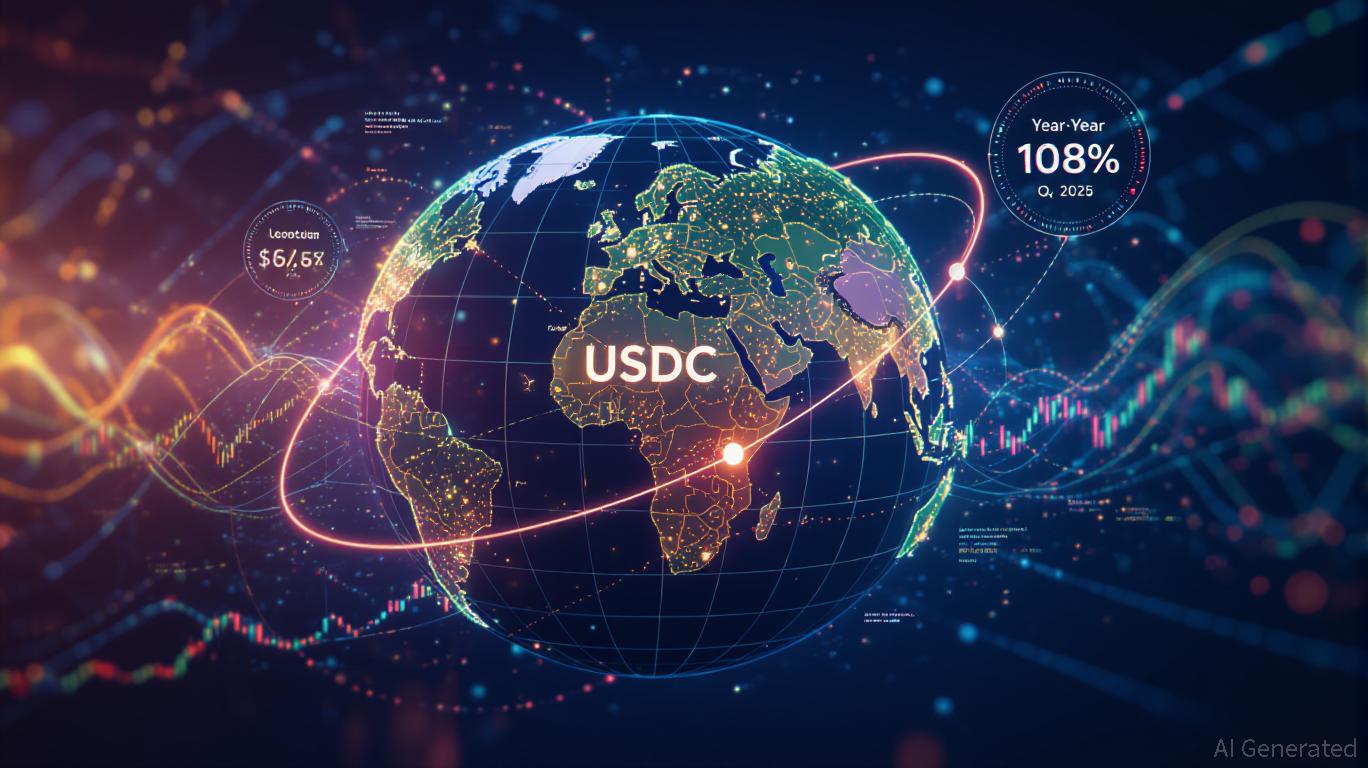
Circle, the company behind USDC, has leveraged this regulatory clarity to expand its reach among institutional clients. By the third quarter of 2025, USDC’s circulation had surged to $73.7 billion—a 108% increase from the previous year—with nearly half of institutional investors utilizing stablecoins for liquidity and settlements. USDC’s adherence to international standards, including those set by Singapore’s MAS and the UAE’s ADGM, has effectively created a “regulatory passport” for cross-border transactions.
Boosting Liquidity and Improving Risk-Adjusted Returns
USDC and similar stablecoins offer distinct benefits for liquidity management. Unlike traditional assets such as cash and bonds, which can be slow and less accessible, USDC enables near-instant settlements at minimal cost, making it highly suitable for high-frequency trading. Institutions using USDC for liquidity have reported a 35% decrease in settlement delays compared to conventional correspondent banking systems.
Beyond liquidity, USDC also enhances risk-adjusted returns. While cash and short-term bonds provide safety, their yields are often negligible in low-interest environments. USDC, on the other hand, can be allocated to yield-generating strategies such as decentralized finance (DeFi) protocols or tokenized securities, offering competitive returns while maintaining dollar stability. According to a 2025 Morgan Stanley study, portfolios incorporating USDC for liquidity management achieved a 12% improvement in Sharpe ratios compared to those relying solely on traditional assets. This is especially valuable for institutions aiming to protect against inflation while retaining flexibility.
USDC Compared to USDT and Traditional Financial Instruments
Although Tether’s USDT remains the largest stablecoin by market capitalization ($175 billion as of Q3 2025), USDC’s appeal to institutions is rooted in its transparency and regulatory compliance. While USDT provides quarterly and less detailed reserve disclosures, USDC offers monthly third-party audits that confirm full reserve backing. This level of transparency has made USDC the preferred option for regulated organizations, including banks and DeFi platforms, that must adhere to evolving compliance standards.
Compared to traditional assets, USDC offers unmatched accessibility. While bonds and cash are often limited by geography and banking hours, USDC operates around the clock on blockchain networks, enabling real-time global transactions. This has led institutions in emerging markets to adopt USDC as a way to avoid volatile local currencies, with daily transaction volumes reaching $140 billion in the third quarter of 2025. This scalability is a major factor in USDC’s growing presence in institutional portfolios.
Expanding Global Access and Financial Infrastructure
USDC’s integration into the broader financial ecosystem has further increased its strategic importance. By collaborating with over 500 million wallet providers and 130 financial institutions, USDC has become a vital link between traditional finance and digital assets. This infrastructure supports a range of applications, from international remittances to tokenized equity trading. Morgan Stanley projects that stablecoins will enable $1.2 trillion in cross-border payments annually by 2026.
The GENIUS Act’s mandate for public reserve disclosures has also strengthened institutional trust. For instance, Circle’s Q3 2025 report revealed $14 billion in U.S. Treasury holdings, reinforcing USDC’s reputation as a safe haven during market volatility. This combination of transparency and efficient blockchain infrastructure positions USDC as a foundational element of modern financial systems.
Conclusion: USDC’s Strategic Importance for the Future
With regulatory frameworks becoming more robust and institutional demand for liquidity and yield on the rise, USDC has established itself as a key asset for forward-thinking investors. Its compliance with international standards, liquidity benefits, and role in advancing financial infrastructure make it an attractive addition to institutional portfolios. While regulatory differences remain a challenge, the alignment of policy and technology suggests that stablecoins like USDC will continue to play a central role in shaping the future of institutional investment.





