How PENGU USDT Sell Signals Influence Sentiment in the Crypto Market
PENGU USDT Turbulence Sheds Light on Crypto Market Shifts
Recent dramatic price swings in PENGU USDT have become a key example of the challenges facing the cryptocurrency sector, especially as algorithmic stablecoins come under increased examination. In November 2025, PENGU experienced a rapid 25% surge within a single day, only to drop by 30% soon after. This volatility highlighted weaknesses in its liquidity structure and sparked widespread sell-offs across DeFi platforms. The event, compounded by mixed technical signals and ongoing regulatory ambiguity, has significantly altered investor attitudes and prompted a reassessment of strategies involving stablecoins.
Technical Analysis: Conflicting Signals
Technical analysis of PENGU USDT during November 2025 revealed a complex picture. On shorter timeframes, such as the 4-hour chart, indicators like the Accumulation/Observation (AO) oscillator and the Money Flow Index (MFI) pointed to strong buying interest, with the MFI nearing overbought levels. However, the daily chart painted a more cautious outlook, with bearish divergence in the RSI and weakening support levels, indicating that buyers were losing momentum. These contradictory signals underscore the inherent volatility of algorithmic stablecoins, which depend on automated balancing mechanisms instead of traditional collateral.
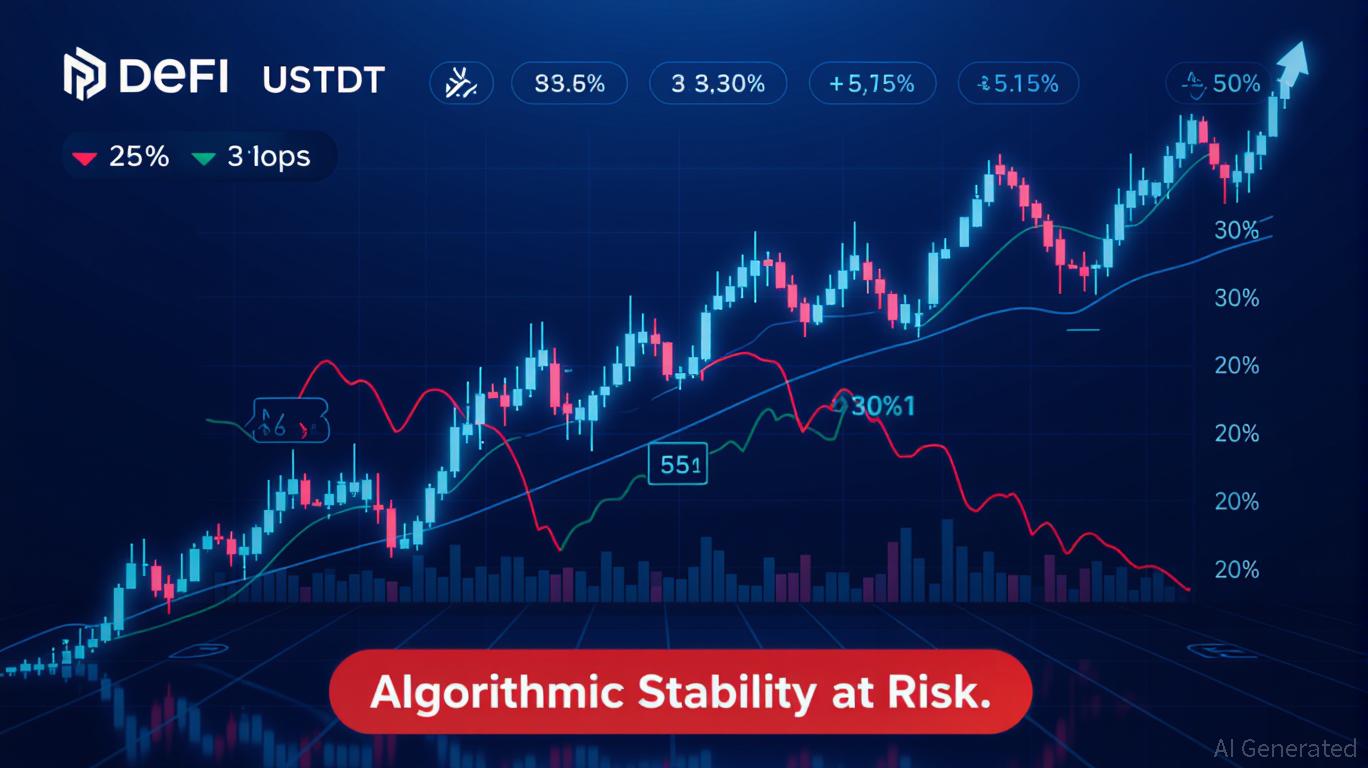
Certain price thresholds became pivotal. A move above $0.013 could have sparked further gains toward $0.020, but failing to maintain levels above $0.010 led to a retest of support at $0.0093. Institutional investors injected $430,000 and open interest climbed by 32%, signaling some optimism. However, these positive signs were overshadowed by a massive $66.6 million withdrawal from PENGU’s team wallets, raising concerns among retail investors.
Investor Reactions: From Fear to Caution
The sell-off in PENGU revealed stark differences in investor responses. Retail traders, still cautious after the 2022 TerraUSD (UST) debacle, increasingly shifted toward stablecoins backed by fiat currency. While on-chain data showed $157,000 in inflows from experienced investors, this was dwarfed by the significant outflows from team wallets, fueling speculation about potential liquidity problems within the project.
Similar defensive behavior was observed in traditional markets. As the S&P 500 and NASDAQ-100 declined by 1.6% and 3.1% respectively in November 2025, individual investors became more hesitant to buy the dip, with research indicating the lowest retail confidence since May 2025. In the crypto space, automated risk management tools like Bluwhale’s AI Stablecoin Agent gained popularity as investors sought ways to protect themselves from volatility.
Wider Market Connections and Economic Headwinds
PENGU’s troubles were not isolated. In 2025, the S&P 500 and NASDAQ-100 showed correlations of 42% and 46% with major crypto indices, highlighting the growing links between traditional and digital assets. Broader market declines, driven by concerns over artificial intelligence valuations and global trade disputes, intensified PENGU’s instability as investors moved funds into safer assets such as gold and regulated exchange-traded funds (ETFs).
Regulatory developments added further complexity. The U.S. GENIUS Act, which does not require algorithmic stablecoins to maintain full reserves, left tokens like PENGU in a regulatory gray zone. This uncertainty hastened the shift toward fiat-backed stablecoins, with USDC gaining market share as investors favored transparency and security over algorithmic mechanisms.
Strategic Shifts: Embracing Caution in Stablecoin Portfolios
The events surrounding PENGU have led to a fundamental change in how investors approach stablecoins. There is now a clear preference for overcollateralized, fiat-backed options, and growing interest in central bank digital currencies (CBDCs) as alternatives. Real-time on-chain analytics have become crucial for monitoring risk, tracking liquidity movements, and identifying potential vulnerabilities in smart contracts.
For portfolio managers, the key takeaway is the necessity of diversification and compliance with regulatory standards. The PENGU episode illustrates the dangers of relying solely on algorithmic models during periods of market stress, as redemption runs can quickly escalate into broader failures. Careful evaluation of reserve assets and governance frameworks is now essential for both entering and exiting positions in the stablecoin market.
Conclusion: Adapting to a Changing Crypto Landscape
The PENGU USDT sell-off in November 2025 stands as a stark reminder of the risks inherent in the crypto market. While technical analysis and investor behavior offer important insights, the larger issues of regulatory uncertainty, economic volatility, and systemic risk require a comprehensive approach to managing exposure. As the market seeks stability, investors must strike a balance between innovation and caution, ensuring that the lessons learned from PENGU’s downfall contribute to a stronger and more resilient financial ecosystem.





