Informed Traders Edge Out Retail Risk-Takers on Prediction Markets
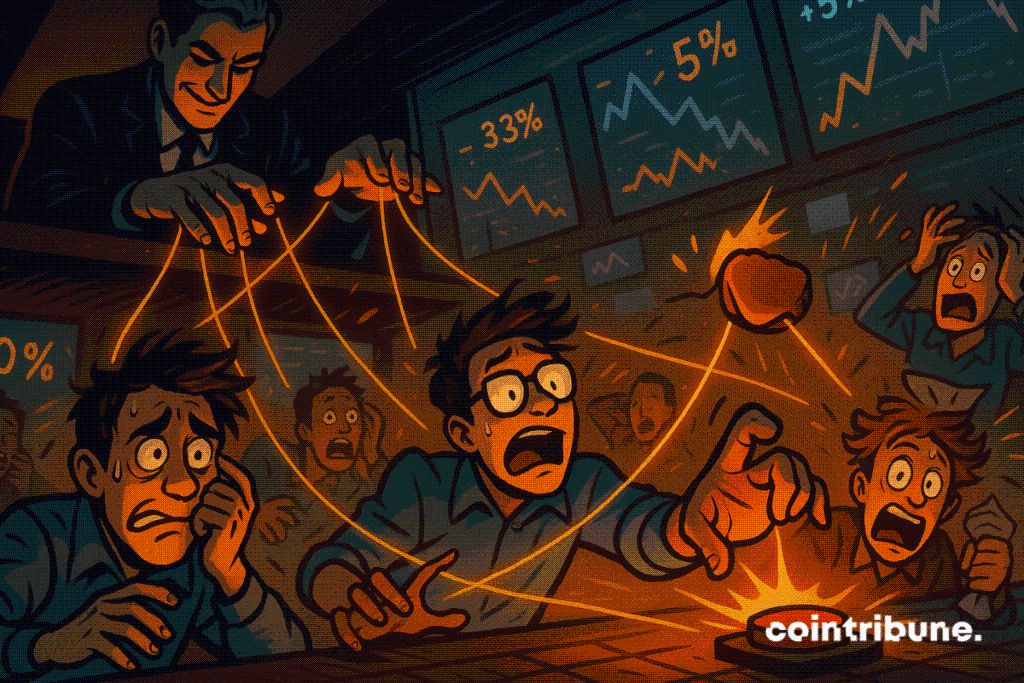
Where money is on the line, competition naturally heats up—and that’s exactly what’s happening in prediction markets. The space now sees better-informed traders going head-to-head with everyday retail participants who often place quicker, less-researched bets. This mix has turned the market into a battleground where insight meets speculation. Those with more information tend to hold the upper hand, while casual users risk being outpaced and outmatched.
In brief
- 10x Research finds most users approach prediction markets like sports bettors, chasing quick wins.
- Rising liquidity and increased retail participation allow professional desks to step up activity, further widening the gap between casual and informed participants.
- Paradigm researcher uncovered a bug in Polymarket data that caused trading volumes to be double-counted.
Prediction Market Profits Favor the Knowledgeable
Although prediction markets are promoted as platforms tapping into collective intelligence, 10x Research finds that outcomes are mostly influenced by a small group of knowledgeable participants. These traders make the profits by accurately gauging probabilities, managing risk effectively, and taking advantage of the bolder bets placed by retail users.
10x Research noted that “the majority of users behave like sports bettors—trading dopamine and narrative for discipline and edge—while a small cohort systematically monetizes mispriced optimism, order-flow imbalance, and late-stage convergence.” This dynamic is further amplified as rising liquidity and the influx of retail users encourage professional trading desks to step up their activity, exploiting inefficiencies and information gaps in the market.
Blockchain analysis highlights the struggles of less-experienced traders. Dune’s data shows that roughly 17% of wallets on Polymarket are in profit, leaving the vast majority with losses. While the exact amounts vary, this suggests that most users fail to grow—and often lose—the money they put in at the start, showing just how tough the prediction market can be for casual participants.
Prediction Market Traders Raise Insider Trading Concerns
Even as most users struggle, a small number of accounts have achieved flawless records, raising questions about possible insider knowledge. Among them, a Polymarket trader named pony-pony has maintained a perfect win rate, primarily focusing on bets related to OpenAI news.
A separate account, AlphaRaccoon, drew attention after earning over $1 million in a single day by winning 22 of 23 wagers linked to Google search trends. Jeong Haeju reported that this same trader previously predicted the early release of Gemini 3.0, earning more than $150K before the results were publicly known.
Polymarket Trading Data Flaw Discovered
Beyond individual trading concerns, structural issues with the platform’s data have also come to light. Paradigm researcher Storm Slivkoff discovered a significant bug in Polymarket’s data, which caused nearly all major dashboards to double-count trading volume. The error is unrelated to wash trading and stems from duplicate entries in the platform’s on-chain records.
The bug affects both primary metrics in prediction markets: notional volume, which tracks the number of contracts traded, and cashflow volume, which measures the dollar value of transactions. Paradigm confirmed that platforms such as DefiLlama, Allium, and Blockworks verified the issue and are now revising their Polymarket data to correct the double-counting.





