PENGU Price Forecast: Analyzing Market Drivers and Changing Sentiment in the Fourth Quarter of 2025
PENGU Token: Navigating Volatility Amid Regulatory and Market Shifts
The PENGU token, closely linked to the Pudgy Penguins ecosystem, has seen dramatic price swings in late 2025. This turbulence stems from a blend of technical market signals, evolving regulations, and rapidly changing investor attitudes. As the token approaches crucial resistance points and comes under increased regulatory examination, those considering investment must carefully evaluate these dynamics to anticipate its future direction.
Key Drivers: Technical Trends Versus Regulatory Pressures
Recent blockchain analytics point to a pivotal moment for PENGU. Notably, large investors have accumulated approximately $273,000 worth of the token, and On-Balance Volume (OBV) has been on the rise since November 4, 2025—signaling heightened interest from institutional players. The token’s price has neared a significant resistance at $0.0235, suggesting that a breakout could spark a short-lived rally. However, this positive momentum is counterbalanced by regulatory developments.
The U.S. Securities and Exchange Commission’s postponement of a decision regarding the Canary PENGU ETF until October 2025 has injected uncertainty, contributing to a 42.3% drop in PENGU’s value over the past month.
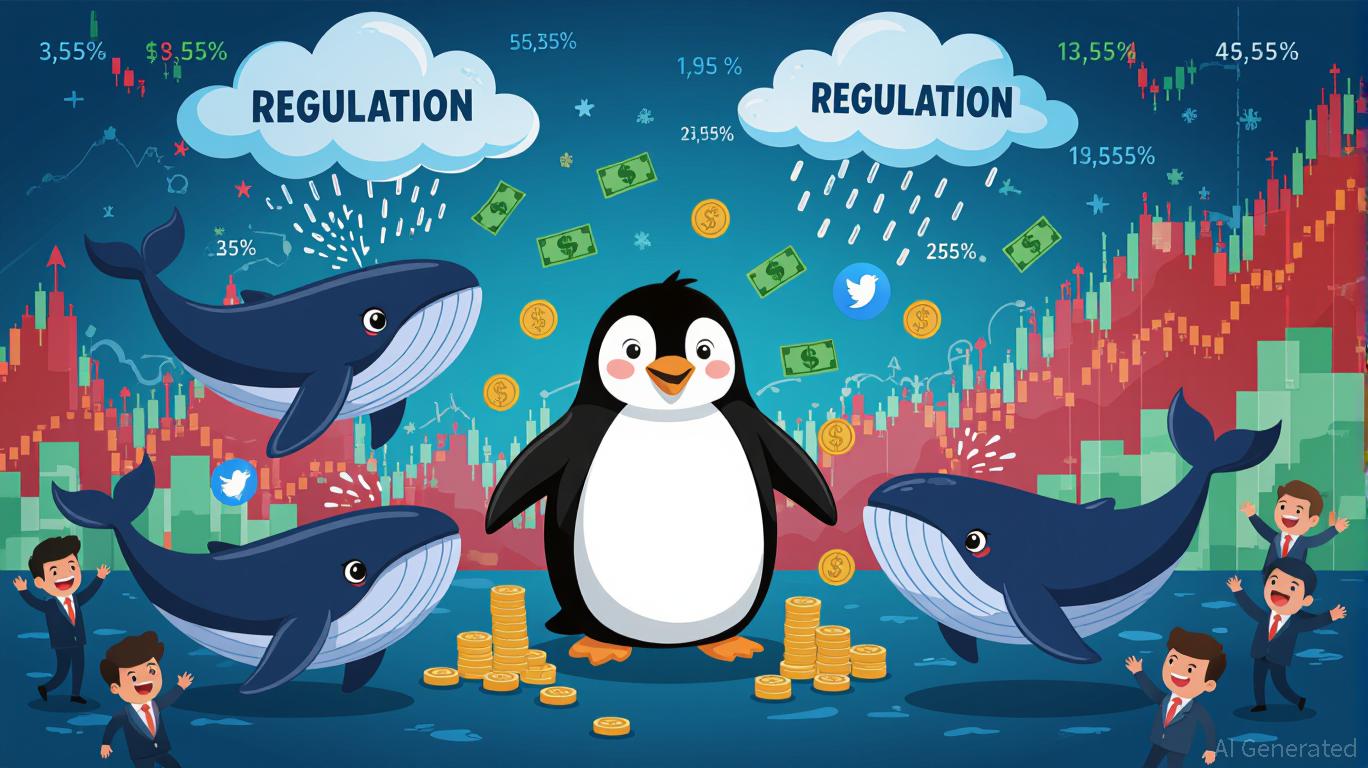
New legislative measures, such as the U.S. GENIUS Act and the European Union’s MiCA regulation, have further complicated the landscape. These rules have raised compliance expenses and limited liquidity for speculative tokens like PENGU. For example, Gate’s adoption of stricter KYC and AML protocols in 2025 coincided with an 80% plunge in PENGU’s market capitalization, illustrating how regulatory moves can disproportionately affect niche digital assets. Additionally, a regulatory investigation in late November 2025—mistakenly conflating PENGU with Pinnacle West Capital Corp (PNW)—triggered a single-day price drop of 30%, underscoring the fragility of market confidence amid confusion.
Investor Psychology: From Panic to FOMO and the Influence of Social Media
Sentiment among PENGU holders has fluctuated sharply throughout November 2025. After a 30% price fall, retail investor optimism slid from 90% to 72%, while the Fear & Greed Index plummeted to 28, a level often linked to oversold conditions and possible stabilization. Despite this, the outlook remains uncertain.
Earlier in July 2025, social media-driven FOMO propelled PENGU to a 480% surge, only for panic selling to erase 28.5% of its value by October, as highlighted in market reports. These dramatic shifts reveal the herd mentality that dominates speculative markets. More recently, coordinated buying by large holders and significant inflows from top traders—totaling $103,000—have temporarily boosted bullish sentiment.
Nevertheless, relying on social media sentiment analysis carries inherent risks. Algorithm-driven amplification and echo chambers can distort reality, fueling exaggerated narratives and intensifying volatility. For instance, the recent regulatory probe was widely circulated on online forums, accelerating sell-offs even after clarifications distinguished PENGU from PNW.
Outlook: Exercising Prudence in an Uncertain Environment
While technical patterns and whale activity hint at possible short-term gains, the broader context remains challenging. Ongoing regulatory ambiguity and macroeconomic pressures suggest that any upward movement may be fleeting. Currently, PENGU trades at $0.011140—down 69% from its peak—reflecting a stressed market where limited liquidity amplifies price movements.
Investors should focus on two critical factors: first, the SEC’s upcoming decision on the Canary PENGU ETF, which could either validate or further undermine the token; and second, whether on-chain activity can sustain recent momentum. For PENGU to break above $0.0235, not only technical confirmation but also a shift from fear to cautious optimism will be necessary—a scenario dependent on regulatory clarity and reduced panic in online communities.
Final Thoughts
PENGU’s performance in the last quarter of 2025 mirrors the broader challenges facing the cryptocurrency sector. While some technical and on-chain indicators offer hope, regulatory risks and behavioral biases remain significant obstacles. Investors are advised to proceed with caution, viewing any short-term rallies as opportunities to reassess risk rather than as signals for long-term commitment. In a market where sentiment can swing rapidly, the wisest approach may be to await clearer regulatory guidance and more stable on-chain trends before making substantial moves.





