The Impact of AI on Higher Education: Shaping Learning Experiences and Preparing Tomorrow’s Workforce
AI-Powered Education: Transforming the Market and Workforce
The landscape of AI-driven education is experiencing rapid and transformative growth, significantly impacting both investors and the evolving job market. In 2025, the sector was valued at $7.57 billion, and forecasts predict a remarkable increase to $112.30 billion by 2034, reflecting an extraordinary annual growth rate of 46%. This surge is largely attributed to the widespread adoption of AI technologies in educational settings—currently, 60% of educators incorporate AI into their teaching, and 89% of students utilize tools such as ChatGPT for their assignments. While the economic prospects are vast, the true significance lies in how AI is redefining the preparation of future professionals for an AI-centric world.
Market Growth: From Tailored Learning to Professional Development
The influence of AI on education is now quantifiable. Personalized learning platforms powered by AI have led to a 30% boost in student achievement compared to conventional approaches, with test results in AI-supported classrooms rising by 54%. These advancements are not limited to developed countries; the Asia-Pacific region, driven by large populations and substantial investments in educational technology, is at the forefront, expanding at a 48% compound annual growth rate.
AI’s reach extends beyond primary and secondary education. The global market for corporate e-learning is expected to hit $44.6 billion by 2028, propelled by AI solutions that enhance training efficiency by 57% and help bridge skill gaps in rapidly changing industries. For investors, this presents a dual opportunity: the EdTech sector is growing at a 16% CAGR, and innovative learning experiences—such as immersive and gamified platforms—are becoming increasingly prevalent, paving the way for further advancements.
AI in Higher Education: Addressing the Skills Mismatch
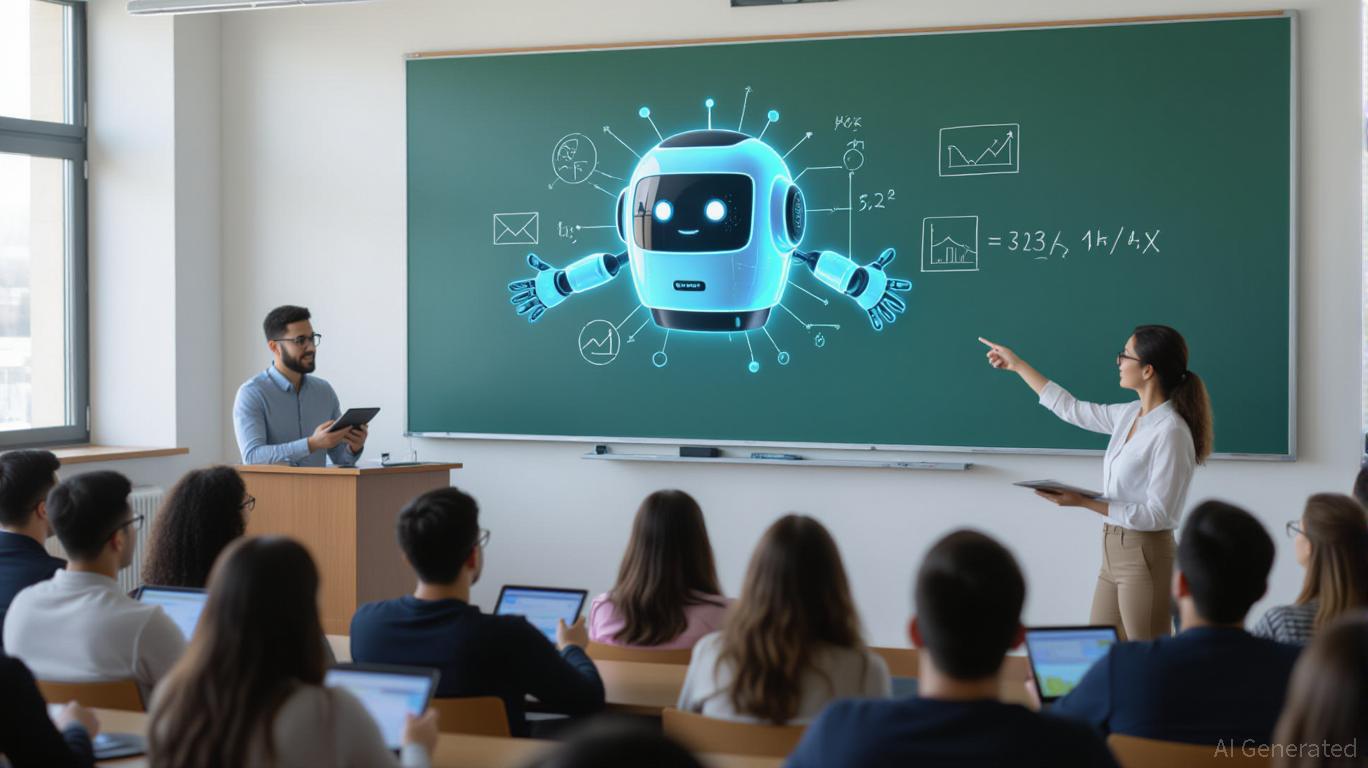
Colleges and universities are progressively embedding AI into their curricula to better align with industry needs. For example, a 12-week AI course for non-STEM students in England demonstrated a clear link between improved AI literacy and higher employment rates six months after graduation. Similarly, among 148 graduates studied, those with advanced AI skills and frequent use of tools like ChatGPT were more successful in securing jobs in their chosen fields, reporting increased productivity and better career alignment.
However, this transition is not without challenges. Since 2023, entry-level job openings in the U.S. have dropped by 35%, as AI automates tasks once handled by junior staff. In sectors like technology and finance, generative AI has replaced roles such as data entry and customer support, resulting in a 13% decrease in employment among workers aged 22 to 25. In the UK, technology firms have reduced graduate positions by 46% from 2023 to 2024, with further reductions anticipated.
This dual effect—where AI both eliminates and creates jobs—underscores the urgency for academic institutions to adapt. Initiatives such as the University of Louisiana System’s AI literacy microcredentials for 82,000 students and staff, which emphasize ethics and digital skills, are leading the way. Meanwhile, universities like UMass Lowell and Arizona State University are launching AI-focused projects and innovation competitions to provide practical experience. These efforts are more than academic—they are strategic moves to ensure graduates possess the AI proficiency now expected in the workforce.
Investment Perspective: Balancing Promise and Challenges
For those looking to invest, the AI education sector offers significant potential. Global spending on educational technology is projected to surpass $404 billion by 2025, with AI-driven education alone expected to reach $32.27 billion by 2030, growing at a 31.2% CAGR. However, realizing this potential requires addressing persistent issues. Notably, male and White students, as well as those with strong math backgrounds, tend to benefit more from AI-enhanced education. Additionally, unresolved concerns about data privacy and academic honesty remain.
Collaboration is key to overcoming these barriers. Universities and industry partners must work together to develop curricula that bridge the gap between academic learning and practical application. For instance, engineering programs are now including modules on AI ethics and governance to tackle issues of bias and transparency. At the same time, businesses are expanding their recruitment efforts by offering AI-focused internships and hackathons to identify and nurture emerging talent.
Looking Ahead: Building a Workforce Ready for the Future
The integration of AI into higher education is more than a technological trend—it is a necessity for economic progress. While AI is reshaping job descriptions and required skills, it also provides opportunities to boost productivity and foster innovation. For investors, the priority should be supporting educational institutions and platforms that emphasize both technical expertise and ethical responsibility. As the job market continues to evolve, those who understand that AI serves to enhance, rather than replace, human potential will be best positioned for success.
- Source: AI In Education Market Size & Share | Industry Report, 2030
- AI in Education Market Review 2024-2025 and Forecast
- 20 Statistics on AI in Education to Guide Your Learning
- AI and engineering careers: recent graduates' outlook
- The formation of AI Capital in higher education: Enhancing...
- AI puts the squeeze on new grads looking for work
- How AI Impacts Students Entering the Job Market
- AI's Impact on Graduate Jobs: A 2025 Data Analysis
- Artificial intelligence skills and their impact on the...
- Rising Use of AI in Schools Comes With Big Downsides for Students
- New Playbook Shares Case Studies on How Colleges Can Embed AI Into Curriculum and Instruction
- The New Jobs AI Is Creating and How It Will Impact...





