
Ethereum spot ETFs are next

And after Ethereum, it will be hard for the SEC to justify not approving NFT ETFs, DeFi ETFs and even ETFs for the top tokenized real-world assets
The new bitcoin spot exchange-traded funds mark the brink of an era that will see trillions pour into tokenization.
The moment BlackRock filed its iShares Bitcoin Trust application with the US Securities and Exchange Commission, it was obvious it would get approved. The evidence was on page 36 of the 111-page filing, which references the “surveillance-sharing agreement” between NASDAQ and a US BTC Spot Market Platform (read: Coinbase). Add to that BlackRock’s 575-1 ETF application approval record, and the writing was on the wall.
But the SEC was also explicit about its real concerns with crypto market manipulation. Manipulation related to bitcoin prices was cited in most, if not all, previous ETF rejections. The SEC isn’t convinced Coinbase and other crypto exchanges can be trusted to “prevent fraudulent and manipulative acts and practices.”
After the ETF approval, we may not be experiencing the record flows of billions of dollars in its aftermath that reporters predicted. But, we are experiencing “crypto’s top enemy” and arguably the largest opponent to blockchain adoption in the US finally acquiescing to its place in the market.
Incoming will be an imminent approval of an Ethereum spot exchange-traded fund with parallels to the legal precedents set by the bitcoin spot ETF.
I’ve been in the tokenization space since 2017. And I’ve been saying since then that every financial asset will one day be on a blockchain. Larry Fink, the CEO of BlackRock, finally agrees . ETFs, he says, are just a mere stepping stone to “the technological revolution in financial markets” that includes “the tokenization of every financial asset.” Fink’s future vision looks something like this: “Every bond will have its own CUSIP, it will be on one general ledger” and “this eliminates all corruption, by having a tokenized system.”
Historically, markets have been plagued with integrity issues. Transactions require trust that the other party will uphold their end of the bargain. Financial institutions, both commercial and regulatory, have blossomed as a way to mediate this. Yet, all this does is require participants to place their trust in centralized third-parties whose operations are opaque and, quite frankly, not immune to corruption.
Blockchain technology reduces this reliance on third parties and the risks it brings. It’s optimistic for Fink to say blockchain can eliminate all illicit behavior — criminals will always find a way to be criminals. But blockchain can offer more transparent, traceable transactions in real-time that prevents fraud and lets regulators track illicit behavior much more easily and effectively.
More industry players like Fink, and even more regulators, are now starting to see the real, tangible benefits of blockchains. That’s why I predict that it will be hard for the SEC to justify not approving many other products once it approves the Ethereum spot ETF. We’ll have NFT ETFs, DeFi ETFs and even ETFs for the top tokenized real-world assets.
Institutions with trillions in capital will finally be able to access tokens via regulated vehicles on venues with approved counterparties. They’ll push for blockchain in use cases of greater institutional benefit, like the tokenized bonds we’ve seen issued in Europe or the tokenized securities now legal throughout nations in APAC. Legacy finance in the US will finally open to tokenization.
But this tokenization won’t be on one public ledger as Fink hopes. While it would be great for BlackRock if everything happened on Ethereum — this would drive value to its future Ethereum spot ETF — it’s just not what regulators or markets want.
Regulators and institutions have repeatedly indicated a preference for public permissioned networks or private permissioned networks.
In a report by EY Parthenon, 60% of institutions said they preferred a public permissioned network for asset tokenization. Likewise, public permissioned networks were of interest to regulators interviewed for a report by the Global Financial Markets Association and Boston Consulting Group.
Permissioned networks will be the networks of choice for many. They’re either comparable to existing infrastructure in capital markets (private permissioned), or come with frameworks for regulatory and institutional risk-management and tools to enable know-your-customer/AML compliance (public permissioned).
Is the SEC’s approval of the bitcoin spot ETFs exciting?
Yes.
Is it giving the greenlight for institutional capital to pour into crypto and tokenization?
Yes.
But, we’re only in the first inning of this revolution. We haven’t seen anything yet.
Disclaimer: The content of this article solely reflects the author's opinion and does not represent the platform in any capacity. This article is not intended to serve as a reference for making investment decisions.
You may also like
Five charts to help you understand: Where does the market go after each policy storm?
After this regulatory crackdown, is it a harbinger of an impending downturn, or the beginning of a new cycle where all negative news has been fully priced in? Let’s examine the trajectory after the storm through five key policy milestones.

Mars Morning News | The crypto market rebounds across the board, Bitcoin rises above $94,500; The "CLARITY Act" draft is expected to be released this week
The crypto market has fully rebounded, with bitcoin surpassing $94,500 and US crypto-related stocks rising across the board. The US Congress is advancing the CLARITY Act to regulate cryptocurrencies. The SEC chairman stated that many ICOs are not securities transactions. Whales are holding a large number of profitable ETH long positions. Summary generated by Mars AI. The accuracy and completeness of the content generated by the Mars AI model is still being iteratively updated.

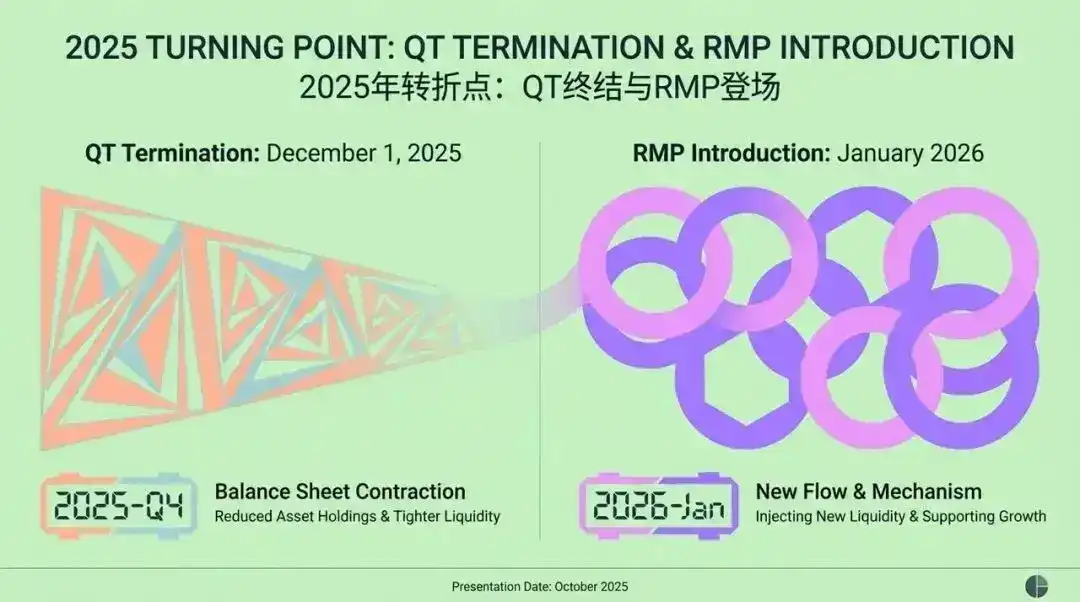
Federal Reserve’s Major Shift: From QT to RMP, How Will the Market Transform by 2026?
The article discusses the background, mechanism, and impact on financial markets of the Federal Reserve's introduction of the Reserve Management Purchases (RMP) strategy after ending Quantitative Tightening (QT) in 2025. RMP is regarded as a technical operation aimed at maintaining liquidity in the financial system, but the market interprets it as a covert easing policy. The article analyzes RMP's potential effects on risk assets, the regulatory framework, and fiscal policy, and provides strategic recommendations for institutional investors. Summary generated by Mars AI This summary was generated by the Mars AI model, and the accuracy and completeness of its content are still in the process of iterative improvement.
Rate Hike in Japan: Will Bitcoin Resist Better Than Expected?

Trending news
MoreCrypto prices
More





