
Uniswap V4 launch, featuring 'hooks,' tentatively set for Q3

Quick Take: The Uniswap version 4 protocol launch is tentatively scheduled for Q3 this year. Launch timing depends on Ethereum’s Dencun upgrade in March and subsequent security audits. V4 aims for a more modular structure with “hooks” for customizing liquidity pools.
This timeframe depends on the implementation of Ethereum’s upcoming Dencun hard fork, slated to take place in March. The V4 upgrade will follow a comprehensive security audit of the protocol starting from Dencun.
Uniswap is the most widely used automated market maker — a decentralized exchange that facilitates trading between tokens using liquidity pools rather than relying on traditional order books where buyers and sellers directly match orders.
Launched in 2018, Uniswap has undergone several iterations, with Uniswap V3 being the current one, introduced in May 2021. The main feature of V3 is that it supports “concentrated liquidity” — allowing liquidity providers to choose specific price ranges where their capital operates to earn higher fees.
The V4 draft code points to a shift towards a more modular structure for Uniswap, predominantly through incorporating “hooks.” These hooks are smart contracts that will facilitate additional customization in Uniswap’s liquidity pools using methods such as dynamic fees, on-chain limit orders and customized on-chain oracles.
The V4 release will also introduce a “flash accounting” system that will result in lower fees for liquidity providers. The mechanism relies on “transient storage,” which will be activated by the proposed EIP-1153 change in Ethereum’s protocol, due to be integrated in the upcoming Dencun upgrade.
Disclaimer: The content of this article solely reflects the author's opinion and does not represent the platform in any capacity. This article is not intended to serve as a reference for making investment decisions.
You may also like
Economic Truth: AI Drives Growth Alone, Cryptocurrency Becomes a Political Asset
The article analyzes the current economic situation, pointing out that AI is the main driver of GDP growth, while other sectors such as the labor market and household finances are in decline. Market dynamics have become detached from fundamentals, with AI capital expenditure being key to avoiding a recession. The widening wealth gap and energy supply are becoming bottlenecks for AI development. In the future, AI and cryptocurrencies may become the focus of policy adjustments. Summary generated by Mars AI This summary was generated by the Mars AI model, and its accuracy and completeness are still in the process of iterative improvement.

AI unicorn Anthropic accelerates IPO push, taking on OpenAI head-to-head?
Anthropic is accelerating its expansion into the capital markets, initiating collaboration with top law firms, which is seen as an important signal toward going public. The company's valuation is approaching 300 billions USD, and investors are betting it could go public before OpenAI.
Did top universities also get burned? Harvard invested $500 million heavily in bitcoin right before the major plunge
Harvard University's endowment fund significantly increased its holdings in bitcoin ETFs to nearly 500 million USD in the previous quarter. However, in the current quarter, the price of bitcoin subsequently dropped by more than 20%, exposing the fund to significant timing risk.

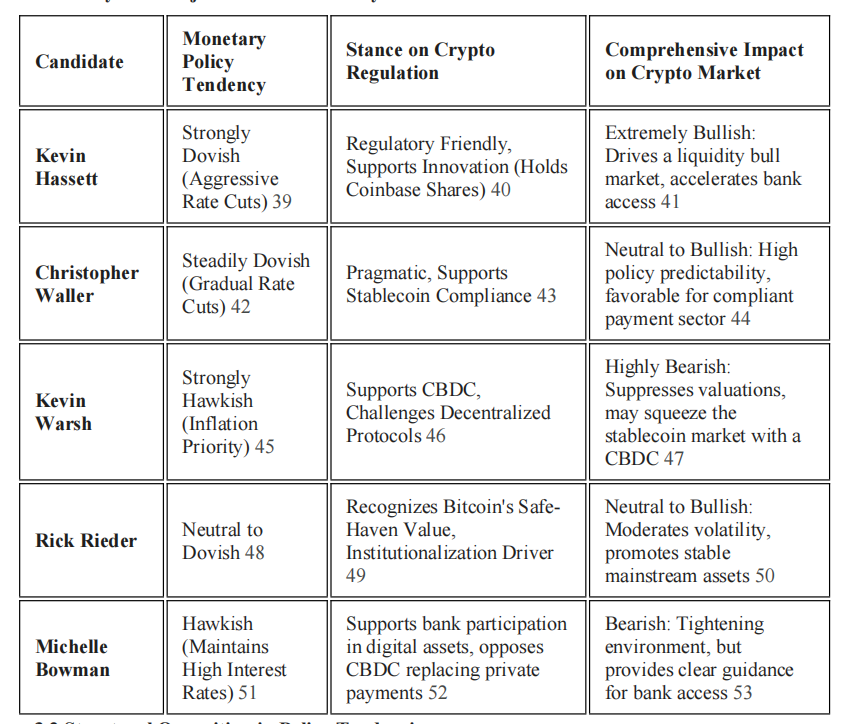
The Structural Impact of the Next Federal Reserve Chair on the Cryptocurrency Industry: Policy Shifts and Regulatory Reshaping
The change of the next Federal Reserve Chair is a decisive factor in reshaping the future macro environment of the cryptocurrency industry.
Trending news
MoreCrypto prices
More






