
It’s cheaper to swap on layer-2s than on Ethereum, Uniswap research finds

97.5% of swappers with trades under $125,000 did better on layer-2s than on Ethereum mainnet
A recent paper by Austin Adams, a researcher at Uniswap Labs, contends that swapping and liquidity provisions on layer-2 networks are significantly cheaper than on Ethereum’s mainnet.
According to the paper, chains like Arbitrum created over three times more liquidity positions this past year than Ethereum.
The report further shows that, when looking at USDC/ETH pools, 97.5% of swappers with trades under $125,000 did better on layer-2s than on Ethereum mainnet.
Read more: Uniswap releases new tools for swappers
This is likely because retail swappers, with trades under $125,000, are much more likely to benefit from the lower gas costs and higher liquidity concentration on layer-2s than the mainnet.
It is worth noting that Ethereum is responsible for only around 25% of the total transaction count but over 60% of the volume — demonstrating that, despite boasting higher transaction volumes, network activity is still predominantly on layer-2s.
Additionally, layer-2s often offer shorter block times, or the time it takes the network to produce a new block. On Ethereum today, the average block time is roughly 12 seconds. On Arbitrum, on the other hand, the average block time is around 0.26 seconds.
Read more: Cheatsheet: Ethereum on track to burn $10B ETH over next year
The shorter the block time, the less opportunity there would be for the market price of an asset to move, meaning that arbitrage attempts will likely not be as profitable.
Less successful arbitrage attempts are a good thing for liquidity providers, who are making 20% more in returns from arbitrage on layer-2s than they are on mainnet, the paper shows .
Although there are significant benefits for users to trade on layer-2s, the paper does note drawbacks. One primary concern is the centralized sequencer.
Read more: ‘Shared Sequencing’ could help unite blockchain rollups
The paper notes that many existing rollups today still operate under one centralized sequencer. This sequencer could take advantage of the situation by reordering transactions to maximize MEV profits for themselves.
Additionally, optimistic rollups today do not have decentralized fraud proofs, which are necessary to correct sequencer errors.
Read more: So your layer-2 is ‘secured by Ethereum’ — what does that mean?
Finally, there are over 40 layer-2 ecosystems present today. The proliferation of these networks means further liquidity fragmentation, as they cannot trustlessly speak to one another in real time. This means that they will need to rely on bridging infrastructure, which is both costly and time-consuming.
The developers of layer-2 networks are working to address these concerns. Optimism recently revealed a permissionless fault-proof system , while shared sequencer networks like Espresso have explored ways to diversify sequencers for rollups .
“For decentralized markets to fulfill their full potential, aggregate trading costs must continue to decline and user experience must continue to improve,” Adams wrote. “We believe that the studied generalized layer-2s still have many benefits that users can utilize today, and any future improvements will only continue to benefit the trading experience.”
Don’t miss the next big story – join our free daily newsletter .
- Ethereum
- layer-2
- liquidity
- Uniswap
Disclaimer: The content of this article solely reflects the author's opinion and does not represent the platform in any capacity. This article is not intended to serve as a reference for making investment decisions.
You may also like

Why is the short seller who made $580,000 now more optimistic about ETH?

The truth behind Bitcoin's overnight 9% surge: Is December the turning point for the crypto market?
Bitcoin strongly rebounded by 6.8% on December 3 to $92,000, while Ethereum surged 8% to break through $3,000, with mid- and small-cap tokens seeing even larger gains. The market rally was driven by multiple factors, including expectations of a Federal Reserve rate cut, Ethereum’s technical upgrades, and policy shifts. Summary generated by Mars AI. This summary was produced by the Mars AI model, and the accuracy and completeness of its content are still in the process of iterative updates.

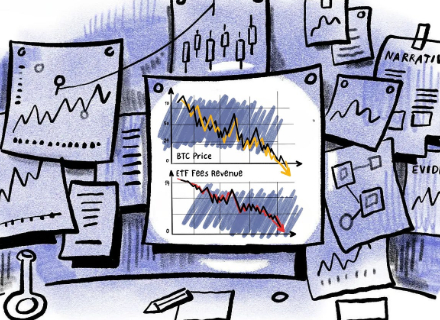
Even BlackRock can't hold on? BTC ETF sees $3.5 billion outflow in a single month as institutions quietly "deleveraging"
The article analyzes the reasons behind cryptocurrency ETF outflows in November 2025 and their impact on issuers' revenues, comparing the historical performance of BTC and ETH ETFs as well as the current market situation. Summary generated by Mars AI. This summary is produced by the Mars AI model, and the accuracy and completeness of its generated content are still being iteratively updated.
Trending news
MoreCrypto prices
More






