
The Hong Kong Monetary Authority has launched the Ensemble Sandbox program, accelerating the RWA process! | Mankiw Web3 Legal Education
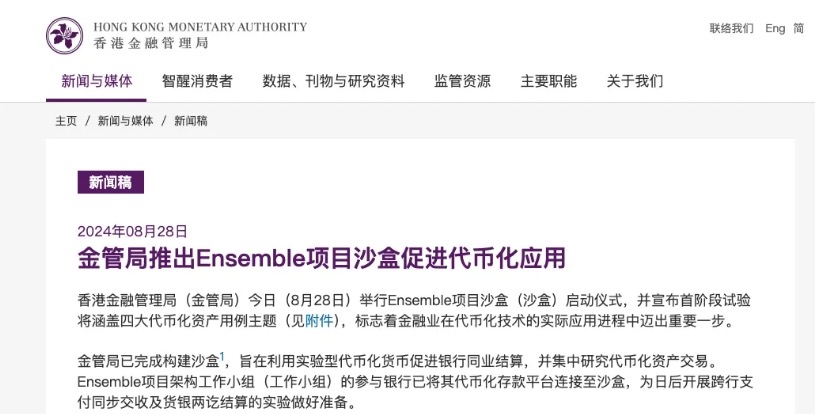
- Explore application scenarios: Allow participants to experiment with tokenized assets in a secure environment and explore various applications without immediately facing the pressure of full implementation.
- Technical Testing: Testing the compatibility between different digital assets, tokenized deposits, and CBDC. This stage is crucial to ensure the robustness of the technology and prepare for wider adoption.
- Establish industry standards: Establish common industry benchmarks for tokenization, which is crucial for the development of technology. By facilitating the entire lifecycle of tokenized asset transactions from creation to transaction to payment and settlement, Sandbox helps participants understand the actual impact of tokenization and its potential to solve real-world challenges, such as its application in supply chain financing.
- Solving real-world challenges: Sandbox promotes innovative applications aimed at solving practical problems in the financing field, especially in areas such as trade and supply chain finance. By addressing these pain points, Ensemble is helping to make tokenization a viable option for enterprises.
- Fixed Income and Mutual Funds: This topic explores how tokenization is changing traditional investment tools, making them more accessible and efficient. By creating digital representations of bonds or Mutual Funds, the financial industry can reduce settlement time, lower costs, and enhance liquidity, providing new opportunities for investors.
- Liquidity Management: Tokenization has the potential to revolutionize liquidity management by allowing assets to be split and traded on digital platforms. This could lead to more dynamic and efficient liquidity management, especially where quick access to funds is critical.
- Green and Sustainable Finance: The MAS also focuses on how tokenization can support green and sustainable finance initiatives. By tokenizing assets such as green bonds or carbon credits, the financial sector can enhance transparency and traceability, ensuring that funds are effectively allocated to environmental projects.
- Trade and Supply Chain Finance: Tokenization can solve major pain points in trade and supply chain finance by simplifying the process of tracking and transferring ownership of goods and financial assets. This can improve the efficiency and transparency of the supply chain, reduce fraud risks, and enhance overall market confidence.
- Enhance liquidity. Traditional real-world assets like real estate tend to be illiquid, meaning they can be difficult to sell quickly. Tokenization allows these assets to be split into smaller tokens that are easier to trade, improving liquidity.
- Increase accessibility. Tokenization makes asset classes that were previously inaccessible to many investors more widely accessible. For example, people with limited capital can purchase a small portion of high-value assets (such as real estate) through tokens.
- Reduce transaction costs. Blockchain technology can reduce the cost of trading and transferring assets as it eliminates the need for intermediaries such as brokers or custodial agents.
Disclaimer: The content of this article solely reflects the author's opinion and does not represent the platform in any capacity. This article is not intended to serve as a reference for making investment decisions.
You may also like
AAVE drops 1.47% amid Aave’s overhaul of its multichain approach
- Aave's multichain strategy shift caused AAVE to drop 1.47% despite 7.08% weekly gains. - Governance proposal aims to consolidate operations on high-revenue chains like Ethereum , phasing out low-performing deployments. - Strategy prioritizes capital efficiency and risk management by focusing liquidity on core networks with stronger revenue potential. - Unanimous DAO support signals industry trend toward quality-focused chain selection over maximalist expansion in DeFi.
LUNA Price Remains Steady as U.S. Lawmakers Advance Stock Trading Ban
- LUNA's price remained stable at $0.0727 in 24 hours but fell 82.47% annually amid U.S. legislative efforts to restrict congressional stock trading. - Rep. Anna Paulina Luna's bipartisan bill seeks to ban lawmakers, spouses, and children from individual stock trading to address ethical conflicts. - The bill, supported by 100+ co-sponsors, faces opposition over financial flexibility concerns for lower-income legislators amid unchanged congressional salaries since 2009. - A discharge petition aims to force
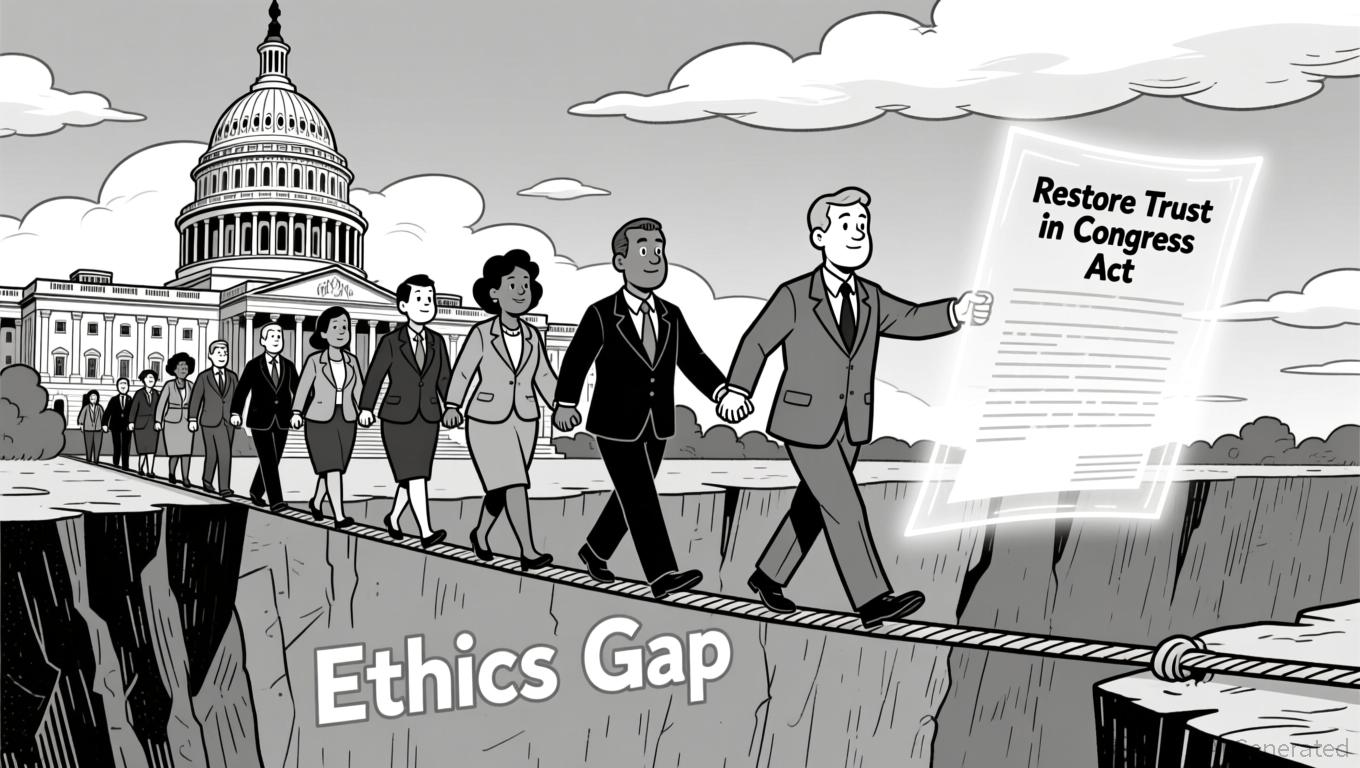
PENGU Price Forecast for 2026: Managing Fluctuations and Momentum from Key Catalysts After the 2025 Market Adjustment
- 2025 crypto market correction reshaped altcoin dynamics as Bitcoin/Ethereum declined amid macroeconomic uncertainty and regulatory pressures. - Pudgy Penguins (PENGU) saw sharp volatility post-correction, with technical indicators suggesting potential $0.069 rebound by 2026 if adoption metrics align. - Strategic partnerships with Bitso and cross-chain integrations, plus Kung Fu Panda NFT collaborations, aim to boost PENGU's liquidity and mainstream adoption. - Despite 12% early 2026 price drop, Pudgy Inv
ZEC Value Increases by 4.82% Following Recent Exchange Listing
- Zcash (ZEC) surged 4.82% in 24 hours after Bitget listed it for spot trading on Dec 3, 2025, boosting short-term liquidity and visibility. - Zcash’s zero-knowledge proof technology enables encrypted transactions while maintaining blockchain integrity, distinguishing it as a privacy-focused asset. - Bitget’s UEX model supports multi-chain access, aligning with Zcash’s goal to balance transparency and privacy, though recent 7-day and 1-month declines highlight market volatility risks.
Trending news
MoreCrypto prices
More






