
Banks can serve crypto clients as long as they can manage the risk, Fed Chair Jerome Powell says

Quick Take The central bank is not against innovation, said Federal Reserve Chair Jerome Powell during a press conference on Wednesday. Crypto firms have complained about the difficulty of establishing and maintaining bank accounts in the U.S.

Banks can serve crypto customers as long as they can manage the risk, said U.S. Federal Reserve Chair Jerome Powell, amid allegations that the crypto industry is being cut off from financial institutions.
"The threshold has been a little higher for banks engaging in crypto activities and that's because they're so new," Powell said on Wednesday when asked by a reporter during a Federal Reserve press conference about risks associated with cryptocurrency.
The central bank is not against innovation, he added.
Crypto firms have complained about the difficulty behind establishing and maintaining bank accounts in the U.S. Following the collapse of crypto exchange FTX in late 2022, several governmental agencies, including the Federal Reserve, issued warnings on " crypto-asset risks ."
Later, in 2023, Castle Island Ventures co-founder Nic Carter coined the phrase "Operation Choke Point 2.0" to describe the alleged crackdown coordinated by government agencies. The phrase is a reference to the Obama-era "Operation Choke Point," a U.S. Department of Justice initiative that sought to limit banking services for industries considered high-risk for fraud and money laundering, including payday lenders and firearm dealers.
Since then, Coinbase lodged a lawsuit against the Federal Deposit Insurance Corporation, through consultant firm History Associates, for allegedly cutting off the crypto industry from the banking sector. The FDIC has said that "banking organizations are neither prohibited nor discouraged from providing banking services to customers of any specific class or type, as permitted by law or regulation."
On the Hill
Crypto debanking has come into the spotlight in Washington as lawmakers. House Financial Services Committee Chair French Hill has said he plans to to investigate debanking and said his committee would take a "strong position." Last week, the U.S. House Oversight Committee also said it was investigating alleged debanking in the crypto industry. Lawmakers have also worked on a number of market structure bills for crypto, but none have yet passed into law.
"I do think it would be helpful if there were a greater regulatory apparatus around crypto," Powell said on Wednesday. "That's something Congress was working on quite a lot."
Big bank CEOs recently opened up about their struggles with crypto. JPMorgan Chase's Jamie Dimon said his bank works with a few crypto firms but is at risk of paying millions of dollars in fines if something were to go wrong, he said during a podcast called The Unshakeables co-produced by Chase for Business.
Disclaimer: The content of this article solely reflects the author's opinion and does not represent the platform in any capacity. This article is not intended to serve as a reference for making investment decisions.
You may also like
Five charts to help you understand: Where does the market go after each policy storm?
After this regulatory crackdown, is it a harbinger of an impending downturn, or the beginning of a new cycle where all negative news has been fully priced in? Let’s examine the trajectory after the storm through five key policy milestones.

Mars Morning News | The crypto market rebounds across the board, Bitcoin rises above $94,500; The "CLARITY Act" draft is expected to be released this week
The crypto market has fully rebounded, with bitcoin surpassing $94,500 and US crypto-related stocks rising across the board. The US Congress is advancing the CLARITY Act to regulate cryptocurrencies. The SEC chairman stated that many ICOs are not securities transactions. Whales are holding a large number of profitable ETH long positions. Summary generated by Mars AI. The accuracy and completeness of the content generated by the Mars AI model is still being iteratively updated.

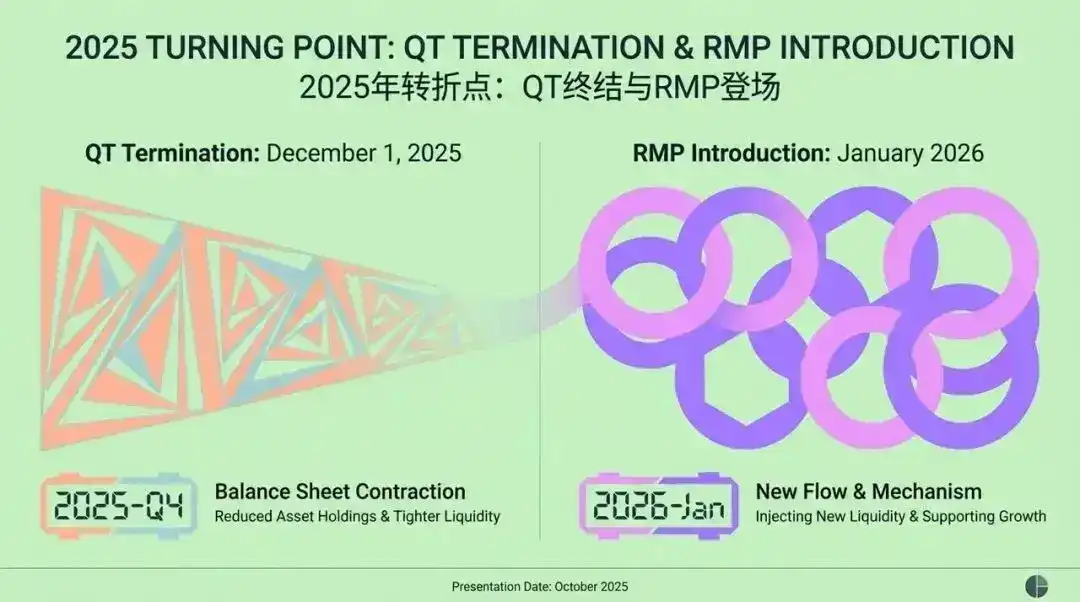
Federal Reserve’s Major Shift: From QT to RMP, How Will the Market Transform by 2026?
The article discusses the background, mechanism, and impact on financial markets of the Federal Reserve's introduction of the Reserve Management Purchases (RMP) strategy after ending Quantitative Tightening (QT) in 2025. RMP is regarded as a technical operation aimed at maintaining liquidity in the financial system, but the market interprets it as a covert easing policy. The article analyzes RMP's potential effects on risk assets, the regulatory framework, and fiscal policy, and provides strategic recommendations for institutional investors. Summary generated by Mars AI This summary was generated by the Mars AI model, and the accuracy and completeness of its content are still in the process of iterative improvement.
Rate Hike in Japan: Will Bitcoin Resist Better Than Expected?

Trending news
MoreCrypto prices
More





