
Ethereum client Geth releases ‘Schwarzschild’ update to fix a vulnerability in previous version

Quick Take Geth, the Go implementation of the Ethereum protocol, released version 1.14.13, codenamed “Schwarzschild.” This update addresses an issue in the peer-to-peer (p2p) layer that could potentially lead to denial of service attacks, affecting both Geth and potentially Layer 2 clients. The vulnerability, cataloged as CVE-2025-24883, makes Geth versions from 1.14.0 susceptible to DoS through malicious p2p messages.

The developers of Geth, the official Go implementation of the Ethereum protocol, released version 1.14.13 , codenamed “Schwarzschild,” on Thursday.
This release explicitly addresses a vulnerability that affects the peer-to-peer (p2p) layer of Geth, which could lead to denial of service attacks on nodes running them and potentially impact Layer 2 clients.
Geth is the most widely used execution layer client for Ethereum.
The vulnerability, cataloged as CVE-2025-24883 , states that the Geth version “is vulnerable to DoS via malicious p2p messages.” Version 1.14.0 appeared to have accidentally introduced this security issue.
Users running Geth 1.14 (or later till 1.14.13) were urged to update to the latest version to mitigate the risk of node crashes or other disruptions.
“If you are running a version of geth that 1.14 or later, please update to the newest version. Nodes running v1.13.x are not affected,” noted Marius Van Der Wijden, Ethereum developer at the Geth client team.
The fix in v1.14.13 was coordinated with multiple Layer 2 solutions to ensure a broad security update across the ecosystem.
This emergency release was crucial because the bug, first identified by security researchers at Polygon, could potentially allow attackers to crash nodes running vulnerable versions of Geth remotely.
The Geth team clarified that nodes operating on the v1.13.x series were not affected by this particular vulnerability.
Disclaimer: The content of this article solely reflects the author's opinion and does not represent the platform in any capacity. This article is not intended to serve as a reference for making investment decisions.
You may also like
Mars Morning News | Ethereum Fusaka upgrade officially activated; ETH surpasses $3,200
The Ethereum Fusaka upgrade has been activated, enhancing L2 transaction capabilities and reducing fees; BlackRock predicts accelerated institutional adoption of cryptocurrencies; cryptocurrency ETF inflows have reached a 7-week high; Trump nominates crypto-friendly regulatory officials; Malaysia cracks down on illegal Bitcoin mining. Summary generated by Mars AI. The accuracy and completeness of this summary are still undergoing iterative updates.

Do you think stop-losses can save you? Taleb exposes the biggest misconception: all risks are packed into a single blow-up point.
Nassim Nicholas Taleb's latest paper, "Trading With a Stop," challenges traditional views on stop-loss orders, arguing that stop-losses do not reduce risk but instead compress and concentrate risk into fragile breaking points, altering market behavior patterns. Summary generated by Mars AI. The accuracy and completeness of this summary are still being iteratively improved by the Mars AI model.

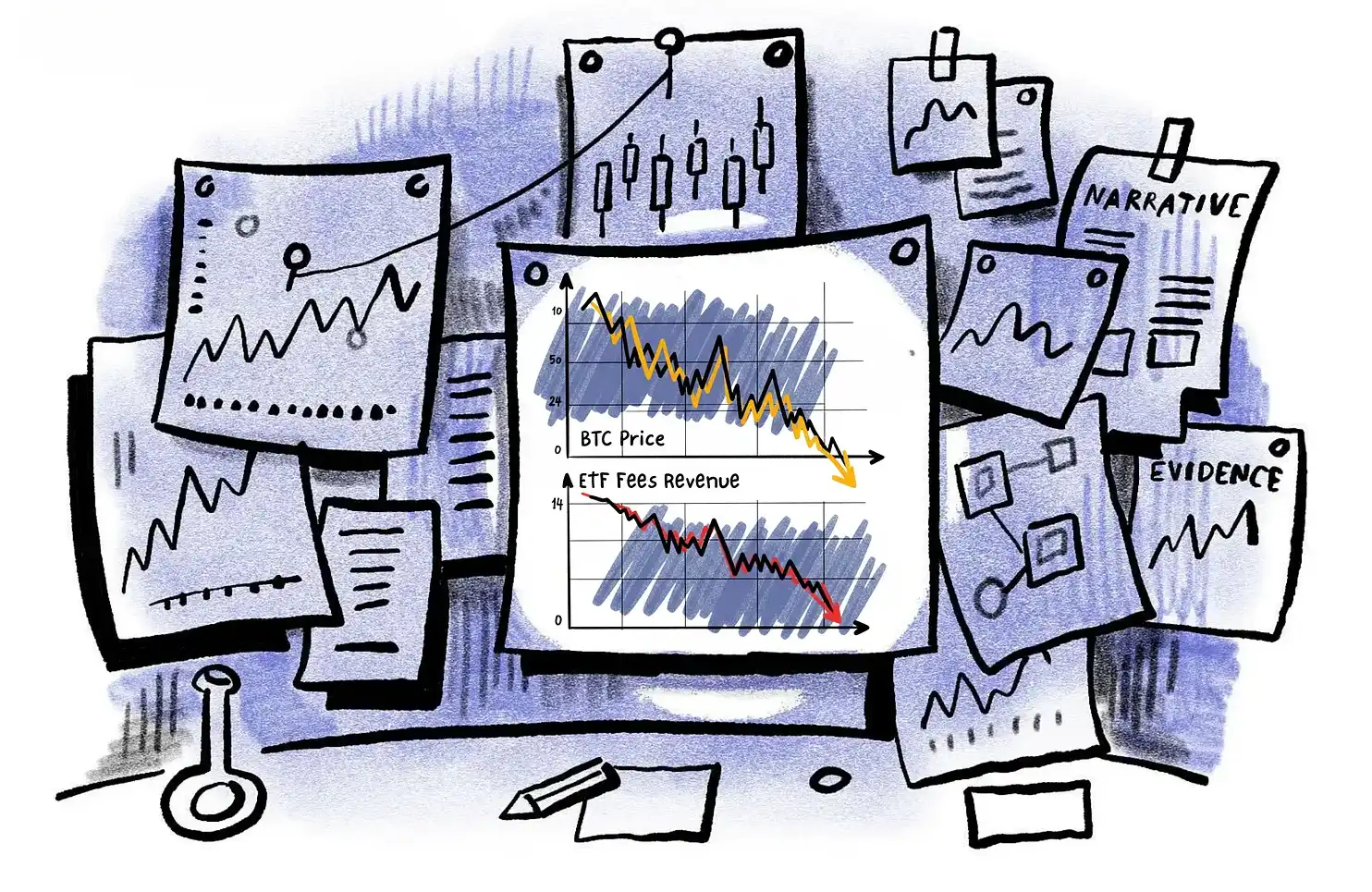
With capital outflows from crypto ETFs, can issuers like BlackRock still make good profits?
BlackRock's crypto ETF fee revenue has dropped by 38%, and its ETF business is struggling to escape the cyclical curse of the market.
Incubator MEETLabs today launched the large-scale 3D fishing blockchain game "DeFishing". As the first blockchain game on the GamingFi platform, it implements a dual-token P2E system with the IDOL token and the platform token GFT.
MEETLabs is an innovative lab focused on blockchain technology and the cryptocurrency sector, and also serves as the incubator for MEET48.

Trending news
MoreCrypto prices
More






