
Bitcoin’s realized cap surpassed $1 trillion as price hit new ATH above $123k

Bitcoin has reached a new milestone with its realized capitalization crossing the $1 trillion mark for the first time, according to on-chain analytics firm Glassnode.
The surge comes just a few days after BTC’s spot price hit a fresh all-time high above $123,000, underlining the intensity of recent investor demand.
Unlike traditional market capitalization, realized cap measures the value of Bitcoin based on the price each coin last moved on-chain. This approach offers a clearer picture of actual capital stored in the network and is widely regarded as a more accurate indicator of investor conviction.
James Check, an on-chain analyst at Checkonchain, highlighted the importance of this metric by describing it as the “most important Bitcoin market metric.”
He explained:
“[The metric] values every coin at the price when it last transacted onchain. If you DCA’d 0.1 BTC back at a $10,000 price, it will be saved at 0.1x$10,000 = $1,000, irrespective of spot price. When it transacts again, it will be revalued, capturing capital flows in or out of the asset. What this metric means, is Bitcoiners have ‘saved’ $1 Trillion in real capital in Bitcoin.”
Meanwhile, Glassnode revealed that 25% of Bitcoin’s realized cap was added this year. According to the firm, this reflects the accelerating inflow of capital into the asset amid broader macro and institutional interest.
Bitcoin price faces resistance
Following this milestone, market analysts have cautioned that BTC must overcome a key resistance level at $123,370 before targeting new highs.
Joao Wedson, CEO of blockchain analytical firm Alphractal, warned that BTC’s recent rejection at this second “Alpha Price” level is a short-term red flag.
The Alpha Price is a dynamic on-chain model that blends realized price, historical average cap, and other factors to estimate likely resistance and support zones.
Wedson said:
“[Alpha Price] behaves almost like pressure zones: lower levels tend to act as strong support, while upper levels often signal increased selling pressure—especially when most wallets are deep in profit. These thresholds reflect shifts in investor sentiment and can define where buyers and sellers are likely to react.”
However, should BTC price overcome the resistance at $123,370, Alphractal forecasts the next major target between $143,000 and $146,000.
Still, the risk of an overheated derivatives market hangs on the horizon.
According to Alphractal, long positions, or traders betting on further price increases, have been dominating in recent months.
While this reflects bullish sentiment, it also increases the risk of a sudden “Long Squeeze”, a situation where falling prices liquidate overleveraged longs and could amplify downward pressure on the market.
The post Bitcoin’s realized cap surpassed $1 trillion as price hit new ATH above $123k appeared first on CryptoSlate.
Disclaimer: The content of this article solely reflects the author's opinion and does not represent the platform in any capacity. This article is not intended to serve as a reference for making investment decisions.
You may also like
Five charts to help you understand: Where does the market go after each policy storm?
After this regulatory crackdown, is it a harbinger of an impending downturn, or the beginning of a new cycle where all negative news has been fully priced in? Let’s examine the trajectory after the storm through five key policy milestones.

Mars Morning News | The crypto market rebounds across the board, Bitcoin rises above $94,500; The "CLARITY Act" draft is expected to be released this week
The crypto market has fully rebounded, with bitcoin surpassing $94,500 and US crypto-related stocks rising across the board. The US Congress is advancing the CLARITY Act to regulate cryptocurrencies. The SEC chairman stated that many ICOs are not securities transactions. Whales are holding a large number of profitable ETH long positions. Summary generated by Mars AI. The accuracy and completeness of the content generated by the Mars AI model is still being iteratively updated.

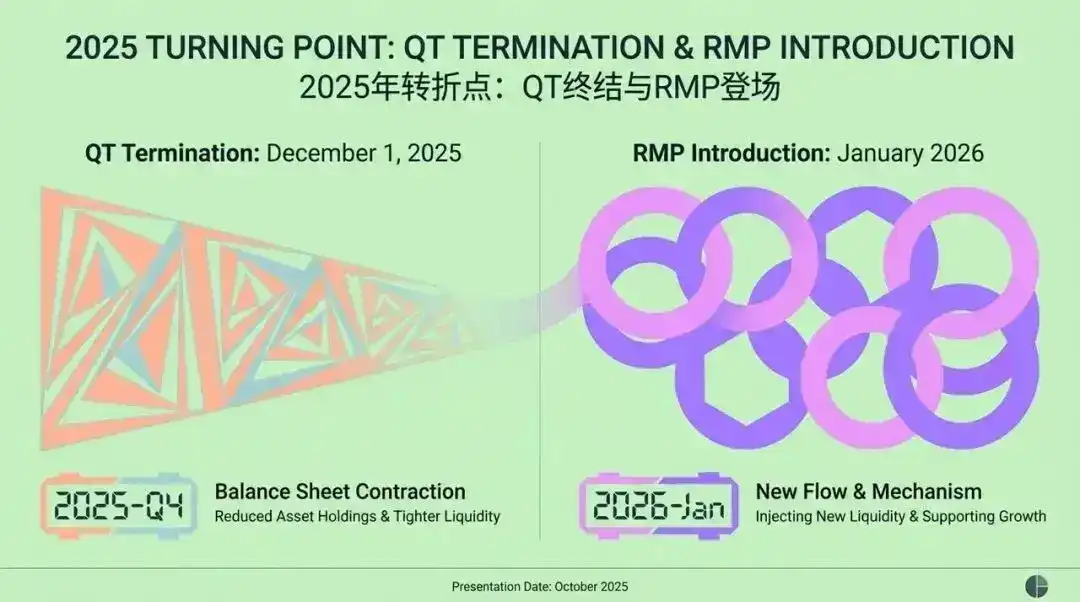
Federal Reserve’s Major Shift: From QT to RMP, How Will the Market Transform by 2026?
The article discusses the background, mechanism, and impact on financial markets of the Federal Reserve's introduction of the Reserve Management Purchases (RMP) strategy after ending Quantitative Tightening (QT) in 2025. RMP is regarded as a technical operation aimed at maintaining liquidity in the financial system, but the market interprets it as a covert easing policy. The article analyzes RMP's potential effects on risk assets, the regulatory framework, and fiscal policy, and provides strategic recommendations for institutional investors. Summary generated by Mars AI This summary was generated by the Mars AI model, and the accuracy and completeness of its content are still in the process of iterative improvement.
Rate Hike in Japan: Will Bitcoin Resist Better Than Expected?

Trending news
MoreCrypto prices
More





