
Cleveland Fed President Says Federal Reserve Needs To Focus on Inflation, Opposes Rate Cut in September

Beth Hammack, the president and chief executive of the Federal Reserve Bank of Cleveland, thinks the Fed needs to maintain its focus on fighting inflation.
In a new interview with Yahoo Finance, Hammack notes that both sides of the Fed’s dual mandate, stable prices and maximum employment, are under pressure, but she says that inflation is the more serious problem right now.
“We have inflation that’s too high and has been trending upwards over the past year. We got one report on the labor market, which is showing some signs of slowing, which is something we need to be attentive to, but the unemployment rate came in at 4.2%, which is right around that maximum employment number and has been stable around that level between 4% and 4.3% for the past year.
So when I look at the balance there, to me it’s important that we maintain a modestly restrictive stance of policy to continue bringing inflation back to target.”
Hammack says she doesn’t see the case for reducing interest rates with the data that’s available now, though she acknowledges there’s a lot more data that will become available between now and the Federal Open Market Committee (FOMC) meeting in September.
“I would only want to move into an accommodative stance of policy if I thought that the economy was materially weakening, which I’m not seeing evidence of right now. I’m not seeing any signs of potential significant downturns, and to me, that’s what would require us to move into an easing stance of policy, rather than our currently modestly restrictive stance.”
The CME FedWatch Tool, which generates probabilities using the 30-day Fed Funds futures prices, estimates there is a 75.5% chance the Fed will cut the federal target rate by 25 basis points at the FOMC meeting in September.
Generated Image: Midjourney
Disclaimer: The content of this article solely reflects the author's opinion and does not represent the platform in any capacity. This article is not intended to serve as a reference for making investment decisions.
You may also like
Economic Truth: AI Drives Growth Alone, Cryptocurrency Becomes a Political Asset
The article analyzes the current economic situation, pointing out that AI is the main driver of GDP growth, while other sectors such as the labor market and household finances are in decline. Market dynamics have become detached from fundamentals, with AI capital expenditure being key to avoiding a recession. The widening wealth gap and energy supply are becoming bottlenecks for AI development. In the future, AI and cryptocurrencies may become the focus of policy adjustments. Summary generated by Mars AI This summary was generated by the Mars AI model, and its accuracy and completeness are still in the process of iterative improvement.

AI unicorn Anthropic accelerates IPO push, taking on OpenAI head-to-head?
Anthropic is accelerating its expansion into the capital markets, initiating collaboration with top law firms, which is seen as an important signal toward going public. The company's valuation is approaching 300 billions USD, and investors are betting it could go public before OpenAI.
Did top universities also get burned? Harvard invested $500 million heavily in bitcoin right before the major plunge
Harvard University's endowment fund significantly increased its holdings in bitcoin ETFs to nearly 500 million USD in the previous quarter. However, in the current quarter, the price of bitcoin subsequently dropped by more than 20%, exposing the fund to significant timing risk.

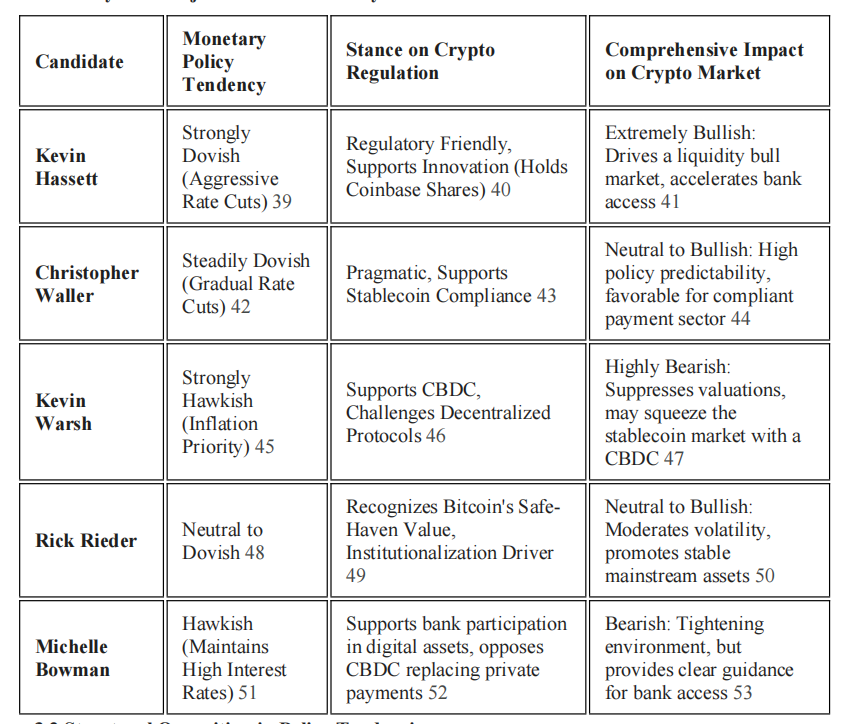
The Structural Impact of the Next Federal Reserve Chair on the Cryptocurrency Industry: Policy Shifts and Regulatory Reshaping
The change of the next Federal Reserve Chair is a decisive factor in reshaping the future macro environment of the cryptocurrency industry.
Trending news
MoreCrypto prices
More






