
WLF Protocol: Balancing Decentralization and Security in Governance
- WLF Protocol, backed by Trump family and Aave, issues WLFI governance token with 100B fixed supply, but 60% allocated to founders and Trumps raises centralization risks. - Governance includes 5% wallet cap and "kill switch" authority, creating decentralization paradox as Trump's 40-60% stake contrasts with community voting mechanisms. - USD1 stablecoin (backed by U.S. Treasury bonds) and $2B Abu Dhabi investment highlight credibility, yet Trump ties trigger regulatory costs under 2025 GENIUS Act. - Trump
The WLF Protocol, a DeFi platform backed by the Trump family and institutional partners like Aave and ALT5 Sigma , presents a unique case study in balancing decentralization and security within governance-driven token models. Its governance token, WLFI, operates on a fixed supply of 100 billion tokens, with governance as the sole utility, enabling holders to vote on protocol upgrades, treasury allocations, and ecosystem incentives [1]. However, the project’s token distribution—60% allocated to founders, early backers, and the Trump family—raises critical questions about centralization risks and long-term investment viability in high-risk crypto ecosystems [1].
Decentralization Mechanisms and Governance Paradox
WLFI’s governance model incorporates community-driven decision-making through token-based voting, with a 5% wallet cap to prevent concentration of power [2]. This cap aims to democratize participation, yet the Trump family’s 40–60% stake in the token introduces a governance paradox: institutional infrastructure (e.g., Aave v3 integration, BitGo custody) strengthens technical robustness, but political branding and regulatory scrutiny could deter risk-averse investors [3]. For instance, the July 2025 community-approved transition of WLFI from non-transferable to tradable status unlocked liquidity while maintaining founder token lock-ups, illustrating a cautious approach to decentralization [1].
However, the protocol’s reliance on third-party platforms like the WLF Forum and Snapshot for governance participation introduces operational dependencies [2]. Additionally, the “kill switch” governance model—a centralized authority allowing the core team to veto community-approved proposals under legal or security concerns—has drawn criticism for undermining decentralization ideals [4]. This duality—community control versus strategic centralization—highlights the inherent tension in governance tokens that must navigate regulatory and political landscapes.
Security and Regulatory Compliance
WLFI’s security framework includes KYC/AML requirements, partnerships with Peckshield and TRM Labs, and institutional-grade infrastructure such as BitGo custody solutions [1]. These measures align with U.S. regulatory expectations, particularly for its USD1 stablecoin, which is fully backed by U.S. Treasury bonds and cash [5]. The stablecoin’s growth, including a $2 billion investment from Abu Dhabi’s MGX, underscores its operational credibility [5].
Yet, the Trump family’s political ties introduce reputational and regulatory uncertainties. The U.S. GENIUS Act, enacted in July 2025, mandates strict reserve backing and compliance costs of $2–10 million annually, adding financial strain [1]. While these requirements enhance institutional trust, they also necessitate a federal or state license for expansion, creating a barrier for projects in politically sensitive ecosystems.
Financial Performance and Market Dynamics
WLFI’s tokenomics prioritize governance over financial utility, distinguishing it from yield-focused DeFi protocols like Aave or Uniswap [3]. From 2020–2025, the project evolved from speculative hype to a governance-driven model, with USD1’s daily trading volume reaching $1.25 billion by mid-2025 [1]. Trump’s 2025 financial filings reported $57.4 million in income from his WLFI stake, reflecting the token’s market traction [3].
However, risks persist. The token’s value may decouple from operational success if the Trump family exits post-token sales, and the September 1, 2025, token unlock could destabilize liquidity [4]. Investors must monitor treasury efficiency, governance participation rates, and USD1’s reserve transparency to gauge long-term viability [1].
Conclusion: A High-Risk, High-Reward Proposition
WLFI’s governance model exemplifies the challenges of balancing decentralization and security in politically charged ecosystems. While institutional partnerships and regulatory compliance bolster its technical foundation, the Trump family’s influence creates a double-edged sword: attracting pro-Trump crypto enthusiasts while deterring mainstream investors wary of regulatory backlash. For long-term viability, WLFI must demonstrate that its governance framework can mitigate centralization risks without sacrificing operational agility. Investors should weigh these factors against the token’s potential to navigate a fragmented regulatory landscape—a test that could redefine governance tokens in high-risk environments.
**Source:[1] WLFI Token Launch and Governance-Driven Unlock Strategy: A Blueprint for Sustainable DeFi Creation [2] WLFI Risk Disclosures [3] Trump-Backed DeFi Project WLFI's Token Unlock and ... [4] Trump-Family-Linked WLF Deploys “Kill Switch” Governance to Manage Sept 1 Token Unlock Risk
Disclaimer: The content of this article solely reflects the author's opinion and does not represent the platform in any capacity. This article is not intended to serve as a reference for making investment decisions.
You may also like
Five charts to help you understand: Where does the market go after each policy storm?
After this regulatory crackdown, is it a harbinger of an impending downturn, or the beginning of a new cycle where all negative news has been fully priced in? Let’s examine the trajectory after the storm through five key policy milestones.

Mars Morning News | The crypto market rebounds across the board, Bitcoin rises above $94,500; The "CLARITY Act" draft is expected to be released this week
The crypto market has fully rebounded, with bitcoin surpassing $94,500 and US crypto-related stocks rising across the board. The US Congress is advancing the CLARITY Act to regulate cryptocurrencies. The SEC chairman stated that many ICOs are not securities transactions. Whales are holding a large number of profitable ETH long positions. Summary generated by Mars AI. The accuracy and completeness of the content generated by the Mars AI model is still being iteratively updated.

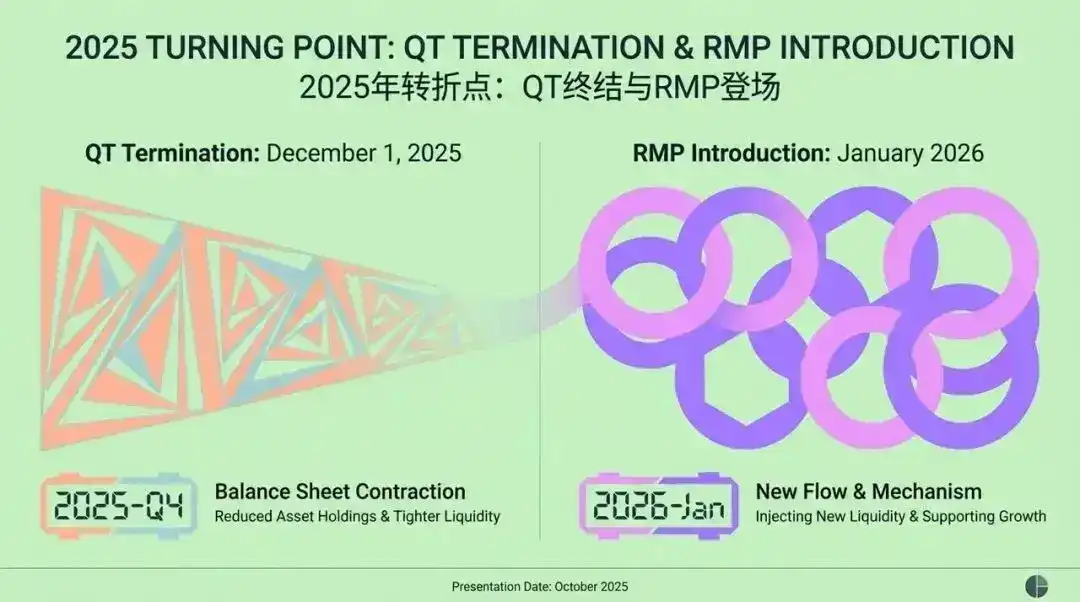
Federal Reserve’s Major Shift: From QT to RMP, How Will the Market Transform by 2026?
The article discusses the background, mechanism, and impact on financial markets of the Federal Reserve's introduction of the Reserve Management Purchases (RMP) strategy after ending Quantitative Tightening (QT) in 2025. RMP is regarded as a technical operation aimed at maintaining liquidity in the financial system, but the market interprets it as a covert easing policy. The article analyzes RMP's potential effects on risk assets, the regulatory framework, and fiscal policy, and provides strategic recommendations for institutional investors. Summary generated by Mars AI This summary was generated by the Mars AI model, and the accuracy and completeness of its content are still in the process of iterative improvement.
Rate Hike in Japan: Will Bitcoin Resist Better Than Expected?

Trending news
MoreCrypto prices
More





