
Ethereum securing Solana: Unified security layers may accelerate institutional crypto adoption

Shared security protocols are positioning themselves as solutions to infrastructure challenges that have complicated institutional blockchain adoption due to unified security layers’ potential ability to reduce development costs and technical barriers for enterprises.
According to Symbiotic CEO Misha Putiatin, the shared security model allows organizations to leverage existing blockchain security infrastructure rather than building custom systems.
Shared security consists of a unified layer where users stake assets, and multiple applications can build upon that security-focused infrastructure. This structure enables institutions to address development timelines and allocate resources effectively.
In an interview with CryptoSlate, Putiatin described the value proposition as immediate scalability through reusable security primitives.
Organizations can utilize existing operator sets and benefit from established infrastructure rather than developing systems independently over multiple years.
Multi-chain infrastructure challenges
Traditional cross-chain verification has presented enterprises with limited options, each carrying distinct trade-offs.
Trusted messenger systems require allowlisting specific authorities and relying on off-chain agreements, while light client implementations demand extensive development resources and ongoing maintenance.
Shared security protocols aim to provide a middle ground by enabling the verification of consensus results across multiple blockchain ecosystems.
For example, users can stake Ethereum (ETH) on Symbiotic, and institutions developing applications on Solana can utilize this validation power. Although the execution architecture is different, the security layer is the same, simplifying validation processes.
This approach could support various enterprise applications, including liquidity protocols, cross-chain bridges, and oracle systems, without requiring separate verification infrastructure for each blockchain.
The unified model creates native connectivity between supported blockchains, potentially simplifying multi-chain deployment for institutions exploring blockchain integration strategies.
Centralization and control considerations
Shared security implementations face scrutiny regarding centralization risks, as unified layers could theoretically create single points of failure affecting multiple connected networks. Different protocols address these concerns through varying architectural approaches.
Putiatin noted that some implementations maintain network autonomy by allowing individual blockchain projects to control their validator selection, staking mechanisms, and governance parameters. This modular approach aims to preserve network independence while providing shared infrastructure benefits.
Upgrade mechanisms also vary, with some protocols implementing opt-in systems where networks choose whether to adopt new features rather than facing mandatory updates that could affect their operations.
Institutional development trends
Financial institutions have adopted a mixed approach to blockchain implementation. They deploy applications on existing public networks while exploring custom blockchain development.
The choice often depends on regulatory requirements, compliance needs, and technical specifications. Shared security protocols target institutions seeking middle-ground solutions that provide customization capabilities without full development overhead.
This approach may appeal to organizations that require specific compliance features or governance structures while allowing for extensive in-house blockchain development.
However, institutional blockchain adoption patterns remain unclear as regulatory frameworks evolve and best practices for enterprise blockchain implementation are still developing across different industries and use cases.
Putiatin concluded that the effectiveness of unified security layers in driving institutional adoption will likely depend on their ability to balance customization needs with the benefits of standardization.
Disclaimer: The content of this article solely reflects the author's opinion and does not represent the platform in any capacity. This article is not intended to serve as a reference for making investment decisions.
You may also like
Economic Truth: AI Drives Growth Alone, Cryptocurrency Becomes a Political Asset
The article analyzes the current economic situation, pointing out that AI is the main driver of GDP growth, while other sectors such as the labor market and household finances are in decline. Market dynamics have become detached from fundamentals, with AI capital expenditure being key to avoiding a recession. The widening wealth gap and energy supply are becoming bottlenecks for AI development. In the future, AI and cryptocurrencies may become the focus of policy adjustments. Summary generated by Mars AI This summary was generated by the Mars AI model, and its accuracy and completeness are still in the process of iterative improvement.

AI unicorn Anthropic accelerates IPO push, taking on OpenAI head-to-head?
Anthropic is accelerating its expansion into the capital markets, initiating collaboration with top law firms, which is seen as an important signal toward going public. The company's valuation is approaching 300 billions USD, and investors are betting it could go public before OpenAI.
Did top universities also get burned? Harvard invested $500 million heavily in bitcoin right before the major plunge
Harvard University's endowment fund significantly increased its holdings in bitcoin ETFs to nearly 500 million USD in the previous quarter. However, in the current quarter, the price of bitcoin subsequently dropped by more than 20%, exposing the fund to significant timing risk.

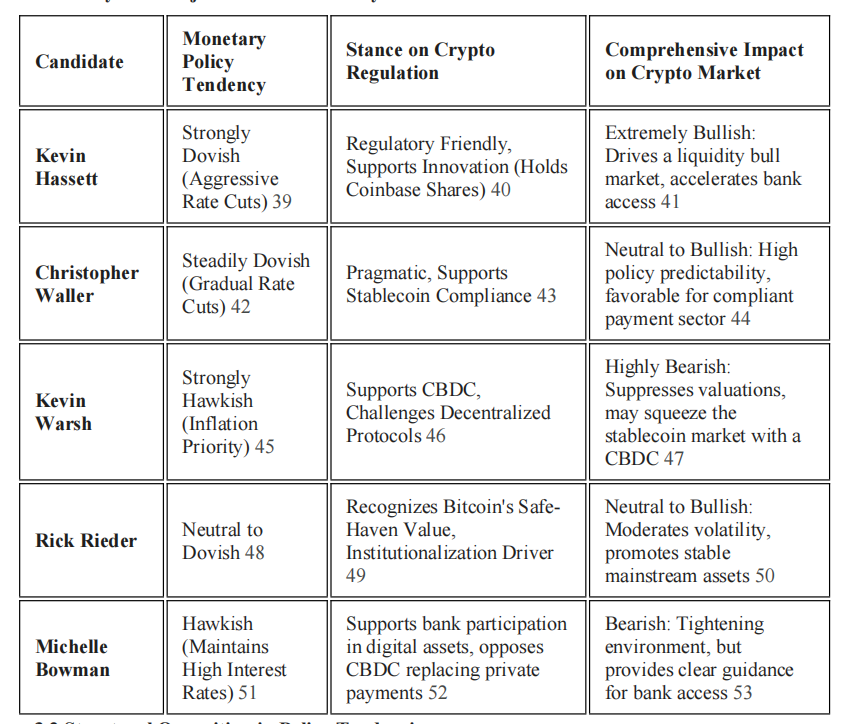
The Structural Impact of the Next Federal Reserve Chair on the Cryptocurrency Industry: Policy Shifts and Regulatory Reshaping
The change of the next Federal Reserve Chair is a decisive factor in reshaping the future macro environment of the cryptocurrency industry.
Trending news
MoreCrypto prices
More






