
Goldman Sachs Says One Emerging Risk Could Send Gold Skyrocketing by Nearly 40% Next Year: Report

Banking giant Goldman Sachs reportedly believes that one growing risk may send gold to an astronomical new all-time high in 2026.
Goldman Sachs analysts say in an investor’s note that gold may hit $5,000 per ounce next year if the Federal Reserve’s independence is damaged, reports Yahoo Finance.
Says Goldman Sachs analyst Samantha Dart,
“Should private investors diversify more heavily into gold, we see potential upside to gold prices to well above our $4,000 mid-2026 baseline. As a result, gold remains our highest-conviction long recommendation.”
Dart notes how a relatively small shift from one investment class into the precious metal would likely be enough to increase gold by nearly 40% its current value.
“For example, we estimate that if 1% of the privately owned US treasury market were to flow into gold, the gold price would rise to nearly $5,000/oz, assuming everything else constant.”
Goldman Sachs analysts warn that if the Fed’s independence is compromised, it will likely increase inflation, draw down the value of equities as well as long-dated bonds and weaken the US dollar.
The analysts recommend that, given the looming risk, investors should diversify their portfolios into commodities, “especially gold.”
Concerns over the Fed’s independence have increased as President Donald Trump has been publicly pressuring Fed chair Jerome Powell to cut rates and is now moving to oust Fed governor Lisa Cook and replace her with someone who would support rate cuts.
Gold is trading for around $3,600 at time of writing, up more than $900 since January 1st.
Generated Image: Midjourney
Disclaimer: The content of this article solely reflects the author's opinion and does not represent the platform in any capacity. This article is not intended to serve as a reference for making investment decisions.
You may also like
Economic Truth: AI Drives Growth Alone, Cryptocurrency Becomes a Political Asset
The article analyzes the current economic situation, pointing out that AI is the main driver of GDP growth, while other sectors such as the labor market and household finances are in decline. Market dynamics have become detached from fundamentals, with AI capital expenditure being key to avoiding a recession. The widening wealth gap and energy supply are becoming bottlenecks for AI development. In the future, AI and cryptocurrencies may become the focus of policy adjustments. Summary generated by Mars AI This summary was generated by the Mars AI model, and its accuracy and completeness are still in the process of iterative improvement.

AI unicorn Anthropic accelerates IPO push, taking on OpenAI head-to-head?
Anthropic is accelerating its expansion into the capital markets, initiating collaboration with top law firms, which is seen as an important signal toward going public. The company's valuation is approaching 300 billions USD, and investors are betting it could go public before OpenAI.
Did top universities also get burned? Harvard invested $500 million heavily in bitcoin right before the major plunge
Harvard University's endowment fund significantly increased its holdings in bitcoin ETFs to nearly 500 million USD in the previous quarter. However, in the current quarter, the price of bitcoin subsequently dropped by more than 20%, exposing the fund to significant timing risk.

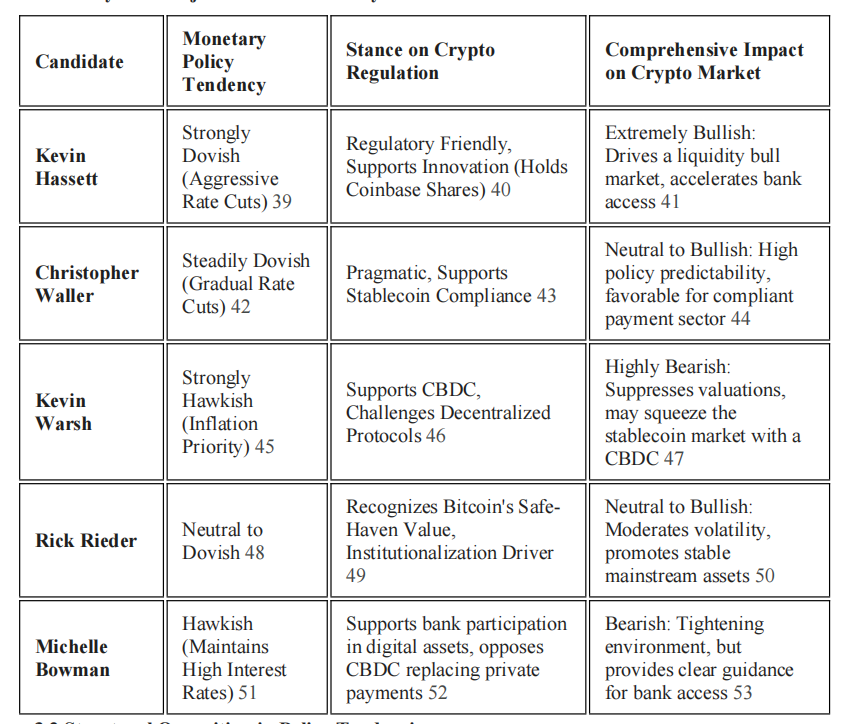
The Structural Impact of the Next Federal Reserve Chair on the Cryptocurrency Industry: Policy Shifts and Regulatory Reshaping
The change of the next Federal Reserve Chair is a decisive factor in reshaping the future macro environment of the cryptocurrency industry.
Trending news
MoreCrypto prices
More






