
Lawmakers and Saylor Push Ahead on Bitcoin Reserve Bill


- U.S. lawmakers hold talks with crypto leaders to discuss the proposed BITCOIN Act.
- The bill proposes a Strategic Bitcoin Reserve with one million BTC over five years.
- Funding methods include seized assets, tariffs, and gold revaluation to stay budget neutral.
U.S. lawmakers are meeting with 18 crypto executives in Washington, D.C., to push forward the BITCOIN Act. The closed-door roundtable, hosted on Capitol Hill by Senator Cynthia Lummis and Representative Nick Begich, includes Michael Saylor of Strategy, Tom Lee of BitMine, and Fred Thiel of Marathon Digital Holdings. The meeting aims to advance legislation that proposes the United States acquire one million Bitcoins over five years through budget-neutral methods.
Push for a National Bitcoin Reserve
In March, Senator Lummis reintroduced the BITCOIN Act, officially titled the “Boosting Innovation, Technology, and Competitiveness through Optimized Investment Nationwide Act.”
The legislation calls for a Strategic Bitcoin Reserve, with holdings modeled after the country’s gold stockpile. President Donald Trump’s earlier executive order prohibiting the sale of government-seized Bitcoin laid the foundation for the bill’s framework.
The proposal mandates acquisitions without adding taxpayer burden. According to the Digital Power Network’s Hailey Miller, the bill outlines budget-neutral approaches such as revaluing Treasury gold certificates, redirecting tariff revenues, and utilizing seized digital assets. These strategies are part of the discussion during today’s meeting, where crypto executives explored feasible funding mechanisms with lawmakers.
Industry Leaders and Policy Stakeholders
The roundtable includes a diverse mix of participants from the crypto and traditional finance sectors. In addition to Saylor, Lee, and Thiel, attendees include Riot’s Brian Morgenstern, Bitdeer’s Haris Basit, and CleanSpark’s Matt Schultz.
Representatives from venture capital firms Off the Chain Capital and Reserve One join, as well as executives from eToro and Western Alliance Bank. The event was organized by the Digital Power Network, an affiliate of The Digital Chamber, which has consistently lobbied for broader digital asset adoption in Washington.
Miller emphasized the importance of keeping the BITCOIN Act prominent amid other pending crypto-related legislation. She noted that lawmakers recently passed a stablecoin-focused bill, indicating the momentum around digital asset policymaking.
Related: Strive Launches $950M Plan to Boost Bitcoin Treasury
Next Steps and Political Challenges
At present, the BITCOIN Act is before the House Financial Services Committee and Senate Banking Committee, awaiting hearings. Miller stated that roundtable meetings included proposals for breaking through stagnant momentum and attracting bipartisan support.
The bill holds backing only from Republican lawmakers, and participants need to examine operational questions, including custody, security, and long-term holding requirements for the proposed reserve.
The legislation specifies that acquired Bitcoin must be stored for at least 20 years, with limited exceptions allowing use for national debt repayment. These provisions resemble existing frameworks governing the nation’s gold reserves. The initiative, if enacted, would be one of the largest sovereign entries into the Bitcoin market.
Lawmakers and executives suggest the need for structured planning, given the scale of the acquisitions and potential market impacts. The coming months are expected to determine whether congressional committees move forward with hearings or revisions of the bill.
Meanwhile, meeting with executives like Saylor, Tom Lee, and Fred Thiel shows the growing coordination between policy and industry leaders, and the discussion emphasizes coalition building, operational planning, and political negotiation as key steps in determining the future move of the legislation.
The post Lawmakers and Saylor Push Ahead on Bitcoin Reserve Bill appeared first on Cryptotale.
Disclaimer: The content of this article solely reflects the author's opinion and does not represent the platform in any capacity. This article is not intended to serve as a reference for making investment decisions.
You may also like
A decade-long tug-of-war ends: "Crypto Market Structure Bill" sprints to the Senate
At the Blockchain Association Policy Summit, U.S. Senators Gillibrand and Lummis stated that the "Crypto Market Structure Bill" is expected to have its draft released by the end of this week, with revisions and hearings scheduled for next week. The bill aims to establish clear boundaries for digital assets by adopting a classification-based regulatory framework, clearly distinguishing between digital commodities and digital securities, and providing a pathway for exemptions for mature blockchains to ensure that regulation does not stifle technological progress. The bill also requires digital commodity trading platforms to register with the CFTC and establishes a joint advisory committee to prevent regulatory gaps or overlapping oversight. Summary generated by Mars AI. The accuracy and completeness of this summary, generated by the Mars AI model, is still being iteratively updated.
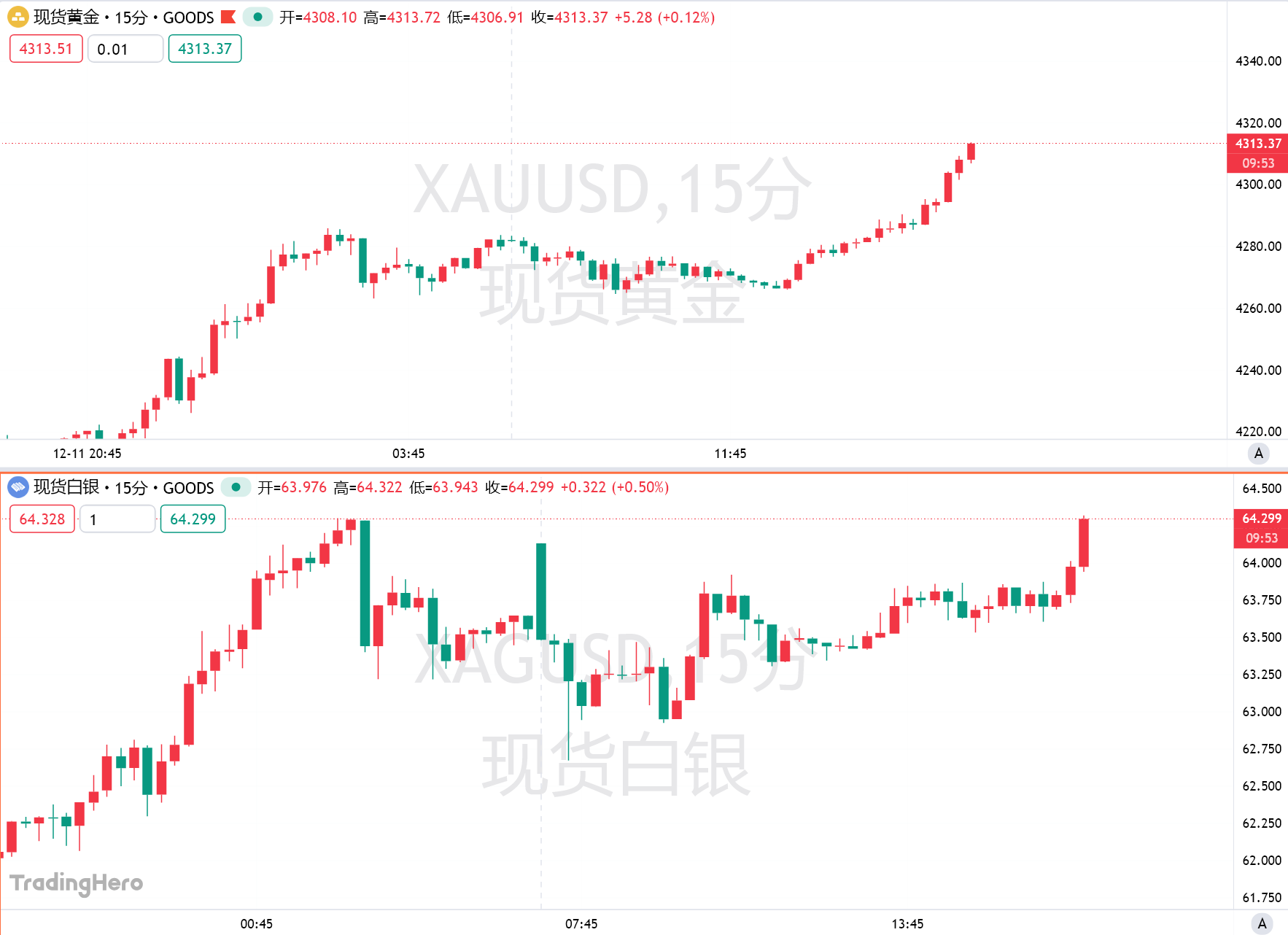
Gold surpasses the $4,310 mark—Is the "bull frenzy" returning?
Boosted by expectations of further easing from the Federal Reserve, gold has risen for four consecutive days. Technical indicators show strong bullish signals, but there remains one more hurdle before reaching a new all-time high.
Trend Research: Why Are We Still Bullish on ETH?
Against the backdrop of relatively accommodative expectations in both China and the US, which suppress asset downside volatility, and with extreme fear and capital sentiment not yet fully recovered, ETH remains in a favorable "buy zone."

Trending news
MoreCrypto prices
More





