
Abracadabra Mitigates Third Hack with Treasury Buyback
- Abracadabra endured its third hack in two years.
- $1.8 million loss mitigated via treasury buyback.
- Cumulative exploit losses exceed $21 million.
Abracadabra faced a $1.8 million hack due to a recurring smart contract flaw. The DAO promptly addressed the breach, absorbing the loss and maintaining MIM’s peg, but repeated incidents since 2024 highlight systemic risks in its protocol.
Points Cover In This Article:
ToggleMain Content
Lending platform Abracadabra Money, developers of the MIM stablecoin, faced their third major breach since 2024, resulting in a $1.8 million loss. The hack was neutralized by executing a buyback using the DAO’s treasury funds on October 9, 2025.
Repeated breaches at Abracadabra raise concerns about the structural security of DeFi protocols, where market reactions highlight vulnerability concerns. Community feedback and expert commentary emphasize the need for rigorous audits and stronger risk management in these platforms.
Response and Consequences
Abracadabra, a key participant in the DeFi space, experienced another exploit due to a known fork flaw, which led to losses in their Magic Internet Money (MIM) stablecoin. Despite this, MIM maintained its dollar peg, and the DeFi lending protocol absorbed the losses through the DAO treasury.
0xMerlin, a contributor to the Abracadabra DAO, announced that funds were bought back, emphasizing that user funds remained secure. “The issue has been identified and mitigated. The affected MIM tokens were bought back from the market using DAO treasury funds. No user funds were affected.” – 0xMerlin, Contributor, Abracadabra DAO source . No feedback has yet been provided by Abracadabra’s founders, highlighting the silent response from protocol leadership in moments of crisis.
Implications and Outlook
The hack’s immediate impact was seen in the attempts to launder $1.8 million via Ethereum through Tornado Cash. These mechanisms are often scrutinized for their role in enabling illicit flows, impacting larger conversations around DeFi regulations.
Losses added to the ongoing scrutiny of DeFi risk management practices, with Abracadabra’s history of breaches underscoring potential systemic risks within these ecosystems. Reactions include calls for extensive security audits and revisions in smart contract architecture.
Weilin William Li, Security Researcher at BlockSec Phalcon, noted, “Recurring exploits signal systemic risks in smart contract design. Rigorous audits and reforms are essential.” – source
Speculative scrutiny over the technology and security of DeFi solutions could prompt tighter regulations and calls for enhanced frameworks to prevent similar breaches. This might require financial institutions and regulatory bodies to reassess their roles within decentralized systems.
Disclaimer: The content of this article solely reflects the author's opinion and does not represent the platform in any capacity. This article is not intended to serve as a reference for making investment decisions.
You may also like
The ZK Transformation: Evaluating How Zero-Knowledge Technology Influences the Future Development of Blockchain
- ZK-rollups scale blockchain networks by bundling transactions, achieving 43,000 TPS and 30% lower gas fees, attracting institutions like Goldman Sachs and JPMorgan . - ZK technology resolves privacy-scalability paradox by enabling verifiable transactions without data exposure, adopted by EU regulators and enterprises like Nike and Sony . - Challenges persist: ZK-SNARKs require heavy computation, trusted setup risks exist, and privacy conflicts with AML regulations in some jurisdictions. - $725M+ VC inves
The Influence of Vitalik Buterin's Support for ZKsync on the Advancement of Scalable Blockchain Technologies: Evaluating the Prospects for Long-Term Investment in Pr
- Vitalik Buterin's 2025 endorsement of ZKsync accelerated its rise as a scalable Ethereum Layer-2 solution with 30,000 TPS and $3.3B TVL. - ZKsync's EVM compatibility and institutional partnerships contrast with StarkNet's quantum-resistant STARK proofs and Aztec's privacy-first architecture. - Analysts project ZK token prices at $0.40–$0.60 by 2025, while StarkNet faces adoption barriers and Aztec navigates regulatory challenges in privacy-focused DeFi. - The $7.59B ZKP market (2033 forecast) hinges on b
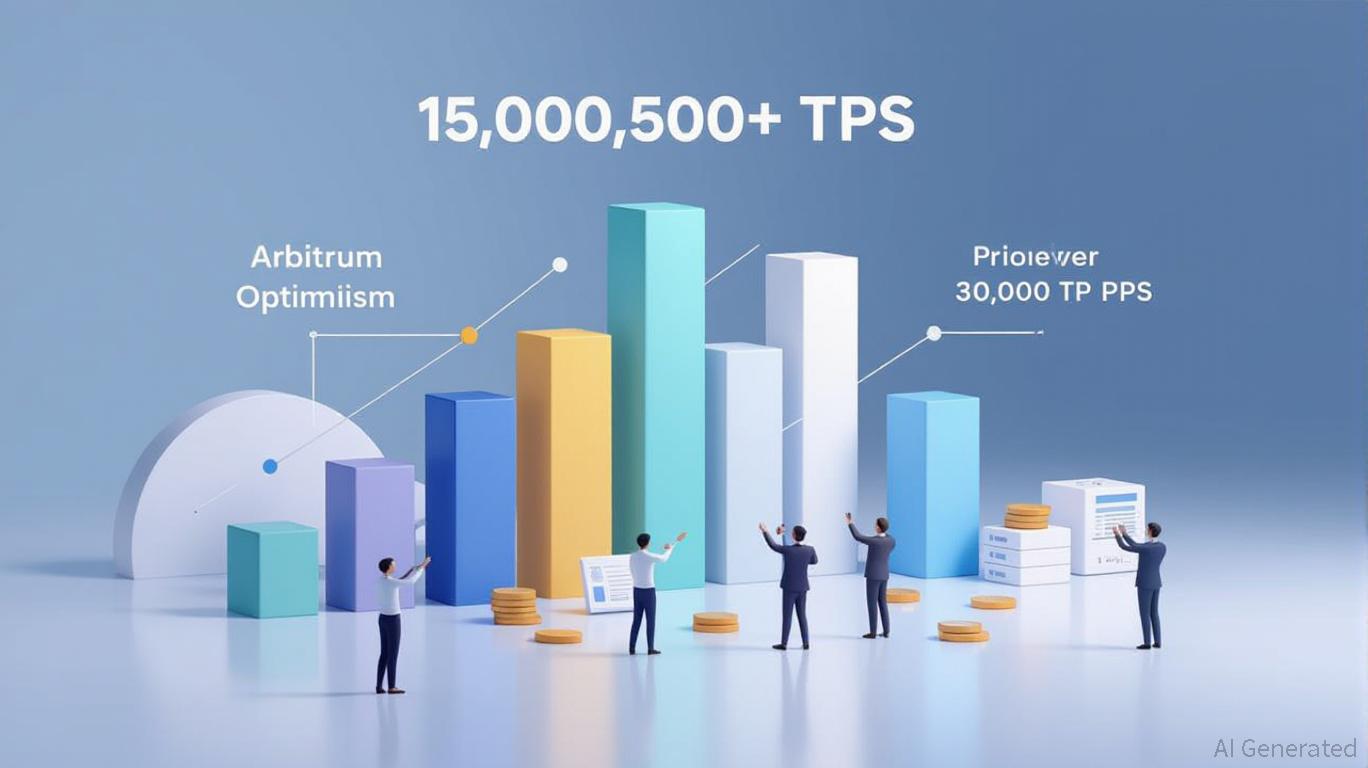
ZK Atlas Enhancement: Transforming Blockchain Scalability and Paving the Way for Institutional Integration
- ZKsync’s 2025 Atlas Upgrade achieves 15,000–43,000 TPS with $0.0001/transaction costs, boosting blockchain scalability for institutions. - Deutsche Bank , Sony , and Citi adopt ZKsync for tokenized assets and privacy-driven transactions, citing compliance and efficiency gains. - Market forecasts predict 60.7% CAGR for ZK Layer-2 solutions through 2031, with Fusaka upgrade targeting 30,000 TPS to solidify ZKsync’s leadership.
Hinge’s latest AI tool assists singles in skipping dull introductory conversations

Trending news
MoreCrypto prices
More





