
Erebor secures conditional OCC charter for crypto banking

Erebor has obtained preliminary conditional approval for a national bank charter, positioning itself to target the innovation economy and become a cornerstone for crypto and AI startups.
- Erebor has received preliminary conditional approval from the OCC to operate as a national bank.
- Backed by Peter Thiel, Palmer Luckey, and Joe Lonsdale, Erebor aims to serve crypto, AI, and defense startups.
- The OCC’s decision signals a policy shift toward allowing “safe and sound” digital asset activities within federally chartered banks.
According to a press release dated Oct. 15, the Office of the Comptroller of the Currency granted Erebor Bank preliminary conditional approval for a national bank charter.
In his statement , Comptroller Jonathan V. Gould said Erebor is the first de novo bank to receive such approval since he took office in July, framing the decision as a cornerstone of his commitment to a “dynamic and diverse federal banking system.”
Gould added that this move demonstrates the OCC will not erect “blanket barriers” to banks engaging in digital asset activities, provided they operate in a “safe and sound manner.”
“Permissible digital asset activities, like any other legally permissible banking activity, have a place in the federal banking system if conducted in a safe and sound manner. The OCC will continue to provide a path for innovative approaches to financial services to ensure a strong, diverse financial system that remains relevant over time,” Gould said.
A new kind of national bank takes shape
Founded in 2025 by tech entrepreneurs Palmer Luckey and Joe Lonsdale, Erebor draws backing from Founders Fund, Haun Ventures, and Peter Thiel. The firm’s stated mission, according to its OCC filing, is to serve the “United States innovation economy,” targeting firms in digital assets, artificial intelligence, defense, and advanced manufacturing.
Erebor said its main office will be located in Columbus, Ohio, with a secondary branch in New York City, placing it at the intersection of Middle America’s banking infrastructure and the country’s financial capital.
Notably, Erebor’s model breaks from tradition by declaring its intention to hold certain cryptocurrencies directly on its own balance sheet while also providing banking solutions to payment processors, venture-backed startups, and trading firms.
Upon final approval, Erebor will join the ranks of more than 1,000 institutions in the federal banking system. This network is a financial behemoth, holding more than $16 trillion in combined assets and managing about $85 trillion in custody and fiduciary control. Erebor’s entry into this club is symbolic, representing a potential shift in how this vast pool of institutional capital can interact with the digital asset space.
Disclaimer: The content of this article solely reflects the author's opinion and does not represent the platform in any capacity. This article is not intended to serve as a reference for making investment decisions.
You may also like
Economic Truth: AI Drives Growth Alone, Cryptocurrency Becomes a Political Asset
The article analyzes the current economic situation, pointing out that AI is the main driver of GDP growth, while other sectors such as the labor market and household finances are in decline. Market dynamics have become detached from fundamentals, with AI capital expenditure being key to avoiding a recession. The widening wealth gap and energy supply are becoming bottlenecks for AI development. In the future, AI and cryptocurrencies may become the focus of policy adjustments. Summary generated by Mars AI This summary was generated by the Mars AI model, and its accuracy and completeness are still in the process of iterative improvement.

AI unicorn Anthropic accelerates IPO push, taking on OpenAI head-to-head?
Anthropic is accelerating its expansion into the capital markets, initiating collaboration with top law firms, which is seen as an important signal toward going public. The company's valuation is approaching 300 billions USD, and investors are betting it could go public before OpenAI.
Did top universities also get burned? Harvard invested $500 million heavily in bitcoin right before the major plunge
Harvard University's endowment fund significantly increased its holdings in bitcoin ETFs to nearly 500 million USD in the previous quarter. However, in the current quarter, the price of bitcoin subsequently dropped by more than 20%, exposing the fund to significant timing risk.

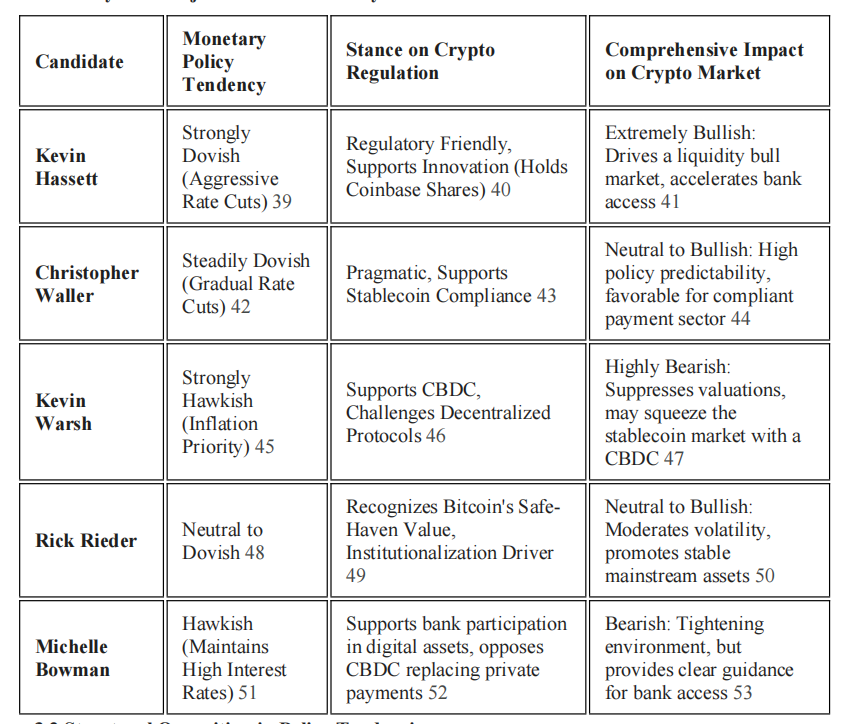
The Structural Impact of the Next Federal Reserve Chair on the Cryptocurrency Industry: Policy Shifts and Regulatory Reshaping
The change of the next Federal Reserve Chair is a decisive factor in reshaping the future macro environment of the cryptocurrency industry.
Trending news
MoreCrypto prices
More






