
Political Stalemate Triggers Initial NNSA Furloughs, Putting Nuclear Security at Risk
- NNSA furloughed 1,400 employees during its first-ever government shutdown, with 400 working unpaid to maintain nuclear security. - Energy Secretary Chris Wright warned 100,000 contractor jobs and national security are at risk as emergency funding dwindles. - Political gridlock over healthcare subsidies and nuclear modernization has stalled Congress, threatening operations at key facilities like Pantex and Y-12. - Congressional leaders condemned the furloughs, calling them unacceptable risks to strategic
The National Nuclear Security Administration (NNSA), which oversees the safety of America's nuclear arsenal, began placing 1,400 employees on furlough starting October 21 as the federal government shutdown reached its twentieth day[1]. Energy Secretary Chris Wright called it "a difficult day," pointing out that this was the first time in the NNSA's 25-year existence that such furloughs had occurred[2]. Around 400 staff members will remain on duty without pay to ensure essential safety and security measures continue[3].
These furloughs come after the Department of Energy (DoE) employed various budget maneuvers to keep vital operations running, including those of contractors at nuclear sites[1]. Wright stressed the seriousness of the situation, warning that up to 100,000 contractor workers at national laboratories and nuclear facilities could lose their jobs if emergency funds are depleted[1]. "Our national security, as well as the livelihoods of tens of thousands of essential employees and their families, are in jeopardy," he said[1].
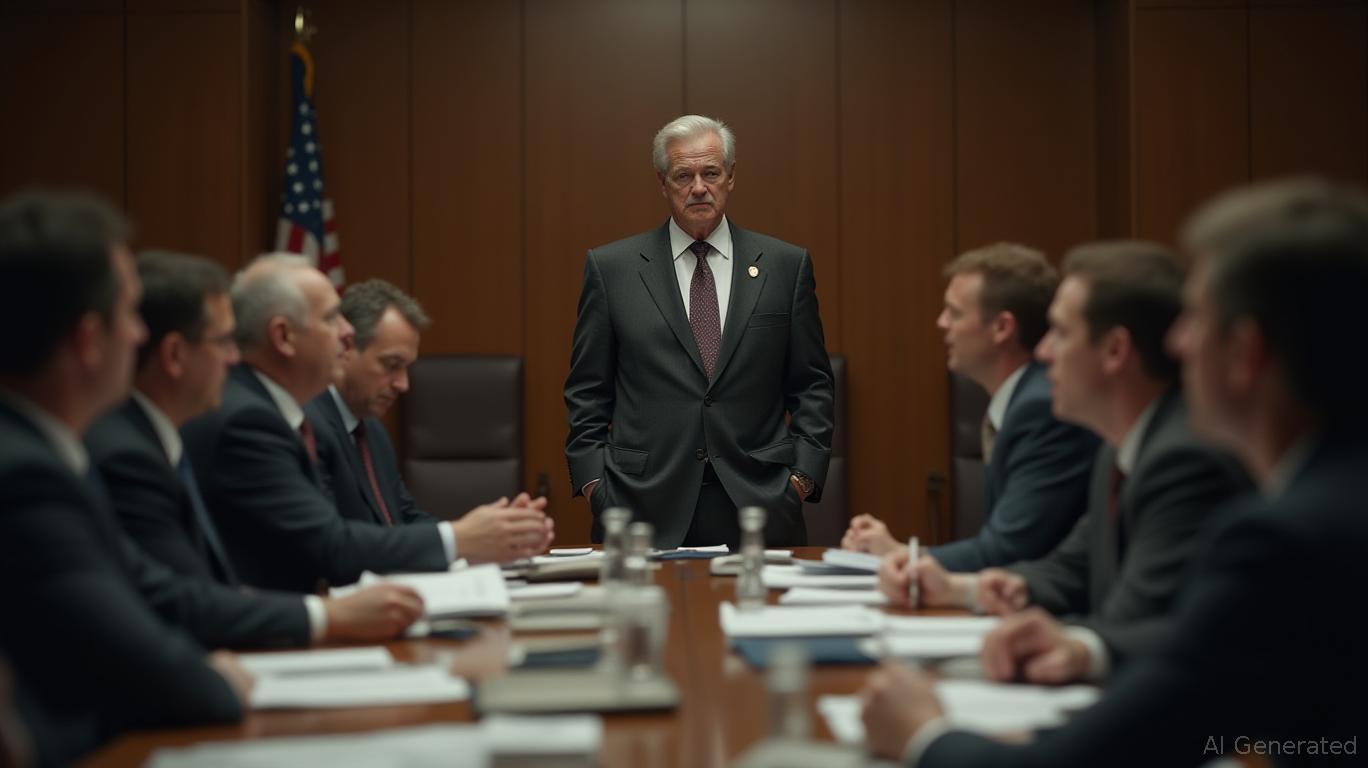
The shutdown has only added to the frustration among NNSA personnel, who earlier this year endured a controversial federal workforce reduction initiated by the Trump administration's Department of Government Efficiency[4]. One NNSA staffer, speaking anonymously, described the furlough as another setback for morale, saying, "The mental strain on federal workers right now is enormous"[1].
Political discord continues as congressional talks remain deadlocked. Representative Dina Titus (D-Nev.) criticized the furloughs, cautioning that they could hinder nuclear arsenal upgrades and "weaken our nuclear deterrence"[1]. Energy Secretary Wright attributed the shutdown to Senate Minority Leader Chuck Schumer (D-N.Y.), while Democrats countered that Republicans are blocking negotiations over health care subsidy funding[1].
The NNSA’s Office of Secure Transportation, responsible for moving nuclear materials, is funded through October 27[1]. Nevertheless, insiders warn that operations at major sites like Pantex in Texas and Y-12 in Tennessee may be forced to stop by the end of October if funding is not restored[5]. "Halting in the middle of dismantling or assembling a nuclear weapon demands strict safety procedures," one insider noted, highlighting the difficulties of restarting work after a shutdown[5].
Lawmakers have highlighted the seriousness of the crisis. Senator Roger Wicker (R-Miss.), who chairs the Senate Armed Services Committee, labeled the furloughs "intolerable" and called for the government to reopen immediately[3]. House Armed Services Committee Chair Mike Rogers (R-Ala.) stressed that those on furlough "oversee a crucial strategic resource" and "should be on the job and receiving their pay"[6].
This government shutdown is now the second-longest in U.S. history, surpassed only by the 35-day closure in 2018-2019[1]. With no end in sight, the NNSA’s capacity to fulfill its responsibilities is becoming increasingly uncertain. "The longer the shutdown drags on, the greater the harm to workforce stability and weapons modernization," a DoE representative commented[5].
Disclaimer: The content of this article solely reflects the author's opinion and does not represent the platform in any capacity. This article is not intended to serve as a reference for making investment decisions.
You may also like
Tether (USDT) Price Fluctuations and Market Response to PENGU Sell Indicators: Assessing Potential Risks and Opportunities within a Divided Stablecoin Landscape
- Tether (USDT) faced 2025 depegging to $0.90, exposing reserve management flaws and triggering S&P's "weak" stability rating. - Algorithmic PENGU USDT's 28.5% price drop and $66.6M team outflows highlighted systemic risks in opaque collateral structures. - Regulatory shifts (GENIUS Act, MiCA) accelerated migration to compliant stablecoins like USDC , now dominating 30% of on-chain transaction volume. - Market fragmentation reveals dual dynamics: algorithmic risks vs. institutional adoption opportunities i

DASH Increases by 2.44% as Significant Insider Selling and Purchase Indicators Emerge
- DASH rose 2.44% in 24 hours to $50.1, showing a 31.63% annual gain despite a 11.79% seven-day drop. - High-ranking insiders sold millions via 10b5-1 plans, including $9. 3M by Stanley Tang and $6.19M by Andy Fang. - Alfred Lin’s $100.2M purchase signaled confidence, contrasting with other sales and suggesting undervaluation. - Market reacted positively short-term, but analysts expect macroeconomic and business fundamentals to support DASH ahead.

BCH Rises 36.52% Over the Past Year as Network Enhancements and Improved Mining Efficiency Drive Growth
- Bitcoin Cash (BCH) rose 36.52% in a year due to network upgrades and improved mining efficiency. - Growing merchant adoption boosts real-world use cases, enhancing BCH’s practical appeal. - Analysts predict continued momentum from stable updates and adoption efforts amid crypto volatility. - Recent stability, with no major forks, strengthens investor confidence in BCH’s scalability.

Why is COAI experiencing a downturn towards the end of 2025
- COAI token and index collapsed in late 2025 due to deteriorating market fundamentals, governance failures, and regulatory uncertainty. - C3 AI's Q3 2025 revenue growth (26% YoY) was overshadowed by Q1 2026 revenue decline (20% YoY) and leadership instability, eroding investor trust. - Token centralization (87.9% in ten wallets) and lack of transparent governance exacerbated liquidity crises and manipulation risks. - The CLARITY Act's ambiguity and jurisdictional loopholes deepened uncertainty, deterring

Trending news
MoreCrypto prices
More






