
VyFinance Introduces cstAPEX to Bridge Cardano and EVM DeFi Ecosystems

VyFinance, one of Cardano’s most established DeFi projects, today unveiled cstAPEX, a staked version of the APEX token built natively on Cardano that mirrors the potential 10% APY available when staking APEX on Prime.
The new token is designed to bring yield-bearing Cardano assets into a more composable, cross-chain future. VyFinance says cstAPEX was developed and deployed entirely on Cardano’s UTxO-based architecture, but that the work is only the first step: the team plans to extend cstAPEX to EVM chains, linking Cardano-native yield into the broader multi-chain DeFi ecosystem through Apex Fusion.
“This partnership with VyFinance brings Cardano’s DeFi innovation into the heart of the interoperable Web3 world,” said Christopher Greenwood, COO of the Apex Fusion Foundation. “Together, we’re creating a pathway for Cardano-native liquidity to flow across global DeFi, from UTxO-based execution to the broader EVM landscape.”
For users on Cardano, cstAPEX acts like a liquid, yield-bearing representation of staked APEX. It mirrors the staking mechanics offered on Prime and is engineered to integrate with EVM-based applications, acting as a composable instrument in lending, pools, and other DeFi rails. This effectively makes Cardano liquidity easier to move and use across chains, while preserving the native yield characteristics users expect.
“We see enormous potential in making Cardano DeFi interoperable through Apex Fusion’s architecture,” said Steven, CEO of VyFinance. “Cardano’s DeFi protocols have built strong fundamentals — stability, security, and yield. cstAPEX takes those strengths to the next level. It’s about turbocharging Cardano’s DeFi and preparing it for global, multi-chain participation.”
Real-world DeFi Integration
The launch builds off a solid on-chain foundation: the Cardano-native APEX token, which powers Apex Fusion’s internal economy, already has nearly $1 million in liquidity on VyFinance and currently sits in pools yielding around 35% APR. cstAPEX extends that base by offering a stake-like token that preserves up to 10% APY, while being built to plug into Apex Fusion’s liquid staking and cross-chain roadmap.
Apex Fusion describes itself as a tri-chain ecosystem that links UTxO and EVM networks via three layers, PRIME, VECTOR and NEXUS, intended to combine Cardano-grade execution with high-performance EVM compatibility. Partners named by the project include Tenderly, LayerZero and Well-Typed, and the broader aim is enterprise-scale interoperability that keeps Cardano at the center of new multi-chain liquidity flows.
Analysts and builders have long pointed to Cardano’s UTxO model for its precision and security, but also noted that those strengths have sometimes limited seamless access to EVM-driven liquidity. By creating a token like cstAPEX, VyFinance and Apex Fusion are attempting to close that gap: preserve Cardano’s yield mechanics while offering a bridge-ready, composable asset that can participate in the larger DeFi economy.
VyFinance markets itself as a full-suite Cardano DeFi protocol, operating a decentralized exchange, redistributive BAR mechanism, governance features, lottery and token/NFT vaults. The cstAPEX launch is presented as both a product upgrade and a strategic move to position VyFinance and Cardano’s DeFi stack more broadly for the next phase of cross-chain expansion.
If the roadmap holds, cstAPEX will soon act as a conduit: Cardano users can capture native staking-like returns on-chain today, while developers and liquidity providers will have a pathway to leverage that yield across EVM apps tomorrow. For an ecosystem long focused on security and formal assurance, cstAPEX represents a concrete step toward wider composability and real-world DeFi integration.
Disclaimer: The content of this article solely reflects the author's opinion and does not represent the platform in any capacity. This article is not intended to serve as a reference for making investment decisions.
You may also like
Five charts to help you understand: Where does the market go after each policy storm?
After this regulatory crackdown, is it a harbinger of an impending downturn, or the beginning of a new cycle where all negative news has been fully priced in? Let’s examine the trajectory after the storm through five key policy milestones.

Mars Morning News | The crypto market rebounds across the board, Bitcoin rises above $94,500; The "CLARITY Act" draft is expected to be released this week
The crypto market has fully rebounded, with bitcoin surpassing $94,500 and US crypto-related stocks rising across the board. The US Congress is advancing the CLARITY Act to regulate cryptocurrencies. The SEC chairman stated that many ICOs are not securities transactions. Whales are holding a large number of profitable ETH long positions. Summary generated by Mars AI. The accuracy and completeness of the content generated by the Mars AI model is still being iteratively updated.

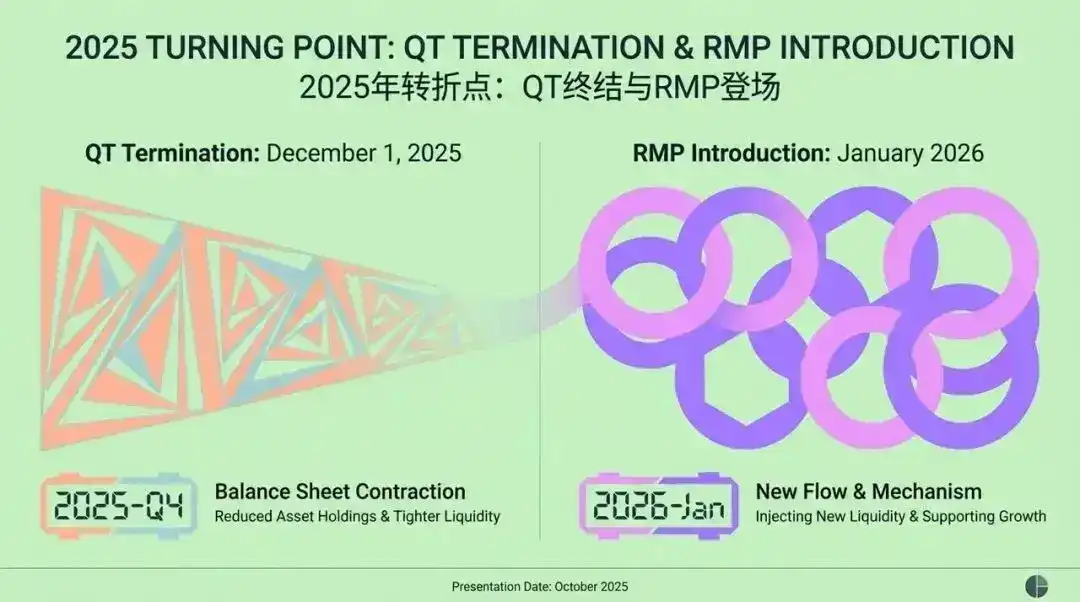
Federal Reserve’s Major Shift: From QT to RMP, How Will the Market Transform by 2026?
The article discusses the background, mechanism, and impact on financial markets of the Federal Reserve's introduction of the Reserve Management Purchases (RMP) strategy after ending Quantitative Tightening (QT) in 2025. RMP is regarded as a technical operation aimed at maintaining liquidity in the financial system, but the market interprets it as a covert easing policy. The article analyzes RMP's potential effects on risk assets, the regulatory framework, and fiscal policy, and provides strategic recommendations for institutional investors. Summary generated by Mars AI This summary was generated by the Mars AI model, and the accuracy and completeness of its content are still in the process of iterative improvement.
Rate Hike in Japan: Will Bitcoin Resist Better Than Expected?

Trending news
MoreCrypto prices
More





