
Hyperliquid News Today: With PING Soaring, Crypto Analysts Caution Against Hype Outpacing Real Value
- A 0xe688 address earned 759% profit ($675,000) in two days via PING token trades, highlighting extreme crypto volatility. - PING's surge drove x402 protocol's 8,218% 7-day trading volume spike, with Coinbase-backed infrastructure attracting 31,000 new buyers. - Analysts warn PING lacks utility as speculative hype mirrors 2023 BTC Ritual Mania, with CoinCodex predicting 24.8% price drop by 2025. - Institutional adoption of x402 by Questflow and Kite AI contrasts with liquidity/regulatory risks, as PING's
According to monitoring by a
Much of PING’s momentum is linked to the x402 protocol, a blockchain advancement introduced by
Interest in PING has fueled intense speculation, with forecasts and volatility assessments emerging quickly. A
The rapid expansion of the x402 protocol has also attracted institutional players, with projects such as Questflow and Kite AI utilizing its framework. Supported by Coinbase, PayPal Ventures, and Animoca Brands, the protocol seeks to incorporate AI-powered transactions and broaden DeFi use cases. However, obstacles persist. Dapp.expert points out that while PING’s rise demonstrates strong community involvement, its sustainability hinges on resolving liquidity and regulatory challenges. “Speculation may yield quick profits, but lasting growth depends on solid practical applications,” an analyst cautioned, advising investors to remain vigilant.
With PING’s market cap now exceeding $63 million, its trajectory reflects larger trends in digital asset trading. The achievements of the x402 protocol highlight the impact of community-led innovation, while PING’s volatility serves as a reminder of the dangers in speculative markets. Thanks to Coinbase’s “Blue Carpet” listing approach and Binance’s backing, alternative tokens like PING are poised to gain wider acceptance. Nevertheless, investors should temper excitement with caution, as rapid gains often carry the risk of equally swift downturns.
Disclaimer: The content of this article solely reflects the author's opinion and does not represent the platform in any capacity. This article is not intended to serve as a reference for making investment decisions.
You may also like
Fed Cuts Rates, Announces $40B T-Bill Program, Crypto Dips
U.S. Marine Policy and Blue Economy Prospects: Key Infrastructure and Geostrategic Roles in Oceanic Commerce
- U.S. oceans policy balances geopolitical strategy, deep-sea tech investments, and UNCLOS ratification challenges to secure maritime influence. - Executive actions accelerate seabed mineral extraction while facing environmental criticism and legal risks from bypassing international seabed authority rules. - Offshore energy partnerships with Australia, Japan, and Saudi Arabia aim to diversify supply chains but face geopolitical tensions in chokepoints like the Red Sea. - Maritime security contracts expand

Aster DEX's On-Chain Momentum: Signaling the Future of DeFi
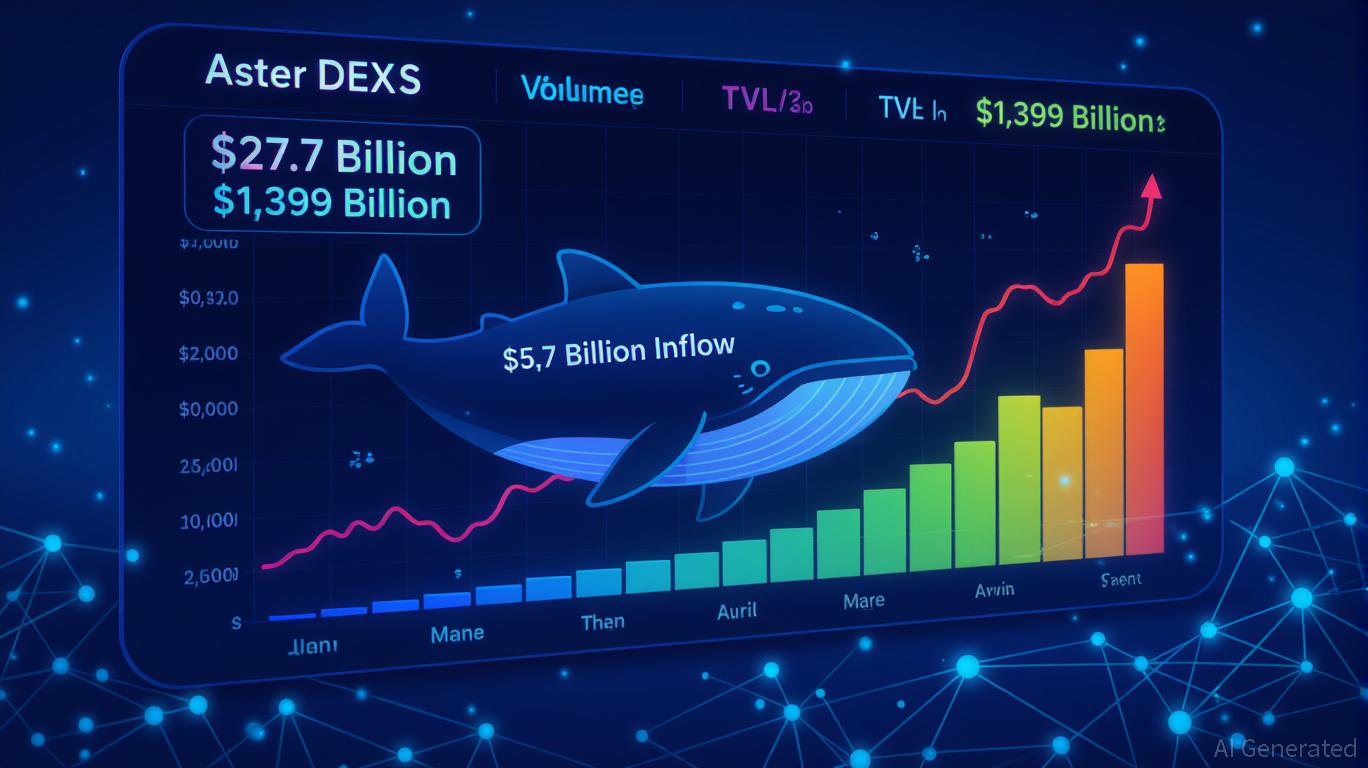
- Aster DEX reported $27.7B daily volume and $1.399B TVL in Q3 2025, outpacing DeFi benchmarks with 2M users. - Institutional whale activity, including CZ's $2M ASTER purchase, drove $5.7B inflows and 800% volume spikes. - Hybrid AMM-CEX model and ZKP privacy tech enabled 40.2% TVL growth, 77% private transactions, and 19.3% perpetual DEX market share. - ASTER's margin trading upgrades and Stage 4 airdrops fueled 30% price surges, while Aster Chain's 2026 launch will integrate privacy-preserving ZKPs. - On
Astar (ASTR) Price Rally: Protocol Enhancements and Ecosystem Growth Drive Long-Term Value
- Astar (ASTR) surged 150% due to protocol upgrades and ecosystem expansion, positioning it as a sustainable value creation case study in blockchain. - Tokenomics 3.0 (fixed 10.5B supply) and Burndrop mechanism created deflationary incentives, supported by Galaxy Digital's $3. 3M OTC investment and Astar's $29.15M buyback. - Cross-chain interoperability with Polkadot/Plaza and Sony's Soneium, plus partnerships with Toyota and Japan Airlines, expanded real-world utility in logistics, identity, and loyalty p
Trending news
MoreCrypto prices
More





