
Fed to cut interest rates amid slowing US inflation

- US inflation falls to 3,0% in September
- Market bets on two interest rate cuts by December
- Trump-Xi Meeting Could Impact Bitcoin
The Federal Reserve is expected to cut interest rates by 25 basis points next week, after new data confirms a slowdown in US inflation. The Consumer Price Index (CPI) rose 0,3% in September, down from the 0,4% increase recorded in August. Year-over-year, the index stood at 3,0%, while core inflation—which excludes food and energy—also reached 3,0%, the lowest level since early 2024.
The 4,1% increase in gasoline prices was the main driver of the month's price increase, partially offset by more modest increases in food and housing. Other sectors, such as used cars, communications, and auto insurance, declined, reinforcing the perception that inflationary pressures are gradually dissipating.
With prices cooling, market expectations for rate cuts have grown significantly. Data from the CME FedWatch tool indicate a 98,6% probability that the Fed will cut rates as early as October, while the chance of another cut in December reaches 94,5%. Market traders are also pricing in a possible third cut in January 2026, reflecting the institution's attempt to balance economic weakness with controlling inflation.
Even amid the optimism, Fed Chairman Jerome Powell remains cautious. He emphasized that "the path of rate cuts will depend on sustained progress in inflation and working conditions." Hiring, in turn, has been slowing, raising concerns that excessive cuts could impact wage dynamics and employment.
Meanwhile, the market is closely monitoring the measures taken by current US President Donald Trump. New tariffs on Chinese imports, scheduled to take effect on November 1st, pose an additional risk to inflation control. However, analysts are also observing the meeting between Trump and Chinese President Xi Jinping, scheduled for the coming days, as a potential turning point in trade tensions between the world's two largest economies.
🚨 CONFIRMED:
🇺🇸🇨🇳 PRESIDENT TRUMP TO MEET WITH XI JINPING NEXT THURSDAY
PRAY FOR THE DEAL!! pic.twitter.com/6aJ7aKF3la
— ᴛʀᴀᴄᴇʀ (@DeFiTracer) October 24, 2025
What this means for Bitcoin and the cryptocurrency market
Bitcoin has been facing weeks of market pressure, reflecting the direct effects of the US-China trade war. Over the past two weeks, the price of the leading cryptocurrency has fallen to nearly $102 amid global risk aversion and uncertainty over economic policies between the two powers.
Since then, the asset has struggled to stay above $110, currently trading at $111.741, up about 4% this week. Experts believe the meeting between Trump and Xi could be a decisive factor in a broader recovery in cryptocurrencies if the dialogue results in a reduction in trade tensions.
Furthermore, the expectation of a new interest rate cut by the Fed next week is likely to boost risk appetite in the markets, favoring both Bitcoin and the rest of the cryptocurrency sector. A more lenient stance from the monetary authority, combined with a possible diplomatic breakthrough between Washington and Beijing, could create the ideal environment for a consistent recovery in the short term.
Disclaimer: The content of this article solely reflects the author's opinion and does not represent the platform in any capacity. This article is not intended to serve as a reference for making investment decisions.
You may also like
Mars Morning News | The crypto market rebounds across the board, Bitcoin rises above $94,500; The "CLARITY Act" draft is expected to be released this week
The crypto market has fully rebounded, with bitcoin surpassing $94,500 and US crypto-related stocks rising across the board. The US Congress is advancing the CLARITY Act to regulate cryptocurrencies. The SEC chairman stated that many ICOs are not securities transactions. Whales are holding a large number of profitable ETH long positions. Summary generated by Mars AI. The accuracy and completeness of the content generated by the Mars AI model is still being iteratively updated.

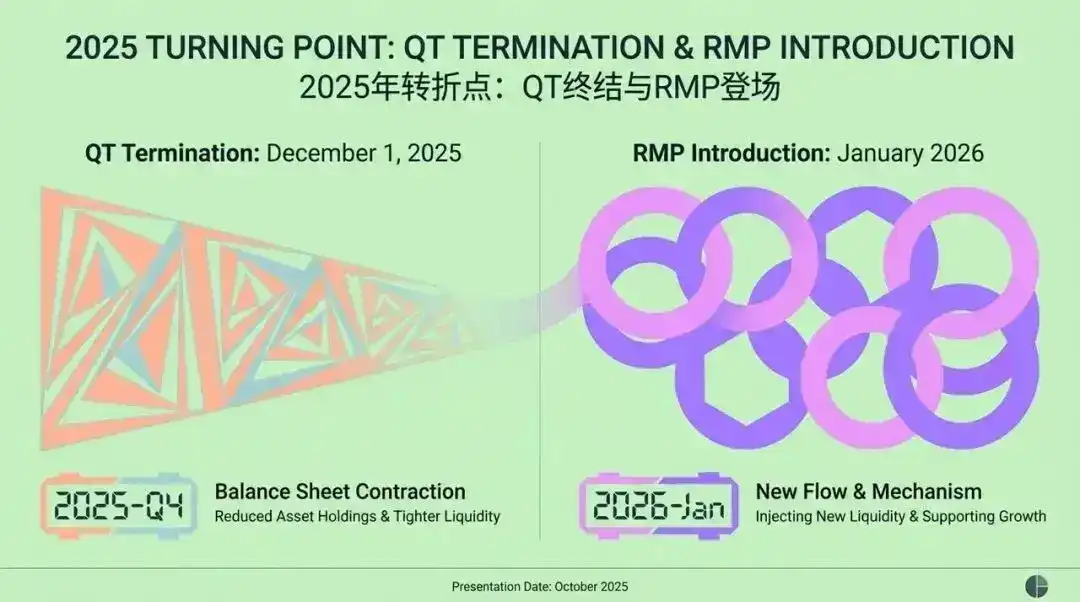
Federal Reserve’s Major Shift: From QT to RMP, How Will the Market Transform by 2026?
The article discusses the background, mechanism, and impact on financial markets of the Federal Reserve's introduction of the Reserve Management Purchases (RMP) strategy after ending Quantitative Tightening (QT) in 2025. RMP is regarded as a technical operation aimed at maintaining liquidity in the financial system, but the market interprets it as a covert easing policy. The article analyzes RMP's potential effects on risk assets, the regulatory framework, and fiscal policy, and provides strategic recommendations for institutional investors. Summary generated by Mars AI This summary was generated by the Mars AI model, and the accuracy and completeness of its content are still in the process of iterative improvement.
Rate Hike in Japan: Will Bitcoin Resist Better Than Expected?

Crucial Decision: Trump’s Final Interviews for Federal Reserve Chair Could Reshape Markets
Trending news
MoreCrypto prices
More





