
Hong Kong's e-HKD: Building a Digital Gateway Connecting China with International Markets
- Hong Kong's HKMA plans to finalize e-HKD retail rules by mid-2026, requiring regulatory approval for all HKD-pegged stablecoins to combat financial risks. - The e-HKD pilot advanced tokenized infrastructure through 11 trials, but current demand remains focused on wholesale use cases like cross-border payments. - Regulatory efforts align with China's 15th Five-Year Plan, emphasizing Hong Kong's role as a "super connector" to integrate with GBA and Northern Metropolis projects. - A $1.7B Seres Group IPO an
Hong Kong is preparing to introduce stricter regulations for digital assets as the
The HKMA’s second phase report on the e-HKD pilot detailed that 11 projects—covering areas like tokenized asset settlement, programmable payments, and offline transactions—have further developed the city’s digital currency ecosystem. Despite these advancements, the HKMA observed that current interest in e-HKD is mainly in wholesale scenarios, such as cross-border payments and trade settlements. To encourage wider use, the authority intends to introduce unified tokenization standards and adjust the retail rollout schedule in response to international developments and market needs. The report also made clear that any stablecoin pegged to the Hong Kong dollar, regardless of where it is issued, must obtain regulatory approval, reflecting a proactive approach to address risks such as money laundering and financial instability.

This regulatory direction is consistent with Hong Kong’s overall plan to participate in national development strategies outlined in the 15th Five-Year Plan. Financial Secretary Paul Chan Mo-po highlighted in a blog post that Hong Kong will use its “super connector” advantage to strengthen ties with the Beijing-Tianjin-Hebei region and the Guangdong-Hong Kong-Macao Greater Bay Area (GBA). The Northern Metropolis, a major development initiative, is positioned as a hub for innovation and investment, with Chan emphasizing that Hong Kong’s distinctive status under “one country, two systems” will promote industrial and technological partnerships.
At the same time, Hong Kong’s financial industry is experiencing notable developments, including
The HKMA’s licensing strategy for stablecoins aims to strike a balance between encouraging innovation and ensuring financial stability. While the e-HKD’s retail introduction is still pending, the authority’s emphasis on wholesale and cross-border applications is in line with Beijing’s efforts to modernize digital infrastructure. As Hong Kong moves into the 15th Five-Year Plan period, its clear regulatory stance on digital assets may attract international fintech firms looking for a regulated environment to trial new technologies.
Disclaimer: The content of this article solely reflects the author's opinion and does not represent the platform in any capacity. This article is not intended to serve as a reference for making investment decisions.
You may also like
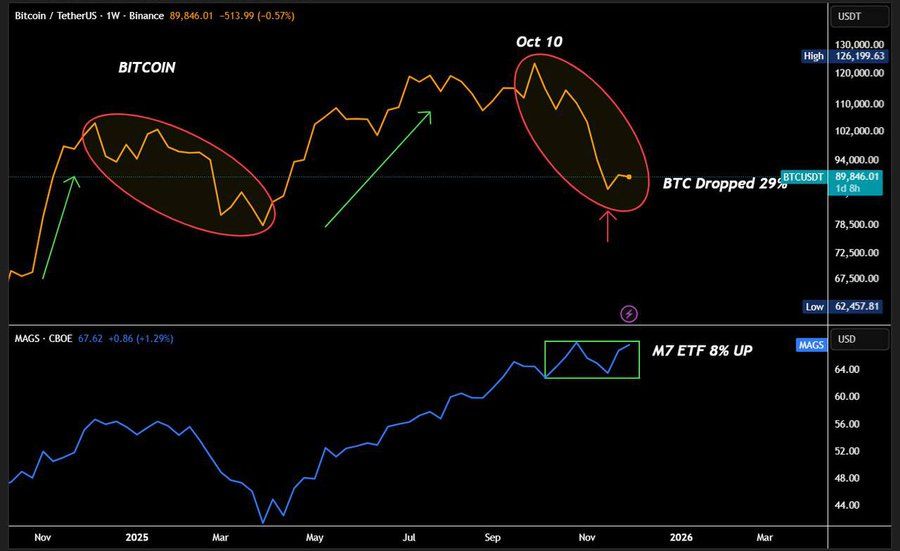
What Caused Bitcoin Price To Crash Below $90K Today?
Exclusive: Expert Says Double-Digit XRP Price ‘Unrealistic’ as ETFs Hit $1 Billion
The Rise of Trust Wallet Token (TWT): An Analysis Following Exchange Integration
- TWT's 2025 surge stems from strategic innovations, institutional adoption, and deflationary tokenomics. - Expanded utility via FlexGas, prediction markets, and RWA integrations boosts demand while burning 10%+ supply. - Institutional confidence grows through Ondo Finance partnership and Binance co-founder CZ's endorsement, driving 50% price jump. - Analysts project $5.13 by 2025 and $15 by 2030 if RWA and cross-chain adoption continue accelerating.
New Prospects in Security Technology and Health Advancement Fields
- Post-pandemic convergence of security systems and health promotion drives innovation in hybrid infrastructure and wellness solutions. - Institutions like Farmingdale State College align curricula with AI, cybersecurity, and health-tech to meet evolving workforce demands. - AI-powered health-tech startups raised $10.7B in 2025, reflecting 24.4% growth as telehealth and data security become critical. - EdTech and health-tech markets are projected to grow rapidly, with EdTech reaching $348B by 2030 and heal

Trending news
MoreCrypto prices
More





