
Fed Faces December Crossroads: Balancing Employment and Inflation Amid Uncertain Data
- U.S. Fed's December rate cut probability dropped below 50% as inflation, labor data delays, and policy uncertainty complicate decisions. - Powell emphasized FOMC divisions between easing rates for jobs vs. maintaining rates to control inflation, exacerbated by government shutdown delays. - Goldman Sachs forecasts three 2025-2026 cuts to 3-3.25%, contrasting with market's 67% December cut chance and Powell's cautious stance. - December meeting could shape 2026 markets: a pause risks labor strains, while a
Prediction markets and financial indicators now show that the likelihood of the U.S. Federal Reserve lowering interest rates at the December FOMC meeting has dipped below 50%. This drop comes as the central bank faces ongoing uncertainty regarding inflation, labor market trends, and delayed economic reports, all of which complicate its policy decisions. As of November 11,
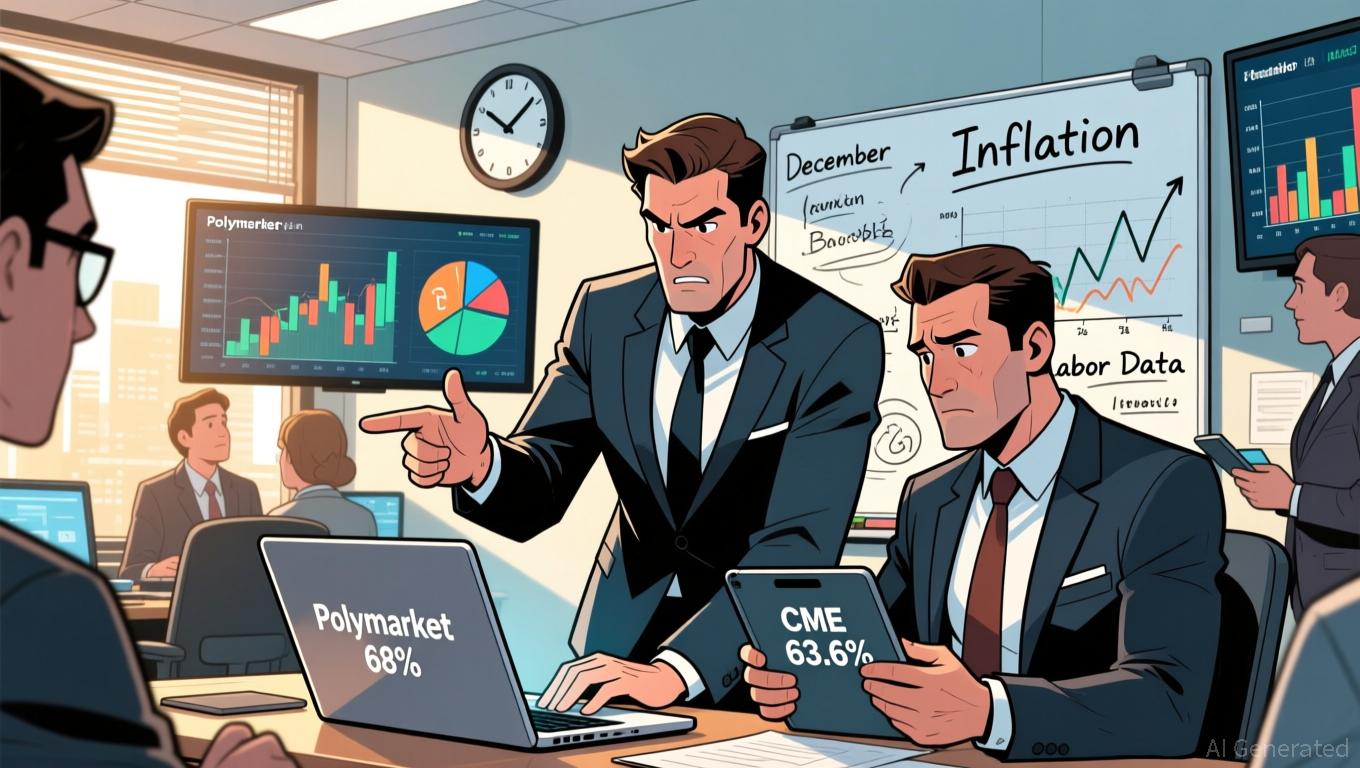
These shifting market expectations highlight broader concerns about the economy.
Investor opinions are also divided. The Seeking Alpha Sentiment Survey found that subscribers were evenly split on whether there would be further rate cuts in 2025, which contrasts with Powell’s more cautious stance.
The outcome of the December meeting will be crucial for setting the tone for markets in 2026. Should the Fed choose to hold rates steady, it may signal a longer period of tight policy, reinforcing its commitment to controlling inflation but potentially putting pressure on the labor market. On the other hand, a 25-basis-point cut would indicate a shift toward supporting economic growth and could trigger a broader market rally. With the government shutdown close to ending, the economic data released in the coming weeks will play a key role in shaping the Fed’s next moves.
Disclaimer: The content of this article solely reflects the author's opinion and does not represent the platform in any capacity. This article is not intended to serve as a reference for making investment decisions.
You may also like
Risks and Insights from the COAI Token Fraud: A 2025 Handbook for Cryptocurrency Due Diligence and Safeguarding Investors
- COAI Token's 2025 collapse caused $116.8M losses, exposing systemic risks in algorithmic stablecoins and centralized governance. - Project's 96% supply concentration in ten wallets, opaque team identities, and weak tokenomics flagged regulatory red flags. - Global regulators froze $150M in assets but exposed jurisdictional gaps, while EU and US introduced crypto frameworks with conflicting standards. - Investors now prioritize AI audits, multi-sig wallets, and KYC compliance to mitigate risks in speculat

COAI's Unexpected Downturn in Late 2025: A Warning Story on AI Stock Valuations and Governance Risks
- COAI Index's 88% YTD drop highlights systemic risks in speculative AI equities and crypto assets amid strong AI infrastructure growth. - C3 AI's Q3 revenue growth contrasts with non-GAAP losses, underscoring AI sector's profitability challenges vs. disciplined tech peers like Benchmark Electronics. - CLARITY Act's regulatory ambiguity and EU AI Act compliance costs deter institutional investment, exacerbating COAI's governance and liquidity issues. - COAI's "fake decentralization" and C3 AI's leadership

Vanguard opens platform to Bitcoin ETFs and ends two-year blockade

3 Strong Altcoin Picks Showing Clear Growth Momentum — GIGA, ALGO, and NOT

Trending news
MoreCrypto prices
More





