
Harvard triples down on bitcoin bet with spot ETF buys from world's largest academic endowment

Quick Take Harvard reported holding nearly seven million shares of BlackRock’s IBIT spot bitcoin ETF as of Sept. 30, a 257% increase over its previously reported holdings. Harvard’s holdings were valued at $442.8 million as of that date, but have since fallen to $364.4 million with IBIT’s decline in price. Still, IBIT is Harvard’s largest declared U.S. holding, making up about 0.6% of the world’s largest academic endowment. Emory University and an Abu Dhabi sovereign wealth fund also recently added to thei

Harvard University has nearly tripled the size of its spot bitcoin ETF holdings, according to a disclosure filed on Friday detailing the U.S. holdings of the world's largest academic endowment.
Harvard reported owning 6,813,612 shares of IBIT, BlackRock's industry-leading spot bitcoin ETF, in Q3, a 257% increase from the 1,906,000 shares the university previously reported holding as of June. At the time, its IBIT holdings were its fifth-largest declared investment; now, the IBIT position is the largest of any declared holdings, beating out Microsoft, Amazon, and the SPDR Gold Trust, and was the largest increase in holdings over the quarter.
Its shares were worth $442.8 million as of that date, but have since fallen to about $364.4 million with IBIT's decline in price. It is unclear from the filings how much Harvard spent to acquire the shares between the two reported dates. Harvard's declared holdings make up only a small percentage of the university's endowment of about $57 billion.
"It's super rare/difficult to get an endowment to bite on an ETF- [especially] a Harvard or Yale, it's as good a validation as an ETF can get," wrote Bloomberg ETF analyst Eric Balchunas on X . "That said, half a billion is a mere 1% of total endowment. Big enough to rank 16th among IBIT holders tho."
IBIT is currently the market's leading spot bitcoin ETF by assets under management (AUM), though the fund has seen about $532.4 million worth of net outflows over the past week, as the price of BTC plunged below $100,000, per SoSoValue data . The world's largest cryptocurrency currently trades at about $96,180, according to The Block's Bitcoin Price page .
Emory, Abu Dhabi also add to bitcoin ETF holdings
Emory University, a private research institution located in Atlanta, also added to its bitcoin ETF holdings according to a recent filing . The university, as of Sept. 30, holds over one million shares of Grayscale's Bitcoin Mini Trust ETF (BTC), which currently has an AUM of $4.3 billion, per SoSoValue. The university had increased its BTC holdings by 91%, from 535,781 as of the end of June. The university also holds 4,450 shares of IBIT, which has remained unchanged since the last filing. Altogether, the holdings are worth $42.9 million.
Emory University was the first university in the United States to disclose spot bitcoin ETF holdings. “There are some risks with doing it yourself,” Emory associate professor of accounting Matthew Lyle said when the university first disclosed its $15 million plus BTC ETF purchase. “Whereas if you use a company like Grayscale or BlackRock to do it for you… it’s unlikely that they’re going to steal your money because they’re well known.”
An Abu Dhabi sovereign wealth fund, Al Warda Investments in the United Arab Emirates, reported owning 7,963,393 shares of BlackRock’s iShares Bitcoin Trust (IBIT), valued at roughly $517.6 million as of Sept. 30, according to a new 13F filing . That’s about a 230% increase from the 2,411,034 shares it reported as of June, when the position first appeared . Al Warda is managed by the Abu Dhabi Investment Council, a sovereign wealth fund that sits within the Mubadala group.
Disclaimer: The content of this article solely reflects the author's opinion and does not represent the platform in any capacity. This article is not intended to serve as a reference for making investment decisions.
You may also like
Economic Truth: AI Drives Growth Alone, Cryptocurrency Becomes a Political Asset
The article analyzes the current economic situation, pointing out that AI is the main driver of GDP growth, while other sectors such as the labor market and household finances are in decline. Market dynamics have become detached from fundamentals, with AI capital expenditure being key to avoiding a recession. The widening wealth gap and energy supply are becoming bottlenecks for AI development. In the future, AI and cryptocurrencies may become the focus of policy adjustments. Summary generated by Mars AI This summary was generated by the Mars AI model, and its accuracy and completeness are still in the process of iterative improvement.

AI unicorn Anthropic accelerates IPO push, taking on OpenAI head-to-head?
Anthropic is accelerating its expansion into the capital markets, initiating collaboration with top law firms, which is seen as an important signal toward going public. The company's valuation is approaching 300 billions USD, and investors are betting it could go public before OpenAI.
Did top universities also get burned? Harvard invested $500 million heavily in bitcoin right before the major plunge
Harvard University's endowment fund significantly increased its holdings in bitcoin ETFs to nearly 500 million USD in the previous quarter. However, in the current quarter, the price of bitcoin subsequently dropped by more than 20%, exposing the fund to significant timing risk.

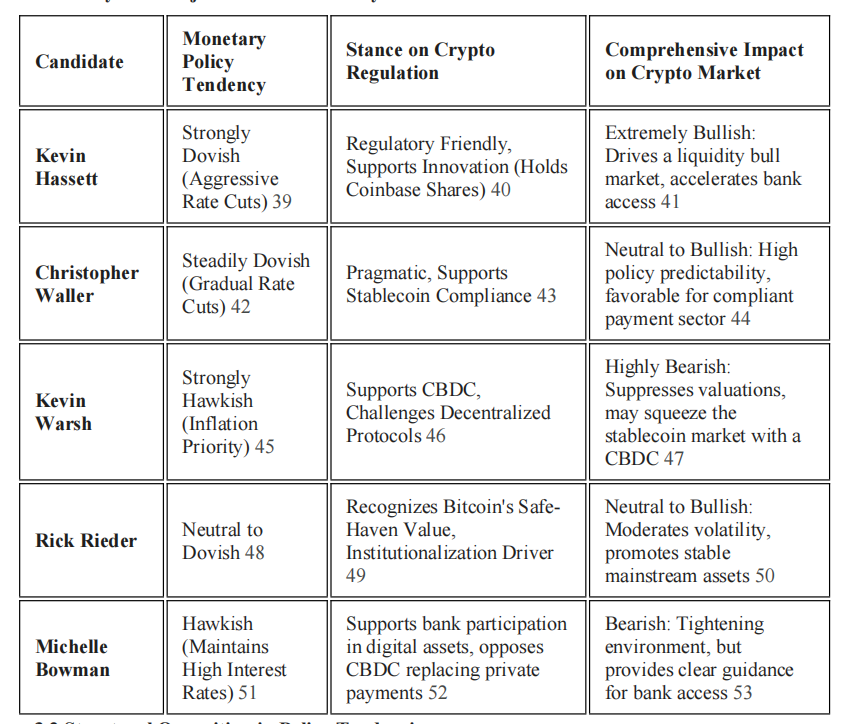
The Structural Impact of the Next Federal Reserve Chair on the Cryptocurrency Industry: Policy Shifts and Regulatory Reshaping
The change of the next Federal Reserve Chair is a decisive factor in reshaping the future macro environment of the cryptocurrency industry.
Trending news
MoreCrypto prices
More






