
MoonPay’s comprehensive stablecoin solution is transforming the way businesses handle payments
- MoonPay launches enterprise stablecoin platform integrated with M0's programmable infrastructure, enabling businesses to issue fully reserved digital dollars across multiple blockchains. - The U.S.-focused service leverages MoonPay's global licensing and M0's interoperable architecture to deliver customized stablecoins for corporate cross-border payments and trade finance. - Strategic shift positions MoonPay as a full-stack stablecoin infrastructure provider, expanding from fiat-to-crypto on-ramps to end
MoonPay, recognized as a global frontrunner in cryptocurrency payments, has introduced a stablecoin platform for enterprises that is integrated with M0—a programmable infrastructure designed for custom stablecoins. This new platform allows companies to create and oversee fully backed digital dollars on several blockchain networks, establishing MoonPay as a comprehensive provider for stablecoin creation, distribution, and regulatory compliance.
This development represents a significant shift for MoonPay, evolving from a simple fiat-to-crypto gateway into a robust payments ecosystem. With the integration of M0’s technology, MoonPay now covers the entire process—from asset origination to international distribution using its suite of buy, sell, exchange, and payment solutions. Luca Prosperi, CEO of M0, noted that MoonPay’s move into tailored stablecoin issuance further cements its position as a major infrastructure provider, covering everything from on/off ramps to programmable payment tools.
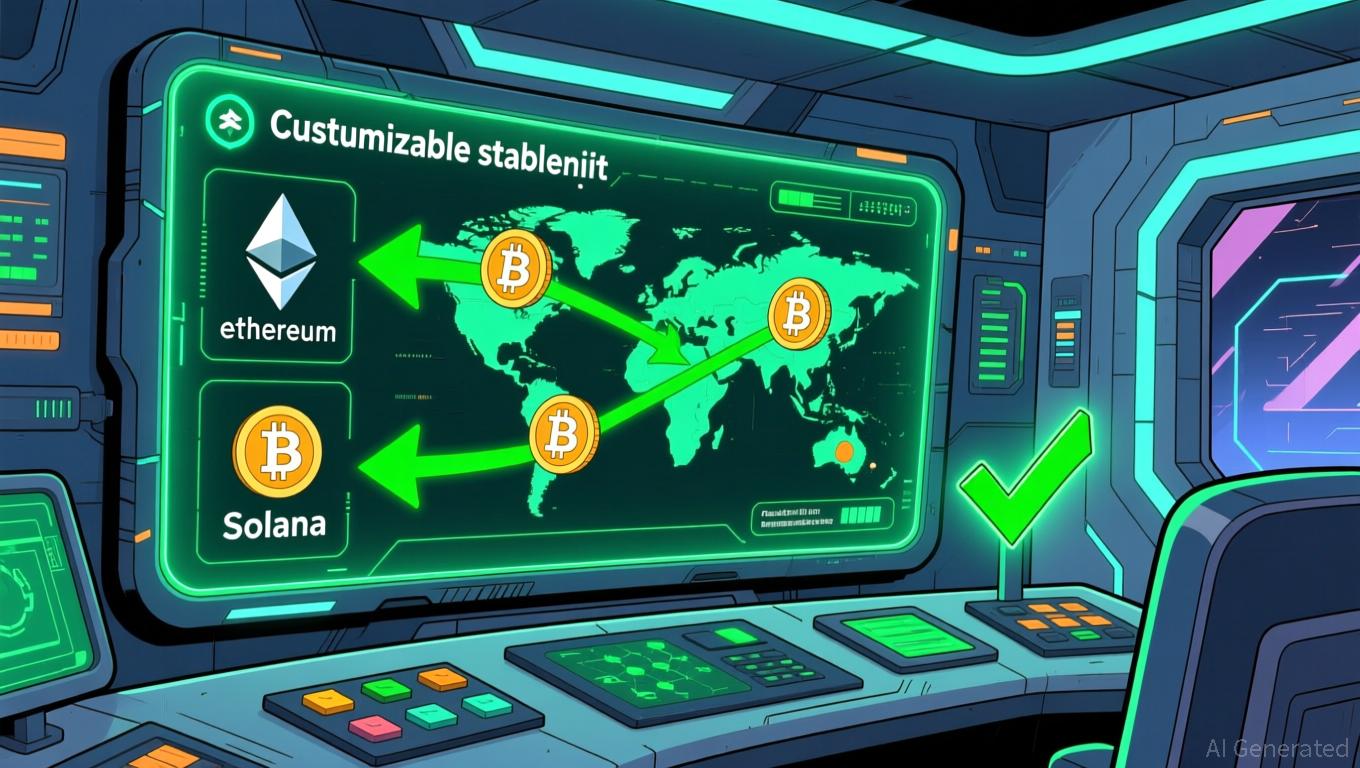
The platform leverages MoonPay’s recent acquisitions of Iron, Meso, and Helio, which have strengthened its API-driven infrastructure and payment integration capabilities. This enables companies to use stablecoins for practical purposes such as international payments and trade financing, with instant access to MoonPay’s global reach. Additionally, MoonPay has recently collaborated with pump.fun, a Solana-based
MoonPay’s move into stablecoin issuance comes as enterprises increasingly seek programmable digital money solutions.
Disclaimer: The content of this article solely reflects the author's opinion and does not represent the platform in any capacity. This article is not intended to serve as a reference for making investment decisions.
You may also like
Solana's Abrupt Decline: Underlying Factors and What It Means for Investors
- Solana’s Q3 2025 sell-off reflects strong network performance (80M daily transactions) but a $352.8M company net loss from derivatives and financing costs. - Market sentiment diverged: $113.5B market cap growth vs. 6.87% stock drop post-earnings, driven by macroeconomic risks and regulatory uncertainty. - Upgrades like Alpenglow (150ms finality) and ZK Compression v2 (5,200x cost reduction) position Solana for institutional adoption despite short-term volatility. - Investors face a dilemma: 32.7% DeFi TV

DASH Price Increases by 1.78% Following Significant Insider's Share Sale Filing
- DoorDash’s stock rose 1.78% on Dec 2, 2025, despite a 20.32% weekly drop, showing long-term investor confidence. - Officer Lee Gordon S filed to sell 2,159 shares via Rule 10b5-1 plan, part of routine insider trading strategy . - Director Alfred Lin bought $100M in DASH shares, contrasting with 90-day insider sales of $174.5M. - Institutional investors showed mixed activity, with Panagora buying and Spyglass, Arrowstreet reducing stakes. - Analysts maintain "Moderate Buy" rating, projecting growth amid v

What's Causing the Latest BTC Price Swings: Is It a Macro-Fueled Reevaluation?
- Bitcoin's late 2025 volatility reflects macroeconomic pressures, Fed policy shifts, and regulatory changes impacting institutional demand. - Sharp price swings from $126k to $87k highlight sensitivity to inflation, interest rates, and leveraged trading risks amid delayed economic data. - New U.S. crypto laws and ETF approvals boosted institutional participation, but geopolitical risks and token unlocks maintained uncertainty. - A potential Fed rate cut and stabilizing inflation could reignite risk appeti
The ChainOpera AI Token Collapse: A Cautionary Tale for AI-Powered Cryptocurrency Markets?
- ChainOpera AI (COAI) token's 96% collapse in late 2025 exposed systemic risks in AI-blockchain markets, mirroring 2008 crisis patterns through centralized governance and speculative hype. - COAI's extreme centralization (96% supply in top 10 wallets) and tokenomics (80% locked until 2026) created liquidity crises, undermining blockchain's decentralized ethos. - Regulatory actions intensified post-crash, with SEC/DOJ clarifying custody rules and targeting fraud, yet CLARITY/GENIUS Acts created compliance

Trending news
MoreCrypto prices
More






