
Municipal Infrastructure and Real Estate Expansion in Webster, NY: The Role of Public-Private Partnerships in Creating Rapidly Growing Industrial Prospects
Webster, New York: A Blueprint for Post-Industrial Renewal
Webster, New York, stands out as a leading example of how towns can reinvent themselves after industrial decline. By forging strong public-private partnerships and making targeted investments in infrastructure, Webster has dramatically reshaped its economic prospects. Between 2023 and 2025, the community secured more than $14.3 million in public grants—including support from the NY Forward Program and FAST NY—to drive industrial redevelopment, lower vacancy rates, and attract significant private capital. These initiatives have not only breathed new life into former industrial sites but have also established Webster as a promising center for logistics and advanced manufacturing.
Key Infrastructure Initiatives and Collaborative Partnerships
Central to Webster’s transformation is the FAST NY Shovel-Ready Grant, which provided $9.8 million to convert a 300-acre former Xerox brownfield into a state-of-the-art industrial park. This ambitious project was realized through the combined efforts of the Webster Economic Alliance, the Town, and the Village of Webster, and included major upgrades to roads, sewers, and electrical systems.

As a result, industrial vacancy rates dropped sharply to just 2%, and by 2025, nearly one million square feet of new industrial space was available for businesses.
The NY Forward Program further contributed $4.5 million to the Village of Webster, supporting the Webster Forward initiative. This collaborative effort, which brought together the School District and Business Improvement District, focused on enhancing walkability, commercial activity, and infrastructure preparedness. The Reimagine Webster Master Plan, completed in 2024, officially recognized the former Xerox site as a Brownfield Opportunity Area, paving the way for future state investment and continued growth.
Private Investment and Economic Growth
Improvements in public infrastructure have directly encouraged private companies to invest in Webster. One standout project is the fairlife® dairy production facility—a $650 million investment being built on 100 acres near Tebor Road. This facility, enabled by upgraded utilities and a skilled local workforce, is expected to generate 250 well-paying jobs by 2025.
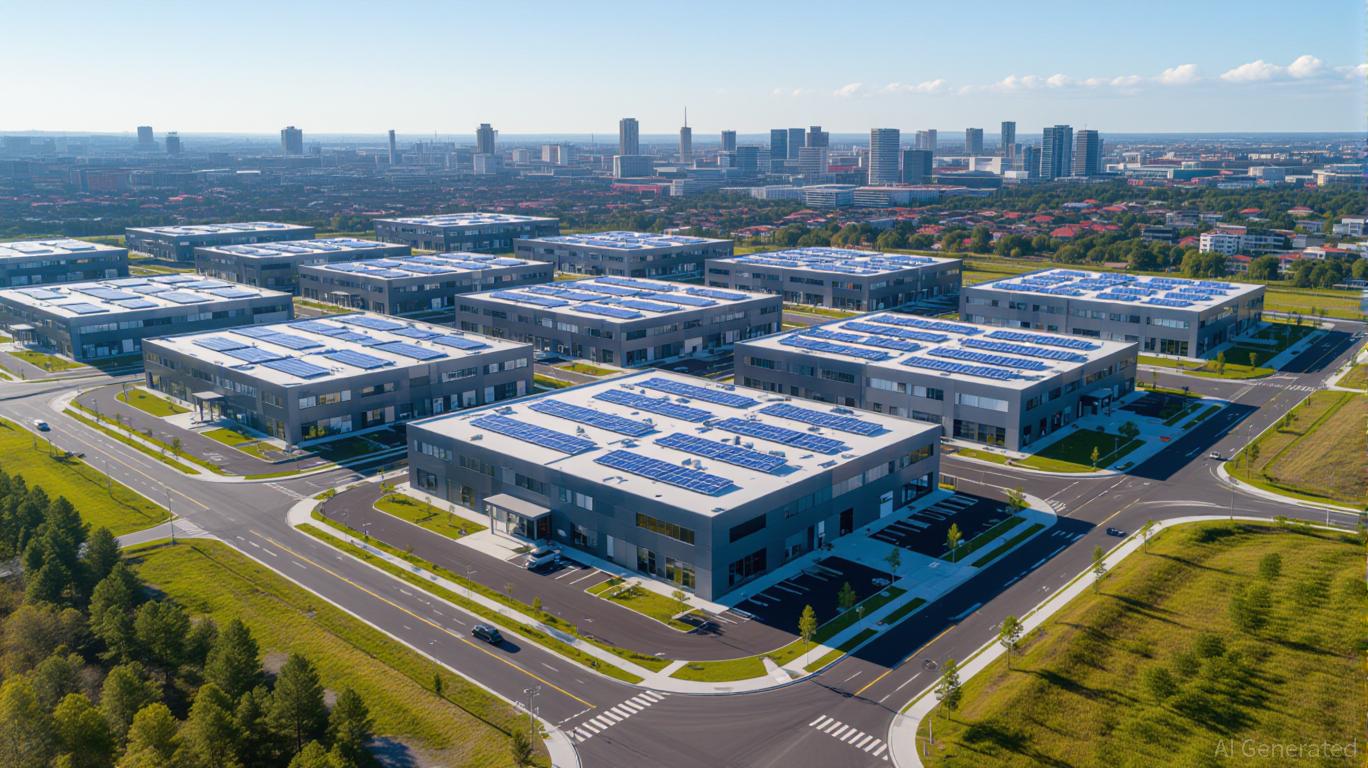
Another major development is the Northeast Area for Technology (NEAT) industrial park, which boasts robust power infrastructure and a substantial water supply, making it highly attractive to logistics and manufacturing companies. Completion of these infrastructure upgrades is anticipated by 2025.
The positive economic impact is clear: since 2023, home values in Webster have climbed by over 10% each year, fueled by job creation and a higher quality of life. The transformation of the brownfield into a technology hub has also made Webster one of the most desirable industrial markets in upstate New York.
Looking Ahead: Opportunities and Future Growth
Webster’s proximity to Rochester International Airport and major transportation routes positions it as a future leader in logistics and renewable energy. The Webster Economic Access Project, which will upgrade an industrial road network previously owned by Xerox, is scheduled to begin construction between late 2025 and mid-2026, further improving the town’s connectivity.
Long-term forecasts are optimistic. The Sandbar Waterfront Revitalization Project, which finished its first phase in 2023, is enhancing shoreline protection and expanding recreational spaces, making Webster even more attractive for mixed-use development. The town is also considering new applications for the Transportation Alternatives Program (TAP) Grant to fund sidewalk and streetscape improvements in West Webster Hamlet, demonstrating a sustained commitment to infrastructure-driven progress.
Conclusion: Setting the Standard for Sustainable Growth
Webster’s journey highlights the effectiveness of public-private collaboration in aligning infrastructure with business needs. By converting underused industrial sites into thriving economic zones and investing in workforce development, the town has set in motion a cycle of sustainable growth. For investors, Webster’s combination of ready-to-build sites, strong state support, and low industrial vacancy rates through 2025 offers a compelling case. As the community continues to focus on infrastructure and partnership, it serves as a model for other municipalities seeking to unlock the potential of industrial real estate in a post-industrial world.
Disclaimer: The content of this article solely reflects the author's opinion and does not represent the platform in any capacity. This article is not intended to serve as a reference for making investment decisions.
You may also like
Hyperliquid’s Growing Influence in Crypto Trading: Enhancing Investor Access and Entry Methods in an Evolving Market
- Hyperliquid dominates 2025 crypto market with 73% DEX perpetual trading share via fee cuts, stablecoin integration, and institutional partnerships. - USDH stablecoin (backed by USD/Treasury) and HyperEVM infrastructure position it as "AWS of liquidity" for on-chain finance developers. - 78% user growth and 1.75M HYPE token unlock resilience highlight its scalability, though stablecoin regulations and market volatility pose risks.

PENGU Token Price Rally: Examining Brief Upward Trends and Institutional Indicators Towards the End of 2025
- PENGU token surged past $0.0100 in late 2025, driven by Bitcoin's rebound and institutional inflows totaling $430,000. - Technical indicators show conflicting signals: overbought RSI (73.76) vs. positive MACD/OBV, with critical support at $0.009. - $66.6M team wallet outflows contrast with institutional accumulation, raising sustainability concerns despite short-term bullish momentum. - Macroeconomic factors like Fed policy and Bitcoin correlation amplify PENGU's volatility, complicating long-term price

LUNA Rises 1.13% Amid Progress on U.S. Lawmaker’s Stock Trading Ban
- LUNA rose 1.13% in 24 hours amid U.S. political pressure to ban congressional stock trading, despite an 82.66% annual decline. - Rep. Anna Paulina Luna advanced the bipartisan Restore Trust in Congress Act, which would prohibit lawmakers and families from trading individual stocks. - The bill faces bipartisan opposition over financial flexibility concerns but has 100+ supporters, including conservatives and progressives, seeking to close ethics loopholes. - Critics argue the 2012 STOCK Act lacks sufficie

BCH Rises 9.13% Over 24 Hours as Overall Market Trends Upward
- Bitcoin Cash (BCH) surged 9.13% in 24 hours, with 10.08% monthly and 37.01% annual gains, signaling sustained bullish momentum. - Analysts attribute the rise to BCH's utility in cross-border payments, low fees, and institutional interest as a Bitcoin layer-2 solution. - No immediate catalysts (regulatory shifts, partnerships) were identified, suggesting market sentiment and macro trends drive the rally. - Experts highlight BCH's structural strengths and active development, positioning it to outperform br

Trending news
MoreCrypto prices
More






