
Pundit Shares 6 Practical Ways XRP Could Witness a Supply Shock

Following the launch of spot XRP ETFs, conversations around whether XRP could face a supply shock have gained momentum.
This renewed interest has intensified on the back of a drop in exchange reserves on platforms like Binance. Amid the discussions, XRP community pundit Pumpius recently presented six practical situations that could trigger such a supply shock.
In a post on X, Pumpius noted that people often predict a dramatic supply shock that could push XRP much higher, yet only a few of them understand what actually causes one.
According to him, a true supply squeeze happens only when XRP leaves the open market faster than new supply enters it. He claimed that nothing secret or sudden creates this scenario. Instead, it builds slowly as different forms of demand absorb available tokens. Pumpius then presented six ways such demand could occur.
ETFs, Institutions, and Corporate Treasuries
Specifically, he started with the first factor: spot ETF issuers must buy real XRP. Because these products rely on actual tokens rather than futures or synthetic exposure, issuers need to source XRP directly from exchanges.
Notably, this steady buying reduces the amount of liquid supply left on trading platforms, as inflows persist. The Crypto Basic recently confirmed that XRP became the second-fastest to cross $800 million in ETF inflows. Today, these inflows have surged further to $874 million at press time.
Pumpius then highlighted the second factor, which involves banks and major asset managers. These institutions would need to hold XRP for settlement processes, treasury needs, and long-term liquidity planning, avoiding any frequent trades. Once they move XRP into custody, the asset leaves the circulating supply and no longer sits in the open market.
The third factor concerns corporate treasuries that could use the XRP Ledger for cross-border payments. According to Pumpius, when more of these companies adopt XRP-powered settlement corridors, they keep tokens in working capital accounts to support ongoing transactions. If they do not send this XRP back to exchanges, it remains locked away, contributing to the supply shock.
Ripple Escrow, On-chain Activity and ZK ID Infra
He then moved on to the fourth factor, which centers on Ripple’s escrow management. Pumpius explained that Ripple has no reason to release more supply than necessary, so the company could avoid releasing tokens from escrow.
The fifth factor involves growing on-chain activity. In this case, more tokenized funds, RLUSD stablecoin operations, liquidity pools, identity layers, and payment corridors could expand on the XRP Ledger. Each of these use cases needs XRP to function, and that demand could remove additional tokens from active trading.
Finally, Pumpius highlighted the sixth factor: the introduction of zero-knowledge identity systems on the network. This new infrastructure could tie more XRP to identity-linked transactions and verification processes, which further reduces the amount of tradable supply.
When all these forces play out together, Pumpius noted that exchanges may begin to run low on inventory, OTC desks could tighten, and market liquidity would thin out.
In such a scenario, buyers would then compete for a shrinking pool of available XRP, which naturally pushes prices higher. He added that real supply shocks do not build slowly in public view. Instead, they appear suddenly on the charts once pressure reaches a breaking point.
Disclaimer: The content of this article solely reflects the author's opinion and does not represent the platform in any capacity. This article is not intended to serve as a reference for making investment decisions.
You may also like
Privacy Coins and Market Fluctuations: Uncovering the Factors Behind ZEC's Latest Price Jump
- Zcash (ZEC) surged 700% in late 2025 driven by institutional backing and network upgrades like the Zashi wallet. - Regulatory pressures and market fragmentation intensified as exchanges delisted privacy coins and liquidity shifted to decentralized platforms. - ZEC's volatility reflects macroeconomic tailwinds and speculative demand, but its long-term viability hinges on balancing privacy with regulatory compliance. - Institutional adoption of privacy coins accelerated in 2025, yet fragmented markets and
Why Dash (DASH) Is Soaring as Institutions Embrace It and Privacy Concerns Fuel Demand
- Dash (DASH) surged 150% in June 2025, driven by institutional adoption and privacy-focused demand. - Institutional ownership reached 90.64% after AGF Management's $7.79M investment and DoorDash's $450M partnership. - Dash Platform 2.0 enhanced scalability while PrivateSend usage grew 25% YoY amid rising privacy needs. - Regulatory challenges persist under EU MiCA and SEC scrutiny, prompting multi-jurisdictional compliance strategies. - DeFi integration and Latin American adoption expanded DASH's utility
ZK Atlas Upgrade: Pioneering the Future of Blockchain Infrastructure for Enhanced DeFi Scalability
- ZKsync's 2025 Atlas Upgrade revolutionizes DeFi scalability via zero-knowledge rollups, boosting transaction throughput to 43,000 TPS and slashing costs to $0.0001 per transfer. - Modular architecture with Atlas Sequencer and Airbender Prover enables real-time execution, while zkSync OS supports EVM/WASM compatibility and cross-chain liquidity unification. - Post-upgrade DeFi metrics show 300% transaction volume growth and $0.28–$1.32 ZK token price projections, positioning ZKsync as a key Layer 2 infras

Bloomberg: Power Theft Exceeds $1 Billion as Malaysia Bitcoin Mining Rigs Overwhelm
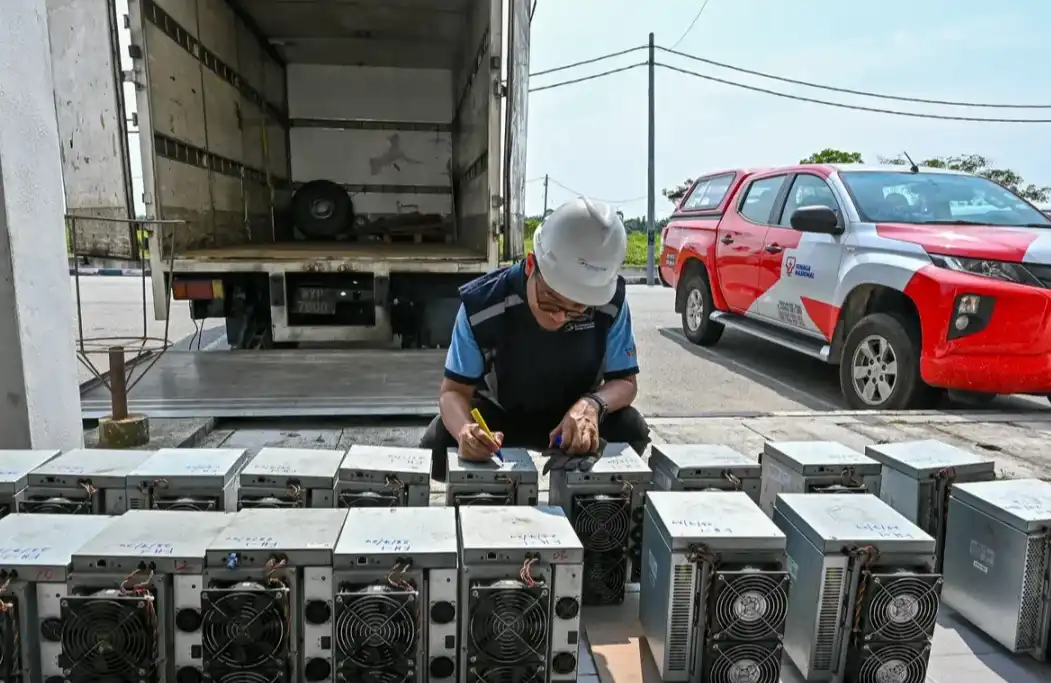
Malaysia has uncovered approximately 14,000 illegal cryptocurrency mining sites in the past five years, causing the state-owned power company losses of over $1.1 billion. In response, the local government established a special committee in November 2025 to consider a total ban on mining,
Trending news
MoreCrypto prices
More





