
Why Solana's Latest Plunge Highlights Underlying Weaknesses in the Crypto Market
- Solana's 57% price crash in Nov 2025 exposed systemic crypto vulnerabilities, including psychological biases, excessive leverage, and fragile infrastructure. - Token unlocks from Alameda/FTX estates and $30M selling pressure triggered the downturn, yet $101.7M in institutional inflows highlighted market paradoxes. - Fed rate cuts drove $417M into Solana ETFs, but uncertainty caused 14% price drops, revealing crypto's growing integration with traditional finance. - $19B in liquidations during the Oct 11 "
Solana’s 2025 Downturn: Unpacking the Deeper Issues in Crypto
In November 2025, Solana (SOL) experienced a dramatic price drop, plunging nearly 57% from its peak of $295.83 to just $120. This sharp decline was not simply a result of technical factors or isolated market events. Instead, it highlighted broader vulnerabilities within the cryptocurrency landscape, including psychological pitfalls, excessive use of leverage, and unstable market infrastructure. As the industry faces this significant setback, it becomes clear that Solana’s troubles are emblematic of the persistent risks in a sector still undergoing rapid evolution.
Key Catalysts: Token Unlocks and Institutional Activity
The immediate spark for Solana’s fall was the scheduled release of 193,000 SOL tokens—valued at $30 million—by the bankrupt estates of Alameda Research and FTX on November 11, 2025. This influx intensified selling pressure, especially as SOL breached important support levels, fueling a wave of negative momentum. Despite this, institutional interest in Solana remained strong. In November, investment products tied to Solana saw net inflows of $101.7 million, with spot ETFs like Bitwise’s BSOL attracting $336 million in just one week. This juxtaposition—steep price declines alongside robust institutional investment—illustrates a paradox: while crypto markets are becoming more institutionalized, they remain highly sensitive to retail-driven volatility and speculative behavior.
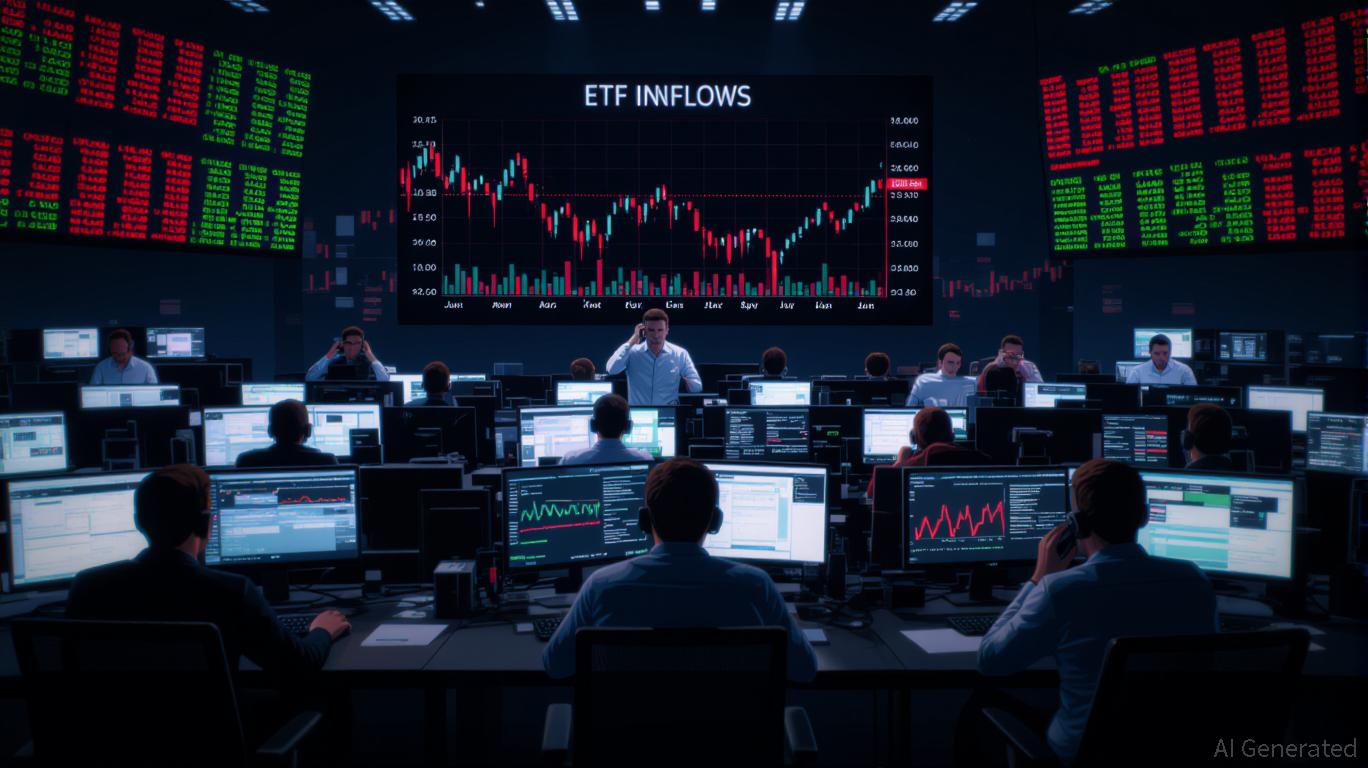
Monetary policy also played a role. The Federal Reserve’s decision to lower interest rates in October 2025 spurred capital flows into digital assets, with the Bitwise Solana ETF (BSOL) drawing $417 million in its early days. However, uncertainty about future rate cuts led to a 14% drop in Solana’s price in early November, as forced liquidations intensified the downward spiral. This interplay between macroeconomic trends and crypto markets highlights both the sector’s growing ties to traditional finance and its ongoing susceptibility to shifts in monetary policy.
Investor Psychology: Biases and the Perception of Control
Beneath Solana’s crash lies a fundamental issue: the psychological tendencies that shape crypto trading. Behavioral economics suggests that investors often believe they can predict market movements—a cognitive bias known as the “illusion of control.” In bullish markets, this leads to FOMO (fear of missing out) and speculative buying. When prices fall, panic selling takes over as risk tolerance quickly disappears.
The “black swan” event on October 11, 2025, when Bitcoin dropped 17% and Solana tumbled 25%, is a case in point. Many traders, emboldened by the preceding rally, had leveraged their positions by 10x to 20x. When the market reversed, over $19 billion in positions were liquidated within a single day, impacting 1.63 million accounts. This episode exposed the dangers of excessive leverage and the herd mentality that can amplify market swings.
Additionally, Solana’s ecosystem has shifted from memecoins to platforms focused on event-driven speculation, such as Polymarket and Kalshi. While this may indicate a maturing market, it also signals a continued reliance on short-term, emotionally charged trading that fuels volatility.
Structural Weaknesses: Leverage, Liquidity, and Regulation
The October 2025 crash also revealed deeper flaws in crypto market structure. Thin order books and algorithm-driven trading exacerbated liquidity shortages during the downturn. These challenges are made worse by the absence of comprehensive regulatory oversight. For example, although the U.S. Securities and Exchange Commission (SEC) remains influential, the approval of a spot Solana ETF is still pending, leaving regulatory uncertainty unresolved.
Institutional investors have tried to manage risk through diversified strategies, including exchange-traded products (ETPs) and staking rewards. Franklin Templeton’s SOEZ ETF, for instance, combines Solana exposure with staking income, offering a regulated alternative to pure speculation. However, such products cannot fully counteract the risks posed by overleveraged retail traders or the fragility of on-chain systems.
Historical Perspective: Boom and Bust Cycles
Cryptocurrency markets have long been characterized by cycles of rapid growth followed by sharp corrections, driven by speculation and investor sentiment. Bitcoin’s halving events, which occur every four years, have historically triggered similar patterns of surging prices followed by pullbacks. Solana’s 2025 crash fits this established cycle, but with added complexity due to the sector’s swift institutional adoption. This has created new feedback mechanisms, where traditional financial risk management tools interact with crypto’s inherent volatility.
Looking Ahead: The Need for Prudence and Reform
Solana’s recent collapse serves as a stark reminder of the need for stronger oversight of leveraged trading, better liquidity solutions, and a deeper understanding of the psychological forces that drive extreme market movements. While institutional interest and technological innovations—such as Solana’s Firedancer and Alpenglow upgrades—hold promise for the future, they cannot fully shield the market from the dangers of speculation.
As regulators and industry participants confront these ongoing challenges, one thing is clear: the future of cryptocurrency will depend not only on technological progress, but also on the sector’s ability to address the psychological and systemic weaknesses that have repeatedly led to market turmoil.
Disclaimer: The content of this article solely reflects the author's opinion and does not represent the platform in any capacity. This article is not intended to serve as a reference for making investment decisions.
You may also like
Zcash Halving and Its Impact on Cryptocurrency Market Trends
- Zcash's 2028 halving will cut block rewards to 0.78125 ZEC, continuing its deflationary supply model to reduce annual inflation to 2%. - Historical data shows halvings trigger extreme volatility, with ZEC surging 1,172% in 2025 but collapsing 96% within 16 days. - Institutional adoption grows via $137M Grayscale Zcash Trust, yet EU's MiCA regulations challenge privacy coins' compliance with transparency rules. - Future success depends on balancing privacy features with regulatory adaptability as Zcash's

Emerging Prospects for Industrial Real Estate in Webster, NY
- Webster , NY, is transforming its industrial real estate through the $9.8M FAST NY Grant, upgrading infrastructure on a 300-acre Xerox brownfield into a high-tech hub. - The initiative aims for a 2% industrial vacancy rate by 2025, boosting residential property values by 10.1% and attracting projects like the $650M fairlife® dairy facility. - Xerox campus reconfiguration and 600 Ridge Road redevelopment, supported by state programs, create shovel-ready spaces with modern infrastructure for advanced manuf

The Growing Impact of Security Systems Technology on the Future Development of Higher Education Infrastructure
- 21st-century higher education infrastructure increasingly relies on advanced security systems to address cyberattacks and campus safety threats. - AI and zero-trust architectures enable proactive threat detection, with 80% of institutions adopting zero-trust strategies by 2025. - Integrated security investments boost enrollment, research credibility, and institutional reputation, though skill gaps and outdated infrastructure hinder full implementation. - ROI extends beyond cost savings, with 60% of stude

Bitcoin Leveraged Position Liquidations and Market Fluctuations: Urging Proactive Risk Control Strategies
- 2025 crypto market saw $21B in leveraged liquidations as Bitcoin's volatility triggered systemic collapses in October and November. - Over-leveraged long positions, social media hype, and automated deleveraging mechanisms fueled cascading losses across exchanges. - Traders shifted to 1-3x leverage and AI-driven risk tools post-liquidations, with 65% reducing exposure in Q4 2025. - Experts emphasize dynamic position sizing, diversification, and 5-15% stablecoin allocations to mitigate volatility risks in
Trending news
MoreCrypto prices
More





