
Sustainable Urban Mobility: Unlocking Investment Opportunities in Electric and Shared Transportation in Developing Markets
- Global urban mobility shifts accelerate in emerging markets through electric and shared transport investments. - Solar-powered taxis (e.g., South Africa's eKamva, Ghana's Solar Taxi) and policy-driven EV adoption (India, Argentina) reduce emissions and costs. - World Bank/ADB fund EV infrastructure, projecting $456B smart transport market growth by 2034 amid climate goals. - Challenges include grid reliability (Ghana's "Dumsor" outages) and regulatory adaptation for shared mobility scalability.
Accelerating the Transition to Sustainable Urban Mobility
Urban centers around the world are rapidly embracing sustainable transportation, propelled by climate concerns, technological advancements, and the pressing need to combat congestion and pollution in fast-growing cities. Emerging economies are at the forefront of this transformation, attracting significant investment in electric and shared mobility solutions that align with environmental objectives. From solar-powered minibuses in Africa to government-backed car-sharing programs in Asia, the intersection of innovation, infrastructure, and policy is reshaping how people move—and opening new investment opportunities.
Electric Vehicle Infrastructure: Driving Decarbonization
Developing robust electric vehicle (EV) infrastructure is central to advancing sustainable transport in emerging markets. In South Africa, the introduction of the eKamva electric minibus taxi—a 15-passenger vehicle with a 200-kilometer range—marks a significant milestone in reducing emissions from informal transit. Spearheaded by GoMetro, this initiative integrates charging stations and a digital platform for fleet management, cutting operational expenses by 40–70% compared to traditional diesel models. Ghana’s Solar Taxi project, which assembles EVs and utilizes solar-powered hubs, has grown into one of the continent’s leading EV manufacturers, showcasing the potential of solar-fueled mobility in sun-rich regions.
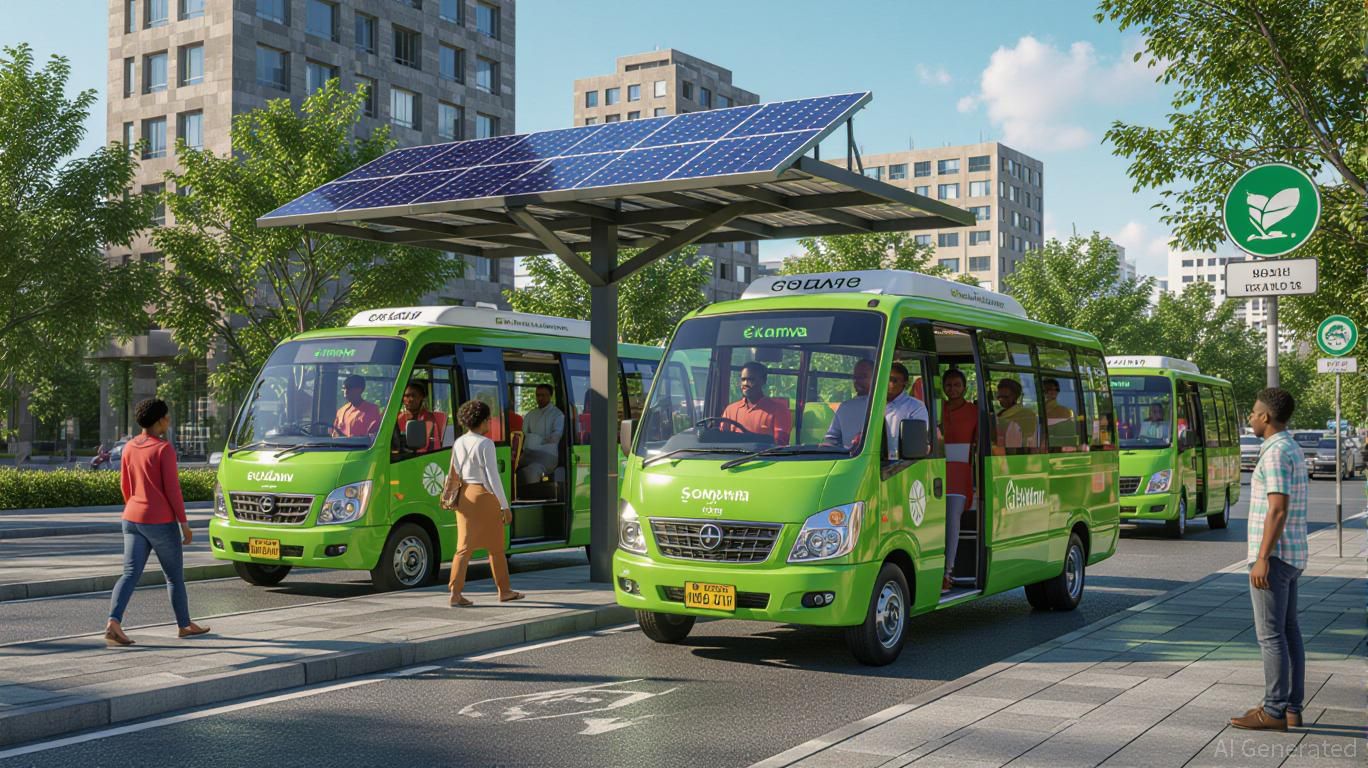
These advancements are bolstered by global funding trends. Major institutions like the World Bank Group and the Asian Development Bank are channeling substantial resources into EV infrastructure, recognizing its importance for reducing emissions and strengthening energy independence. By 2034, the smart transportation sector in emerging markets is expected to surge from USD 136.05 billion in 2024 to USD 456.92 billion, fueled by the push for electrification and modernized energy grids.
Shared Mobility and Car-Sharing: Transforming Urban Transportation
Shared mobility options—including car-sharing and micro-mobility—are gaining momentum as affordable, eco-friendly alternatives to private car ownership. In India, supportive government policies have accelerated EV adoption, resulting in higher consumer satisfaction than in Indonesia or Nigeria. This progress is attributed to incentives, tax breaks, and a comprehensive plan for expanding charging infrastructure, with a target of 30,000 public EV charging stations by 2030. Conversely, Indonesia’s goal of reaching 2 million electric cars by 2030 is challenged by low EV adoption rates and insufficient infrastructure.
Mobility hubs are also encouraging car-sharing uptake, as seen in southern Germany, where improved access to shared vehicles has led more residents to give up personal cars. In emerging economies, integrating car-sharing with EVs and public transit is crucial. For example, Argentina’s removal of import tariffs on affordable electric and hybrid taxis has made these vehicles more accessible, while collaborations with companies like BYD and Shenzhen DiDi are expanding electric fleets.
Policy Innovation and Systemic Change
Effective policy frameworks are essential for enabling sustainable mobility. Emerging markets are increasingly relying on public-private partnerships to speed up infrastructure development. India’s battery-as-a-service approach, for instance, lowers upfront costs for informal sector workers, addressing concerns about range and affordability. In sub-Saharan Africa, pilot projects using solar photovoltaic systems and stationary storage are helping to reduce grid strain, with one Johannesburg initiative cutting grid demand by 66% per taxi.
Regulatory measures such as carbon pricing and clean-air zones are also influencing energy consumption patterns. As of 2024, 75 carbon pricing programs worldwide affect 24% of global emissions, encouraging industries to shift to cleaner alternatives. Cities like London and Beijing have established low-emission zones, gradually phasing out conventional taxis and providing clearer regulatory guidance for operators.
Investment Prospects and Market Outlook
The shared mobility sector is forecasted to expand at a compound annual growth rate of 12.5%, reaching USD 768.2 billion by 2033, driven by urbanization and digital integration. Investments in solar-powered minibuses and car-sharing initiatives are particularly promising. Projects like South Africa’s eKamva and Ghana’s Solar Taxi demonstrate the scalability of solar-based transport, while Argentina’s policy-driven EV expansion highlights the importance of regulatory support in market development.
Development Finance Institutions (DFIs) play a crucial role in financing these transitions. The World Bank’s Climate Action Plan and the Asian Development Bank’s focus on sustainable infrastructure are directing capital toward projects that support net-zero ambitions. Additionally, declining costs for solar technology and EVs are making clean mobility solutions more viable, even in areas with less reliable electricity grids.
Overcoming Obstacles and Looking Ahead
Despite notable progress, significant challenges remain. In countries like Ghana, frequent power outages—locally known as "Dumsor"—pose obstacles to electrification. Accurate forecasting of energy needs and the deployment of decentralized solutions such as solar mini-grids are vital to bridging these gaps. Furthermore, regulatory systems must evolve to keep pace with the rapidly changing landscape of shared mobility, ensuring fair access and efficient operations.
Conclusion
Emerging markets present a dynamic frontier for sustainable urban mobility investments. Innovations such as solar-powered minibuses, policy-driven car-sharing, and data-centric traffic management are not only cutting emissions but also building resilient infrastructure for tomorrow’s cities. As development banks and private investors increasingly align with climate objectives, the coming decade is poised to witness a wave of transformative projects that will redefine mobility across the Global South—turning today’s challenges into opportunities for sustainable growth.
Disclaimer: The content of this article solely reflects the author's opinion and does not represent the platform in any capacity. This article is not intended to serve as a reference for making investment decisions.
You may also like
Modern Monetary Theory and the Transformation of Cryptocurrency Valuation Models in 2025
- Modern Monetary Theory (MMT) reshaped crypto valuation in 2025, transitioning digital assets from speculative tools to institutional liquidity instruments amid low-yield environments. - Central banks and 52% of hedge funds adopted MMT-aligned CBDCs and regulated stablecoins, with BlackRock's IBIT ETF managing $50B as crypto gained portfolio diversification status. - Regulatory divergence (e.g., U.S. CLARITY Act vs. New York BitLicense) created volatility, exemplified by the Momentum (MMT) token's 1,300%

Financial Wellness Emerging as a Key Investment Trend: Psychological and Structural Factors Shaping Sustainable Wealth Over Time
- 2025 investment trends prioritize financial wellness driven by behavioral economics and systemic factors like inflation and AI-driven tools. - Budgeting apps (YNAB, Mint) and automation platforms (Digit, Acorns) address debt management and savings discipline amid $1.17T U.S. credit card debt. - ETFs like iShares IYG and Global X FINX target financial wellness infrastructure, while Vanguard's inflation-protected ETFs cater to capital preservation needs. - Systemic shifts force "cascading waterfall" financ

Investing for Tomorrow: Eco-Friendly Energy Systems and the Growth of Green Cities
- Global climate-conscious energy infrastructure is accelerating, driven by tech innovation and urban decarbonization needs, with cities accounting for 70% of carbon emissions. - Smart grids and AI are transforming energy systems: grids optimize distribution (e.g., Amsterdam/Singapore), while AI cuts building energy use by 30% via automation and analytics. - Renewable energy investments hit $2.2T in 2025, led by solar (cheapest electricity source), but emerging markets face funding gaps despite hosting 40%

Astar 2.0’s Influence on AI Infrastructure and Cloud Computing Sectors: Evaluating Changes in AI Hardware Requirements and Emerging Investment Prospects
- Astar 2.0's blockchain innovations in cross-chain interoperability and scalability aim to reshape AI infrastructure by optimizing data flow and reducing latency. - Partnerships with Sony and Toyota demonstrate blockchain-enabled AI logistics applications, enhancing transparency and operational efficiency in supply chains. - Deflationary tokenomics and institutional adoption strategies position Astar to capitalize on AI hardware growth, with analysts projecting $0.80–$1.20 ASTR valuation by 2030. - The pl

Trending news
MoreCrypto prices
More





