
Vitalik Buterin's Latest ZK-Focused Statement and What It Means for Layer 2 Scaling
- Vitalik Buterin's ZKsync endorsement triggered a 143% $ZK token surge, redefining Ethereum's Layer 2 scalability with ZK technologies as the cornerstone. - ZKsync's Atlas upgrade achieved 43,000 TPS with sub-second finality, while Kohaku/Lighter frameworks reduced proof costs by 50x, accelerating industry-wide ZK adoption. - Institutional adoption (Deutsche Bank, Sony) and $28B+ TVL growth highlight ZK's market potential, with ZKP market projected to reach $7.59B by 2033 at 22.1% CAGR. - Zcash (ZEC) and
Vitalik Buterin’s Support for ZKsync: Transforming Ethereum’s Layer 2 Future
Vitalik Buterin’s recent public endorsement of ZKsync has set off a significant transformation within the blockchain sector, particularly influencing the direction of Ethereum’s Layer 2 scalability solutions. Following this announcement, the $ZK token experienced a dramatic 143% price increase, highlighting the growing importance of zero-knowledge (ZK) technologies as Ethereum advances toward a more secure, high-capacity, and quantum-resistant infrastructure. This article examines the investment prospects of ZK-driven protocols in the wake of Buterin’s backing, weighing technological progress, market trends, and institutional involvement against potential risks.
Technological Breakthroughs: The Rise of ZK Protocols
Buterin’s support for ZKsync’s Atlas upgrade—which introduces the GKR protocol and Airbender proof system—has paved the way for remarkable scalability. These advancements allow for up to 43,000 transactions per second (TPS), with confirmation times under a second and minimal transaction fees. By streamlining proof generation and proposing the elimination of the modular exponentiation precompile, computational demands could be reduced by as much as half, addressing Ethereum’s long-standing scalability, security, and decentralization challenges.
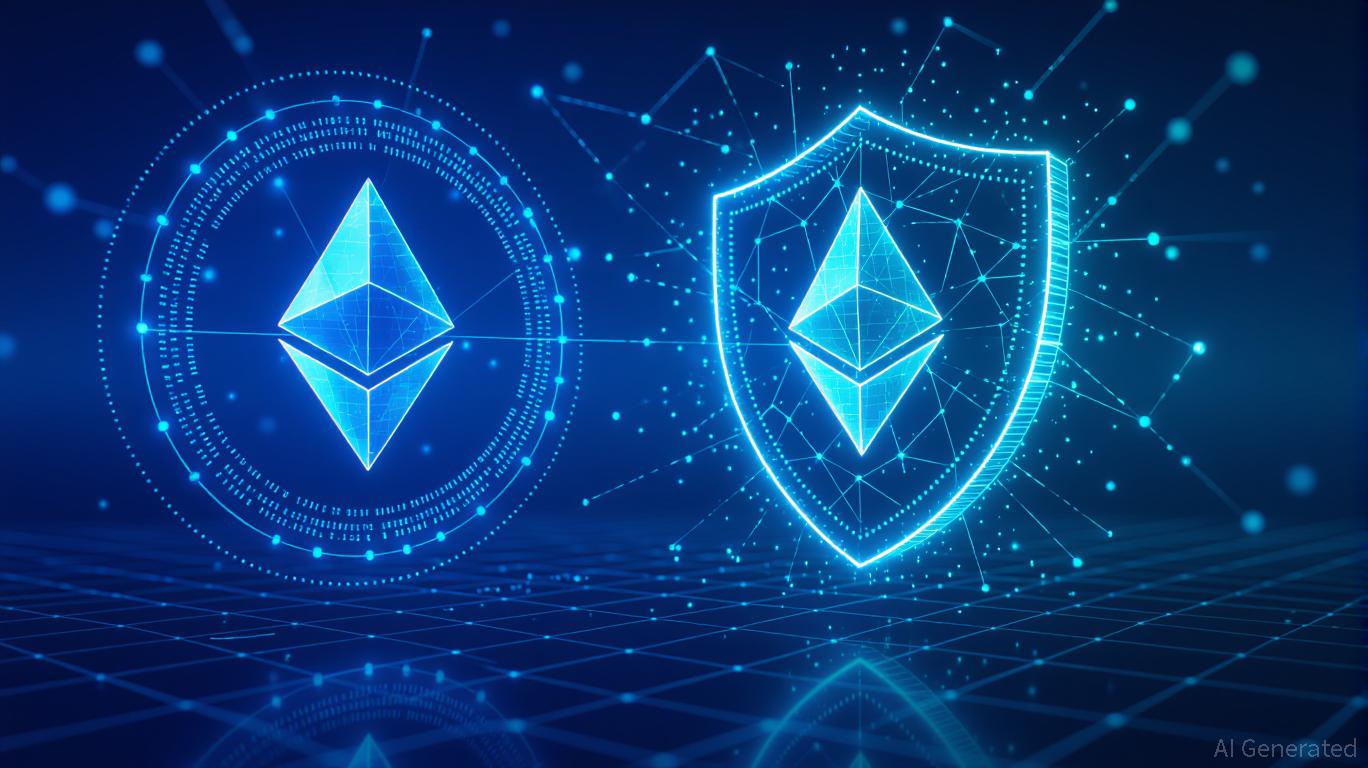
The Ethereum Foundation’s Kohaku and Lighter frameworks further accelerate this progress, slashing proof generation expenses by a factor of 50 and enabling privacy-centric applications. This wave of innovation extends beyond ZKsync—StarkNet achieves 15,000 TPS, while Polygon zkEVM delivers in-game transaction fees below $0.05. These developments are in line with Ethereum’s “Lean Ethereum” strategy, which emphasizes ZK-based solutions to power high-demand sectors such as DeFi and artificial intelligence.
Market Trends: Institutional Embrace and TVL Expansion
The rapid adoption of ZK technology by major institutions underscores its growing significance. Deutsche Bank’s Dama 2 initiative utilizes ZKsync for cross-chain regulatory compliance, and Sony’s NFT projects showcase the technology’s ability to bridge traditional and decentralized finance. Industry giants like Goldman Sachs and Walmart are also adopting ZK-rollups to enhance transaction security and supply chain transparency.
The total value locked (TVL) in ZK rollups has now exceeded $28 billion, with StarkNet’s TVL tripling in the third quarter of 2025. Venture capital interest is strong, as platforms compatible with ZK-EVM, such as zkSync Era and Polygon zkEVM, have secured over $55 million in investments from firms including Rumble Fish and Arch Labs. The zero-knowledge proof (ZKP) market is expected to expand at a 22.1% compound annual growth rate, reaching $7.59 billion by 2033, fueled by practical applications in identity verification and asset tokenization.
Investment Outlook: Forecasts and Return Potential
From an investment standpoint, ZK-based protocols offer promising long-term prospects. For example, Zcash (ZEC), a privacy-oriented digital currency, is projected to trade between $45 and $75 in 2025 under conservative estimates, with optimistic scenarios suggesting prices could reach $120 to $200, supported by clearer regulations and increased institutional participation. Similarly, zkSync’s token (ZK) is expected to reach $0.15 to $0.20 by 2025, driven by its ongoing Fusaka upgrade.
The broader blockchain industry, valued at $57 billion in 2023, is forecasted to grow at an annual rate of 87.7% through 2030, propelled by enterprise adoption of ZK solutions. Deloitte’s 2025 outlook for financial services predicts that tokenized currencies could cut cross-border payment costs by 12.5%, potentially saving $50 billion by 2030. Goldman Sachs’ use of ZKsync for confidential transactions signals a broader institutional shift toward ZK-powered infrastructure.
Risks and Uncertainties: Navigating a Complex Environment
Despite these positive trends, investors should remain vigilant. Technical hurdles remain, particularly in integrating GKR with existing ZK-SNARK and STARK frameworks. Overvaluation risks are present if real-world adoption does not keep pace with market expectations. JPMorgan’s 2026 risk analysis highlights potential disruptions from geopolitical tensions, regulatory changes, and market instability. Additionally, the 2026 U.S. midterm elections could introduce policy uncertainty, historically linked to increased market volatility.
Conclusion: Weighing Opportunities and Risks for ZK Investors
Vitalik Buterin’s recent statements have accelerated the adoption of ZK-based protocols, positioning them as essential to Ethereum’s future scalability and privacy. While technological innovation and institutional support suggest a strong outlook, investors should carefully consider integration challenges and broader economic uncertainties. For those with a long-term perspective, ZK protocols represent a distinctive opportunity to benefit from Ethereum’s ongoing transformation and the wider evolution of blockchain technology.
References
- Vitalik Buterin Backs ZKsync: Could This Spark a Surge in ... [link]
- Vitalik Buterin Calls for Scrapping Ethereum's 'Most ZK- ...
- ZK Technology's Breakthrough: Enhanced Scalability ... [link]
- Top 10 Zero-Knowledge Proof Projects Reshaping
- The ZK Atlas Enhancement: Driving Blockchain Expansion ... [link]
- Evaluating How Vitalik Buterin's Advancements in ZK [link]
- zkSync Price Prediction 2025-2030: Can ZK Reach $0.08 ...
- Zcash Price Prediction 2025-2030: The Ultimate Guide to ZEC Investment Potential
- Top 5 Blockchain Technology Trends to Watch in 2025-2030
- Deloitte Releases 2025 Financial Services Industry Predictions
- JPMorgan Warns of Mounting Market Risks as 2026 Approaches
- ZK Technology's 2025 Price Increase: Sustained Value ... [link]
Disclaimer: The content of this article solely reflects the author's opinion and does not represent the platform in any capacity. This article is not intended to serve as a reference for making investment decisions.
You may also like
PENGU's Notable 7-Day Price Decline: Analyzing Market Reactions and Key Drivers of Crypto Fluctuations
- Pudgy Penguins (PENGU) fell 4.32% in 7 days and 52.55% in 30 days as of Nov 26, 2025, reflecting crypto market fragility. - A $19B October 2025 liquidity crisis triggered cascading liquidations, amplifying PENGU's 30%+ declines amid memecoin sector weakness. - Fear & Greed Index at 27 (extreme fear) and $50M+ long liquidations highlight panic-driven selling and algorithmic trading dynamics. - Technical indicators show conflicting signals: bearish RSI vs. bullish MACD/OBV, with $0.0235 resistance critical

Google Translate now enables you to listen to live translations directly through your headphones

Data leak at major credit reporting firm 700Credit impacts no fewer than 5.6 million individuals
Trending news
MoreCrypto prices
More





