
Interpreting the CoinShares 2026 Report: Farewell to Speculative Narratives, Embracing the Year of Utility

2026 will be a pivotal year for digital assets, transitioning from speculation to utility, and from fragmentation to integration.
Original Title: Outlook 2026 The year utility wins
Original Source: CoinShares
Original Translation: Deep Tide TechFlow
At the end of the year, various institutional year-end review and outlook reports have been released.
In line with the principle of TL;DR, we also attempted to quickly summarize and extract key points from various lengthy reports.
This report is from CoinShares, a leading European digital asset investment management firm established in 2014, headquartered in London, UK, and Paris, France, with assets under management exceeding $6 billion.
This 77-page long report titled "Outlook 2026: The Year Utility Wins" covers key topics such as macroeconomic fundamentals, Bitcoin mainstreaming, rise of DeFi, smart contract platform competition, evolution of the regulatory landscape, and provides in-depth analysis of areas such as stablecoins, asset tokenization, prediction markets, mining transition, venture capital, among others.
Below is our distilled summary of the core content of this report:
1. Core Theme: The Arrival of the Year of Utility
2025 was a pivotal year for the digital asset industry, with Bitcoin hitting a historic high, shifting from a speculative to a utility-driven industry.
2026 is expected to be the "year of utility wins," where digital assets no longer seek to replace the traditional financial system but to enhance and modernize existing systems.
The report's key point is that 2025 marked the decisive shift of digital assets from speculation to utility, and 2026 will be a key year for accelerating this transformative shift.
Digital assets are no longer attempting to establish a parallel financial system but are enhancing and modernizing the existing traditional financial system. Public blockchains, institutional liquidity, regulatory market structures, and integration of real economic use cases are advancing at a pace beyond optimistic expectations.
2. Macroeconomic Fundamentals and Market Outlook
Economic Environment: Soft Landing on Thin Ice
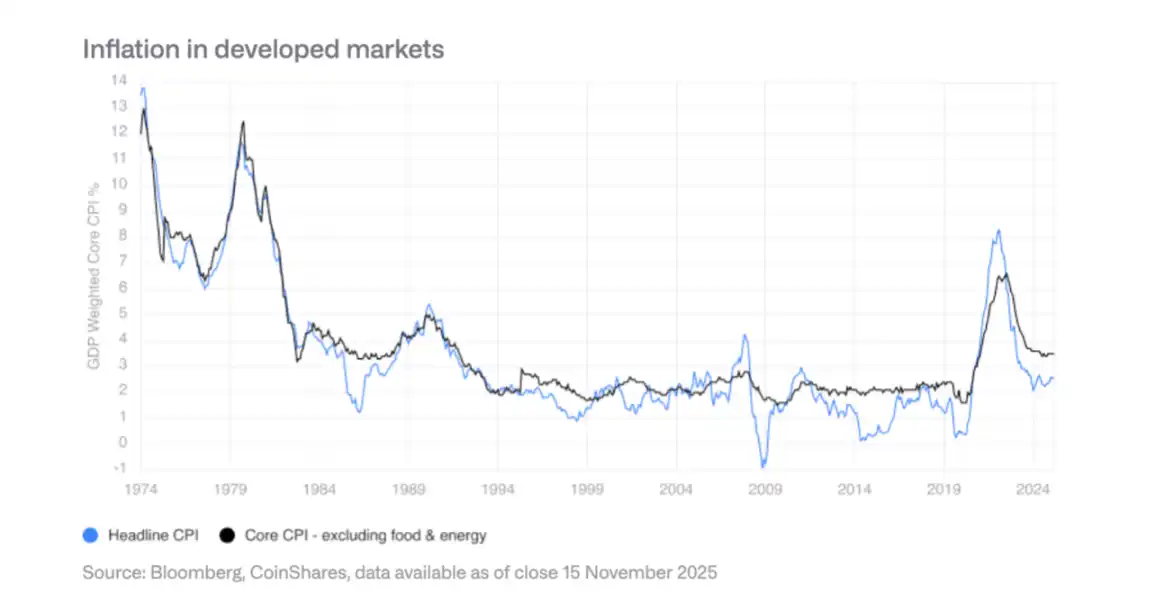
Growth Outlook: The economy in 2026 may avoid a recession, but growth is sluggish and fragile. Inflation continues to ease but not decisively enough, tariff disruptions and supply chain reconfigurations are keeping core inflation at its highest level since the early 1990s.
Fed Policy: A cautious rate cut is expected, with the target interest rate possibly falling to the mid-3% range, but the process will be slow. The Fed's memory of the sharp inflation surge in 2022 remains fresh, and it is unwilling to make a quick pivot.
Three Scenario Analyses:
· Optimistic Scenario: Soft landing + Productivity surprise, Bitcoin may soar above $150,000
· Base Scenario: Slow expansion, Bitcoin trading range $110,000-$140,000
· Bear Market Scenario: Recession or stagflation, Bitcoin may fall to the $70,000-$100,000 range
The Slow Erosion of the Dollar's Reserve Status
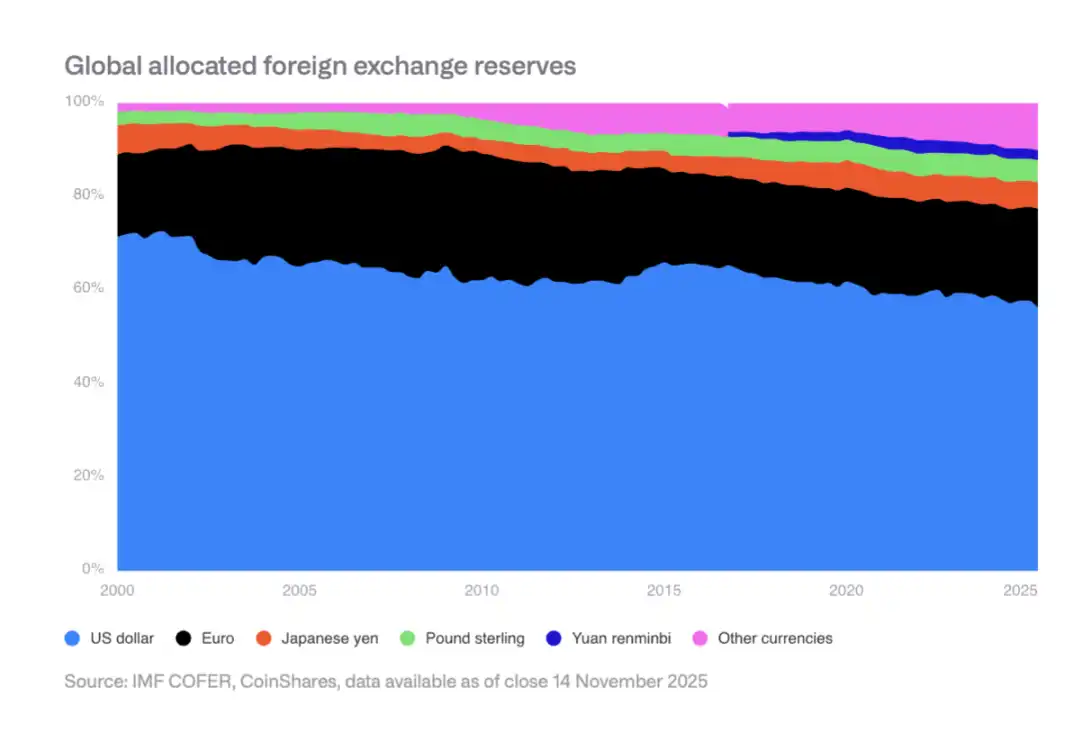
The US dollar's share in global forex reserves has dropped from 70% in 2000 to the current mid-50% range. Emerging market central banks are diversifying their allocations, increasing holdings of assets such as the Renminbi and gold. This creates a structural tailwind for Bitcoin as a non-sovereign store of value.
III. Bitcoin's Mainstreaming Process in the US
By 2025, the US achieved several key breakthroughs, including:
· Approval and launch of a Bitcoin spot ETF
· Formation of a top-tier ETF options market
· Removal of retirement plan restrictions
· Application of fair value accounting rules for companies
· US government designating Bitcoin as a strategic reserve
Institutional Adoption Still in Early Stages
While structural barriers have been removed, actual adoption is still limited by traditional financial processes and intermediaries. Wealth management channels, retirement plan providers, corporate compliance teams, etc., are still gradually adapting.
Expected in 2026
Private sector progress is anticipated: the big four brokerages enabling Bitcoin ETF allocations, at least one major 401(k) provider allowing Bitcoin allocations, at least two S&P 500 companies holding Bitcoin, at least two major custody banks offering direct custody services, etc.
IV. Miner and Corporate Holding Risks
Rapid Growth in Corporate Holdings
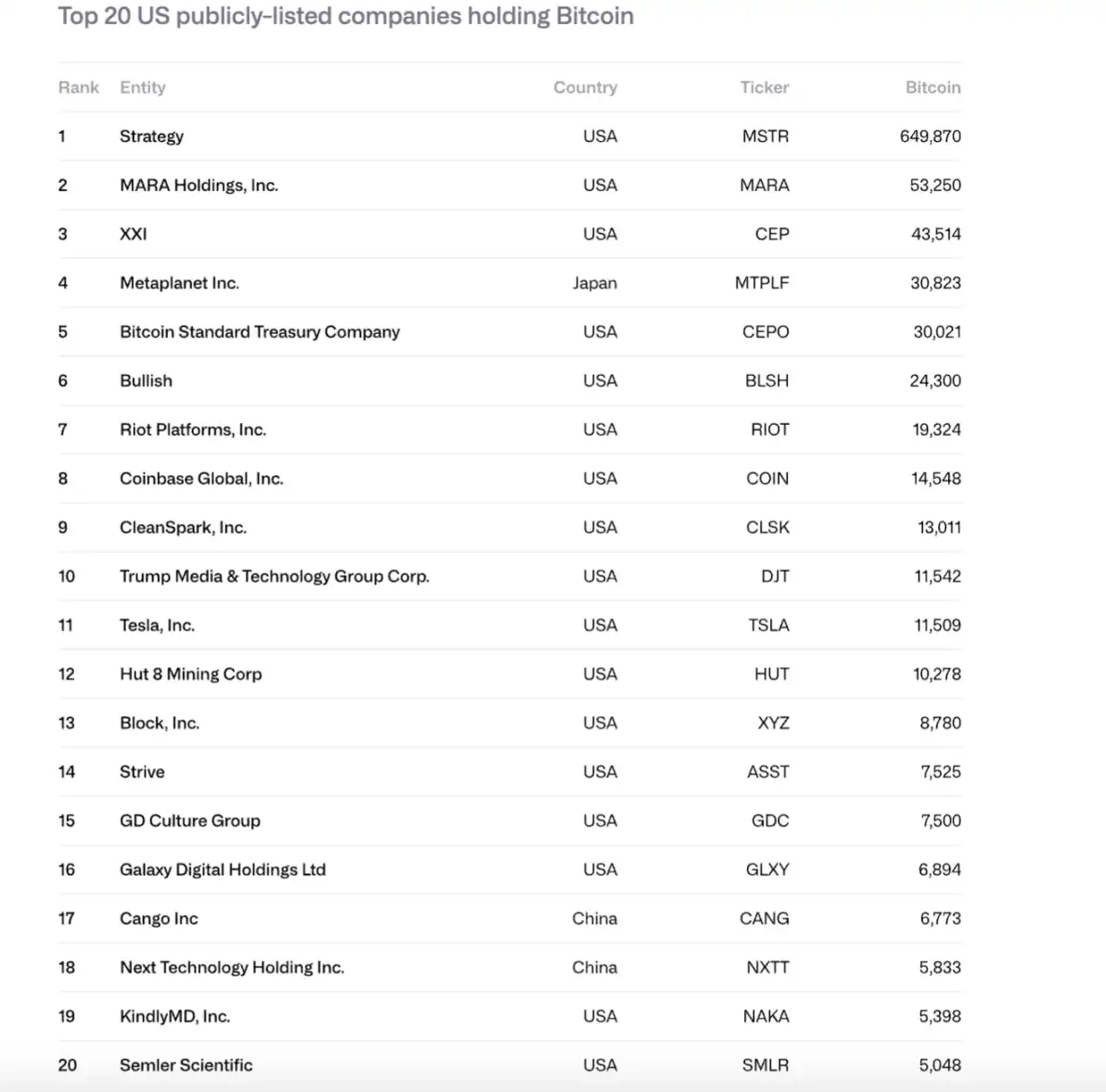
From 2024 to 2025, publicly traded companies' Bitcoin holdings increased from 266,000 coins to 1,048,000 coins, with the total value rising from $11.7 billion to $90.7 billion. MicroStrategy (MSTR) accounts for 61% of this, with the top 10 companies controlling 84%.
Selling Pressure Risk
The Strategy faces two main risks:
· Inability to fund perpetual debt and cash flow obligations (annual cash flow close to $6.8 billion)
· Refinancing risk (most recent bond maturing in September 2028)
If the mNAV approaches 1x or if refinancing at zero interest rate is not possible, selling Bitcoin may be necessary, triggering a vicious cycle.
Options Market and Decrease in Volatility
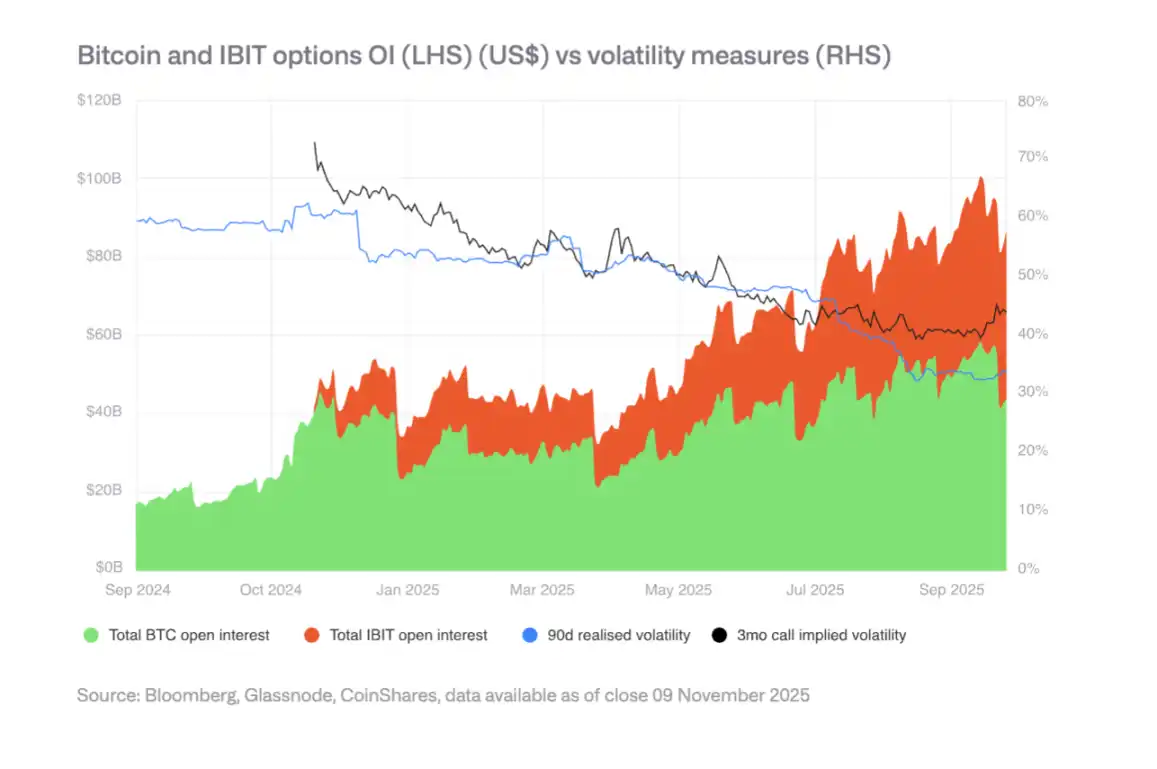
The development of the IBIT options market has reduced Bitcoin volatility, a sign of maturation. However, the decrease in volatility may weaken convertible bond demand, impacting corporate buying power. A turning point in volatility decrease occurred in the spring of 2025.
5. Divergence in Regulatory Landscape
EU: Clarity of MiCA
The EU has the most comprehensive global legal framework for crypto assets, covering issuance, custody, trading, and stablecoins. However, in 2025, coordination constraints were exposed, and some national regulatory bodies may challenge cross-border passports.
US: Innovation and Fragmentation
The US, with its deepest capital markets and mature venture capital ecosystem, has regained momentum. However, regulation remains fragmented across multiple agencies like the SEC, CFTC, and the Fed. Stablecoin legislation (GENIUS Act) has been passed, but implementation is still ongoing.
Asia: Moving Toward Prudent Regulation
Regions like Hong Kong, Japan, etc., are advancing Basel III crypto capital and liquidity requirements, while Singapore maintains a risk-based licensing regime. Asia is forming a more coherent regulatory group focusing on risk-based standards and banking alignment.
Rise of Hybrid Finance
Infrastructure and Settlement Layer
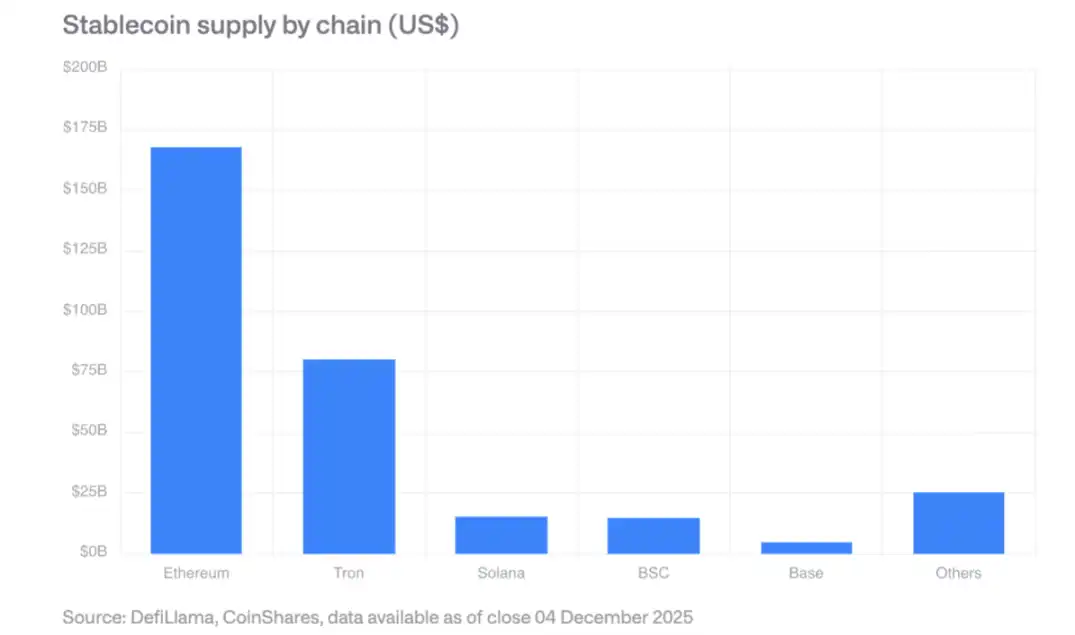
Stablecoins: Market size exceeds $300 billion, with Ethereum holding the largest share and Solana growing the fastest. The GENIUS Act requires compliant issuers to hold US Treasury reserves, creating new demand for Treasury bonds.
Decentralized Exchanges: Monthly trading volume exceeds $600 billion, with Solana processing $400 billion in daily trade volume.
Tokenization of Real World Assets (RWA)
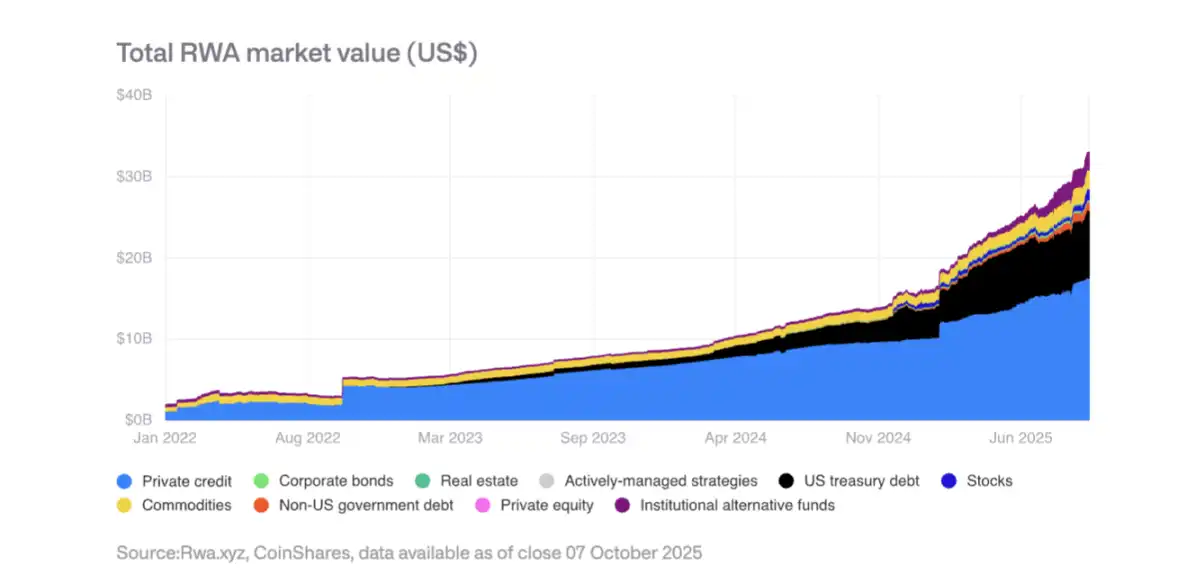
The total value of tokenized assets has increased from $150 billion in early 2025 to $350 billion. The fastest growth in tokenization has been seen in private credit and US Treasury bonds, with gold tokens exceeding $1.3 billion. BlackRock's BUIDL Fund has significantly expanded its asset base, and JPMorgan Chase has launched JPMD tokenized deposits on Base.
Revenue-Generating On-Chain Applications
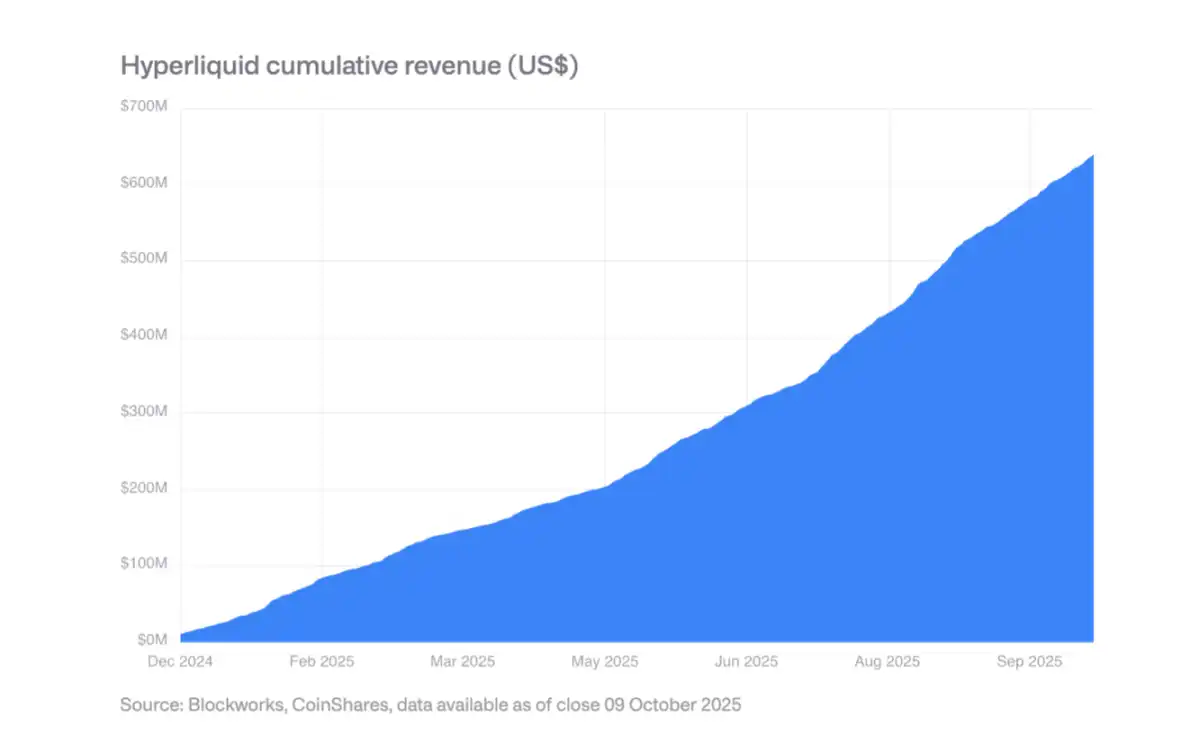
An increasing number of protocols are generating billions of dollars in annual revenue and distributing it to token holders. Hyperliquid uses 99% of its revenue for daily token buybacks, while Uniswap and Lido have launched similar mechanisms. This marks a shift for tokens from pure speculative assets to quasi-equity assets.
Seven, Dominance of Stablecoins and Corporate Adoption
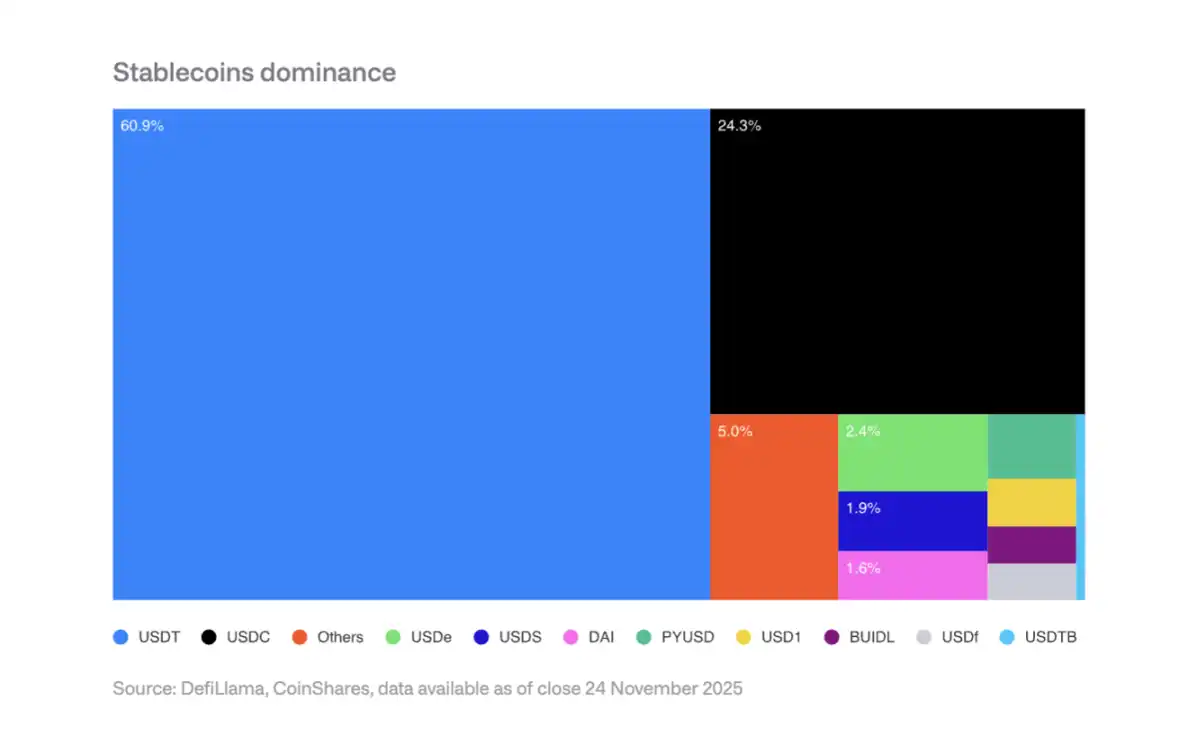
Market Concentration
Tether (USDT) holds 60% of the stablecoin market, while Circle (USDC) holds 25%. New entrants like PayPal's PYUSD face challenges due to network effects, making it difficult to disrupt the duopoly.
Expected Corporate Adoption in 2026
Payment Processors: Entities like Visa, Mastercard, and Stripe have structural advantages and can pivot to stablecoin settlements without altering the front-end experience.
Banks: JPM Coin by JPMorgan Chase has shown promise, with Siemens reporting up to 50% in FX savings and settlement times reduced from days to seconds.
E-commerce Platforms: Shopify has started accepting USDC for checkout, while stablecoin vendor payments are being piloted in the Asian and Latin American markets.
Revenue Impact
Stablecoin issuers face risks of declining interest rates: If the Federal Reserve interest rate drops to 3%, stablecoin issuers would need to issue an additional $887 billion in stablecoin to maintain current interest income.
Eight, Analyzing the Exchange Platform Competitive Landscape Using Porter's Five Forces Model
Existing Competitors: Competition is intense and escalating, with fee rates dropping to low single-digit basis points.
New Entrant Threat: Traditional financial institutions such as Morgan Stanley E*TRADE and JPMorgan Chase are preparing to enter the space, but will rely on partners in the short term.
Supplier Bargaining Power: Stablecoin issuers (such as Circle) enhance their control through the Arc mainnet. The revenue-sharing agreement between Coinbase and Circle for USDC is crucial.
Customer Bargaining Power: Institutional clients account for over 80% of Coinbase's trading volume and have strong bargaining power. Retail users are price-sensitive.
Substitute Threat: Decentralized exchanges like Hyperliquid, prediction markets like Polymarket, and CME crypto derivatives pose competition.
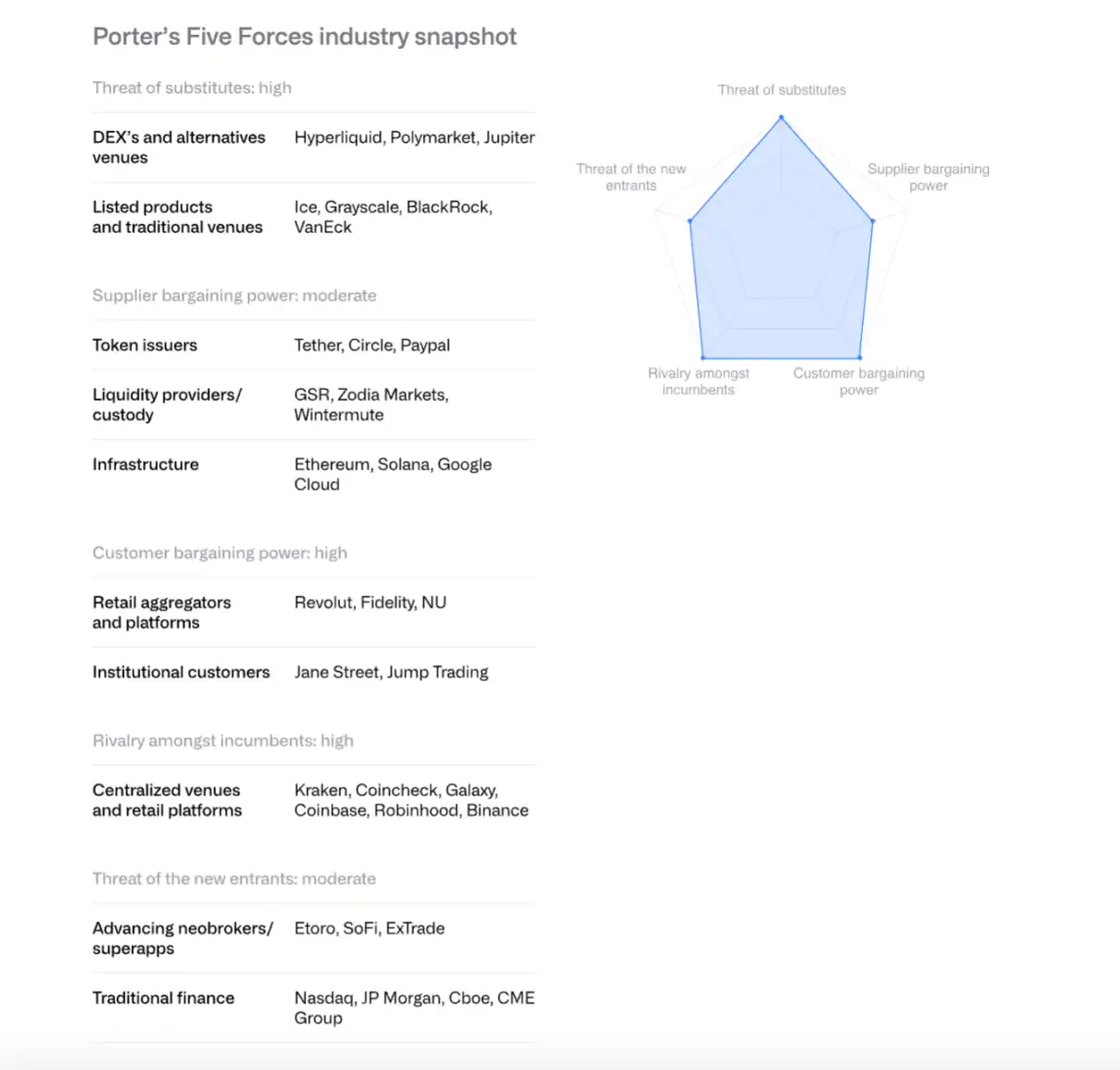
Industry consolidation is expected to accelerate by 2026, with trading platforms and large banks acquiring customers, licenses, and infrastructure through mergers and acquisitions.
IX. Smart Contract Platform Competition
Ethereum: From Sandbox to Institutional Infrastructure
Ethereum has achieved scalability through its Rollup-centric roadmap, with Layer-2 throughput increasing from 200 TPS a year ago to 4800 TPS. Validators are driving an increase in the base layer Gas limit. The US Ethereum spot ETF has attracted approximately $13 billion in inflows.
In the institutional tokenization space, BlackRock's BUIDL Fund and JPMorgan's JPMD demonstrate Ethereum's potential as an institutional-grade platform.
Solana: High-Performance Paradigm
Solana stands out with a highly optimized single-threaded execution environment, representing about 7% of DeFi's total TVL. Stablecoin supply has exceeded $12 billion (growing from $1.8 billion in January 2024), RWA projects are expanding, and BlackRock's BUIDL has increased from $25 million in September to $250 million.
Technical upgrades include the Firedancer client and the DoubleZero validator communication network. The spot ETF launched on October 28 has attracted $382 million in net inflows.
Other High-Performance Chains
Next-generation Layer-1 chains like Sui, Aptos, Sei, Monad, and Hyperliquid compete through architectural differentiation. Hyperliquid focuses on derivative trading, capturing over a third of blockchain's total revenue. However, market fragmentation is significant, with EVM compatibility being a competitive advantage.
Ten, Mining Industry Transformation to HPC (High-Performance Computing) Centers
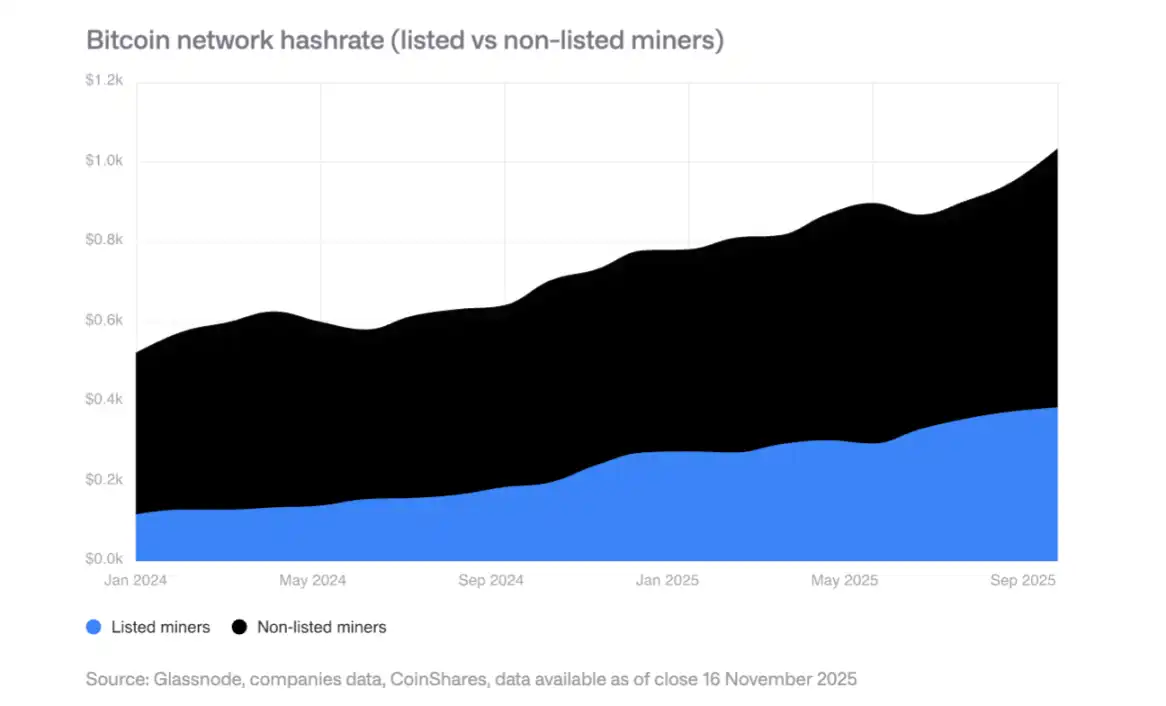
2025 Expansion
Publicly listed miners' hash rate grew by 110 EH/s, primarily driven by Bitdeer, HIVE Digital, and Iris Energy.
HPC Transformation
Miners announced a $650 billion HPC contract, with the expectation that by the end of 2026, Bitcoin mining revenue as a share will drop from 85% to below 20%. HPC business operations will achieve a profit margin of 80-90%.
Future Mining Models
Future mining is expected to be dominated by the following models: ASIC manufacturers, modular mining, intermittent mining (coexisting with HPC), and sovereign state mining. In the long term, mining may trend back toward small-scale decentralized operations.
Eleven, Venture Capital Trends
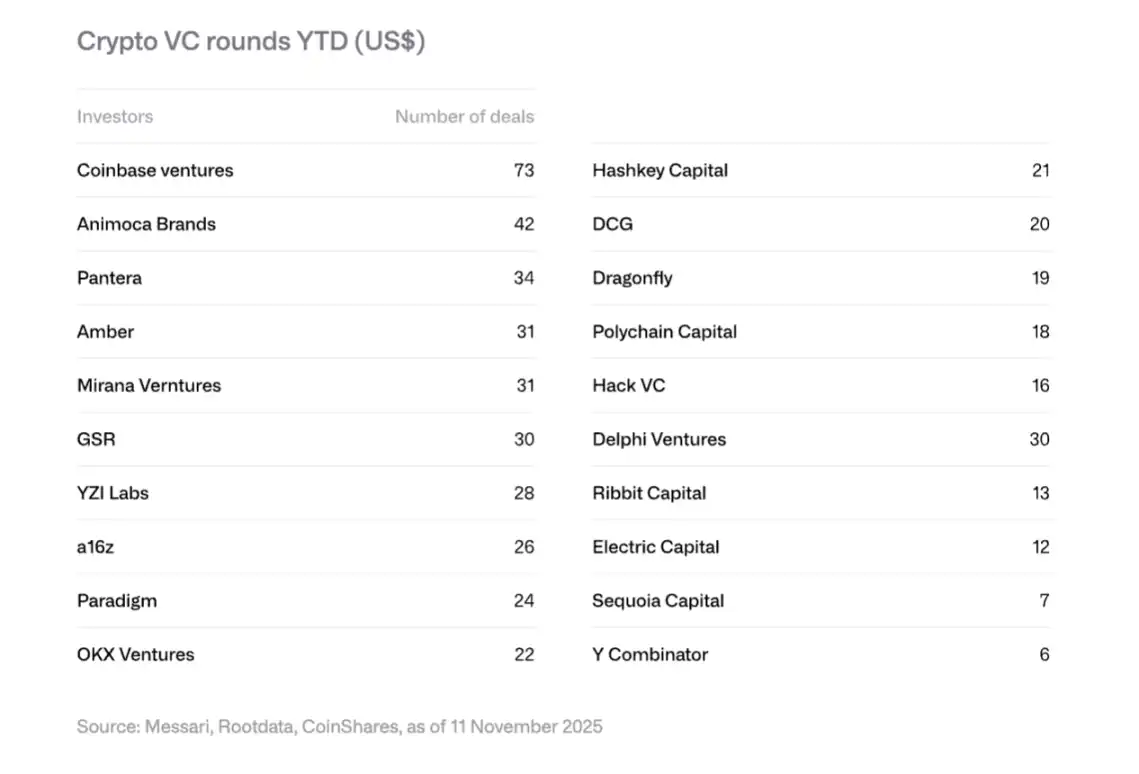
2025 Recovery
Crypto venture funding reached $188 billion, surpassing the full year of 2024 ($165 billion). Driven mainly by large transactions: Polymarket received a $20 billion strategic investment (ICE), Stripe's Tempo received $5 billion, and Kalshi received $3 billion.
Four Major Trends in 2026
RWA Tokenization: Securitize's SPAC, Agora's $50 million Series A round, and others demonstrate institutional interest.
AI Integration with Crypto: Applications like AI agents and natural language trading interfaces are accelerating.
Retail Investment Platforms: Decentralized angel investment platforms like Echo (acquired by Coinbase for $375 million) and Legion are on the rise.
Bitcoin Infrastructure: Projects related to Layer-2 and the Lightning Network are gaining attention.
Twelve, Rise of Prediction Markets
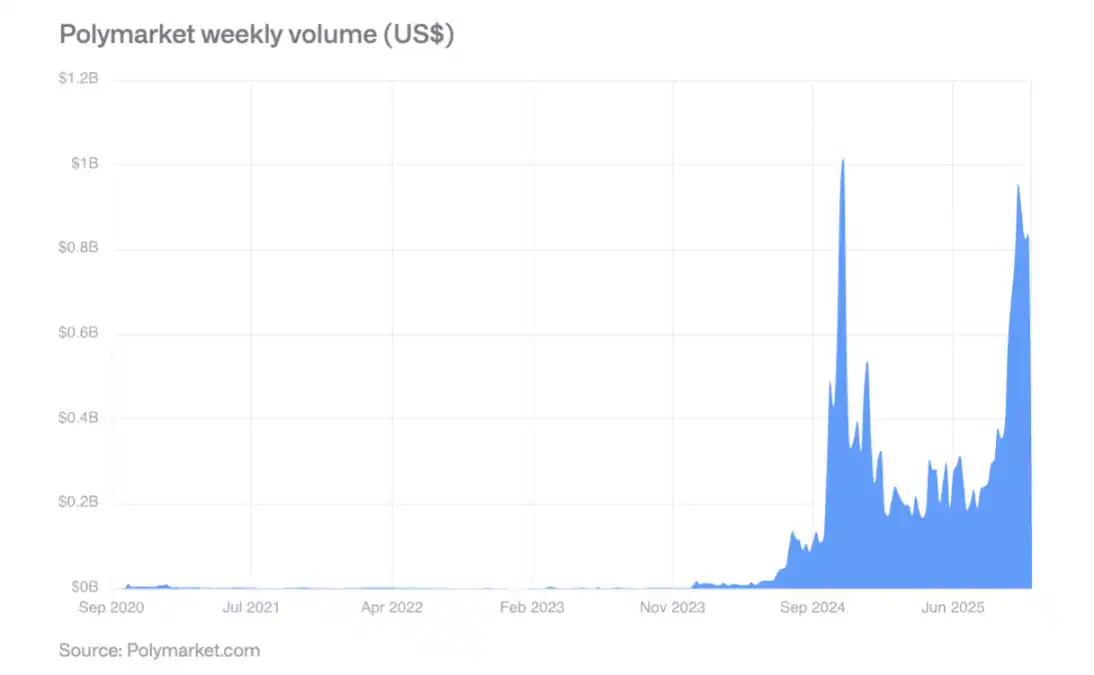
During the 2024 U.S. election period, Polymarket saw weekly trading volumes exceed $800 million, with post-election activities remaining strong. Its predictive accuracy has been validated: events with a 60% probability occurred about 60% of the time, and events with an 80% probability occurred around 77-82% of the time.
In October 2025, ICE made a strategic investment of up to $2 billion in Polymarket, signaling mainstream financial institutions' recognition. The weekly trading volume is expected to surpass $2 billion in 2026.
Thirteen, Key Takeaways
Acceleration of Maturation: Digital assets are transitioning from speculation-driven to utility value and cash flow-driven, making tokens more and more like equity assets.
Rise of Hybrid Finance: The convergence of public blockchains and traditional financial systems is no longer theoretical but visible through the strong growth of stablecoins, tokenized assets, and on-chain applications.
Enhanced Regulatory Clarity: The US GENIUS Act, EU MiCA, and Asia's prudential regulatory frameworks are laying the foundation for institutional adoption.
Gradual Institutional Adoption: Despite structural barriers being removed, actual adoption will take several years, and 2026 will be a year of incremental progress for the private sector.
Reshaping Competitive Landscape: Ethereum remains dominant but faces challenges from high-performance chains like Solana, with EVM compatibility becoming a key advantage.
Risks and Opportunities Coexist: High corporate holding concentration brings sell-off risks, but institutional tokenization, stablecoin adoption, prediction markets, and other emerging areas offer significant growth potential.
Overall, 2026 will be a pivotal year for digital assets, moving from the periphery to mainstream, from speculation to utility, and from fragmentation to integration.
Disclaimer: The content of this article solely reflects the author's opinion and does not represent the platform in any capacity. This article is not intended to serve as a reference for making investment decisions.
You may also like
Exposed: How 0G Tokens Were Stolen in a 520K Exploit While User Funds Stayed Safe
American Bitcoin Skyrockets Holdings: Strategic 613 BTC Surge Signals Confidence
Critical US Crypto Bill Faces Frustrating Delay: Key Issues Push Vote to January
Massive 2,265 Bitcoin Transaction: What This $205 Million Mystery Move Means for Crypto
Trending news
MoreCrypto prices
More





