
Ethereum Validator Outflows Top $3 Billion with 671 ETH Queued

- Ethereum Exit Queue Reaches 671 ETH
- Analysts cite deleveraging and LST arbitrage
- ETH can be reallocated into DeFi or held in custody
The Ethereum network's validator exit queue reached 671.900 ETH, equivalent to approximately US$3,1 billion, marking another significant increase in stake withdrawals. The data, recorded on the validator monitoring dashboard, reflects continuous growth since July and represents the highest volume since early 2024. The estimated average wait time to complete the process is approximately 12 days, compared to nine days recorded the previous month.
Despite the surge in outflows, the queue for new deposits is significantly smaller. Currently, there are 105.620 ETH, valued at approximately US$480 million, waiting to be validated, compared to the previously recorded 359.500 ETH (US$1,3 billion).
Experts point to multiple factors behind the withdrawal pressure. DeFi analyst Ignas highlighted that the unwinding of leveraged staking positions may be contributing to the movement. Investors who used liquid staking tokens, such as stETH, to obtain loans are reportedly deleveraging due to rising funding and borrowing costs.
Another point raised by Ignas is arbitrage involving LSTs (Liquid Staking Tokens). The unfavorable relationship between stETH and ETH may have led participants to convert their positions, taking advantage of spread opportunities and reducing exposure. Data indicates that Lido, EthFi, and Coinbase are among the largest recent sources of ETH withdrawn from staking, suggesting a more cautious stance on the part of users of these platforms.
Some also see the move as a strategic repositioning ahead of the launch of potential institutional staking products. Since the SEC clarified in May that staking does not violate federal securities rules, expectations have grown for funds that can invest part of their assets directly in on-chain yield contracts.
It's important to note that entering the exit queue does not mean immediate sale. After release, ETH can be reallocated to DeFi protocols, held in custody, or sold according to the validator's strategy.
The surge in withdrawals comes as the price of Ethereum approaches all-time highs and spot ETH ETFs continue to receive inflows, which could at least partially absorb the supply released by outflows.
Disclaimer: The content of this article solely reflects the author's opinion and does not represent the platform in any capacity. This article is not intended to serve as a reference for making investment decisions.
You may also like
Powell: Employment is weakening, inflation remains high, and no one is talking about rate hikes now
Powell pointed out that the U.S. labor market is cooling, with hiring and layoffs slowing down and the unemployment rate rising to 4.4%. Core PCE inflation remains above the 2% target, but service inflation is slowing. The Federal Reserve has cut interest rates by 25 basis points and started purchasing short-term Treasury bonds, emphasizing that the policy path needs to balance risks between employment and inflation. Future policies will be adjusted based on data. Summary generated by Mars AI. This summary is produced by the Mars AI model, and the accuracy and completeness of its generated content are still in the process of iterative improvement.

$RAVE TGE Countdown: When Clubbing Becomes an On-Chain Economic Activity, the True Web3 Breakthrough Moment Arrives
RaveDAO is rapidly growing into an open cultural ecosystem driven by entertainment, becoming a key infrastructure for Web3 to achieve real-world adoption and mainstream breakthrough.

A "hawkish rate cut" that's not so "hawkish," and balance sheet expansion that's "not QE"
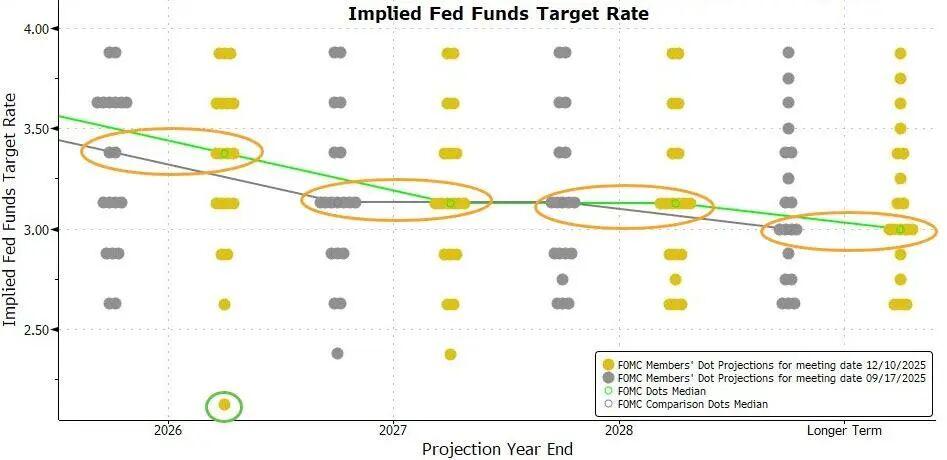
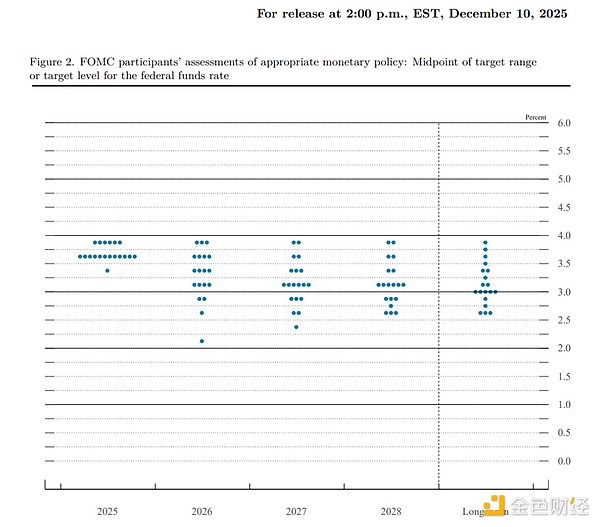
The Federal Reserve has cut interest rates by another 25 basis points as expected, still projecting one rate cut next year, and has launched an RMP to purchase $40 billion in short-term bonds.
Trending news
MoreCrypto prices
More





