
Tether's Strategic Move to Bitcoin: How Stablecoin Infrastructure is Fueling Institutional Adoption
- Tether integrates USDT natively on Bitcoin via RGB protocol, enhancing scalability and privacy for institutional transactions. - RGB and Lightning Network enable fast, low-cost stablecoin operations while preserving Bitcoin’s security and censorship resistance. - This shift addresses Bitcoin’s utility gap, supporting hedging, programmable finance, and tokenized assets with regulatory-compliant stablecoin infrastructure. - Tether’s strategy repositions Bitcoin from "digital gold" to a value-transfer proto
Tether’s recent integration of USDT natively on the Bitcoin network via the RGB protocol marks a pivotal shift in the cryptocurrency landscape. By leveraging Bitcoin’s security and the RGB protocol’s off-chain scalability, Tether is transforming the world’s most valuable digital asset from a "digital gold" narrative into a functional backbone for institutional-grade financial infrastructure [1]. This move addresses a critical gap in Bitcoin’s utility, enabling institutions to hedge risk, execute programmable transactions, and access tokenized real-world assets—all while maintaining exposure to Bitcoin’s long-term value proposition [2].
The Technical Catalyst: RGB and Lightning Network Synergy
The RGB protocol operates as a second-layer solution, allowing private and scalable stablecoin transactions without overloading Bitcoin’s base layer. By validating transactions off-chain and anchoring them to Bitcoin’s blockchain for immutability, RGB ensures that USDT transactions remain fast, low-cost, and private [3]. This is further amplified by the Lightning Network, which facilitates near-instant settlements at negligible fees, making Bitcoin a viable medium of exchange for institutional workflows [1]. For example, a hedge fund could now hedge Bitcoin price exposure by converting BTC to USDT in seconds, then reconvert to BTC when market conditions improve—all within a single wallet interface.
Institutional Adoption: Liquidity, Programmability, and Regulatory Clarity
Institutions have long been hesitant to adopt Bitcoin due to its volatility and limited use cases. Tether’s expansion bridges this gap by providing:
1. Liquidity: USDT’s native presence on Bitcoin allows seamless conversion between BTC and stablecoins, reducing slippage in large trades.
2. Programmability: The RGB protocol enables smart contract-like functionality (e.g., tokenized bonds, derivatives) without compromising Bitcoin’s censorship resistance [2].
3. Regulatory Alignment: Tether’s 2025 US-compliant stablecoin rollout under the GENIUS Act and Europe’s MiCAR framework ensures legal clarity for institutional participation [4].
This trifecta of features aligns with the growing demand for "Bitcoin plus" solutions—where institutions seek to leverage Bitcoin’s value capture while mitigating operational risks. For instance, tokenized real-world assets (RWAs) like gold or real estate can now be collateralized with Bitcoin and traded using USDT, creating a hybrid financial ecosystem [6].
The Broader Implications: Bitcoin as a DeFi Foundation
Tether’s strategy isn’t just about stablecoins—it’s about redefining Bitcoin’s role in the decentralized financial system. By enabling private, scalable transactions and institutional-grade tools, Bitcoin is evolving from a store of value to a "value transfer protocol" [1]. This mirrors the early days of Ethereum , where stablecoins became the bedrock for DeFi. However, Bitcoin’s advantage lies in its unparalleled security and network effects, which Tether’s infrastructure now amplifies [3].
Critics may argue that RGB’s complexity could hinder adoption, but the growing institutional demand for Bitcoin-based solutions suggests otherwise. As of 2025, over 30% of institutional Bitcoin holdings are paired with stablecoin strategies, a trend that Tether’s RGB integration is poised to accelerate [6].
Conclusion: A New Era for Bitcoin and Stablecoins
Tether’s expansion into Bitcoin’s ecosystem is not merely a technical upgrade—it’s a strategic masterstroke that unlocks institutional-grade adoption. By combining Bitcoin’s security with the liquidity and programmability of stablecoins, Tether is building a bridge between traditional finance and Web3. For investors, this signals a shift in Bitcoin’s narrative from speculative asset to foundational infrastructure, with Tether at the helm of this transformation [2].
**Source:[1] Tether's Native USDT on Bitcoin: A Strategic Catalyst for ... [2] Tether's Expansion of USDT to Bitcoin Network: A Catalyst ... [3] Tether to bring native stablecoin rail to Bitcoin with USDT rollout on RGB [4] Tether to Launch US-Compliant Stablecoin by 2025 Under ...
Disclaimer: The content of this article solely reflects the author's opinion and does not represent the platform in any capacity. This article is not intended to serve as a reference for making investment decisions.
You may also like
DiDi has become a digital banking giant in Latin America
DiDi has successfully transformed into a digital banking giant in Latin America by addressing the lack of local financial infrastructure, building an independent payment and credit system, and achieving a leap from a ride-hailing platform to a financial powerhouse. Summary generated by Mars AI. This summary was produced by the Mars AI model, and its accuracy and completeness are still being iteratively improved.

Fed rate cuts in conflict, but Bitcoin's "fragile zone" keeps BTC below $100,000
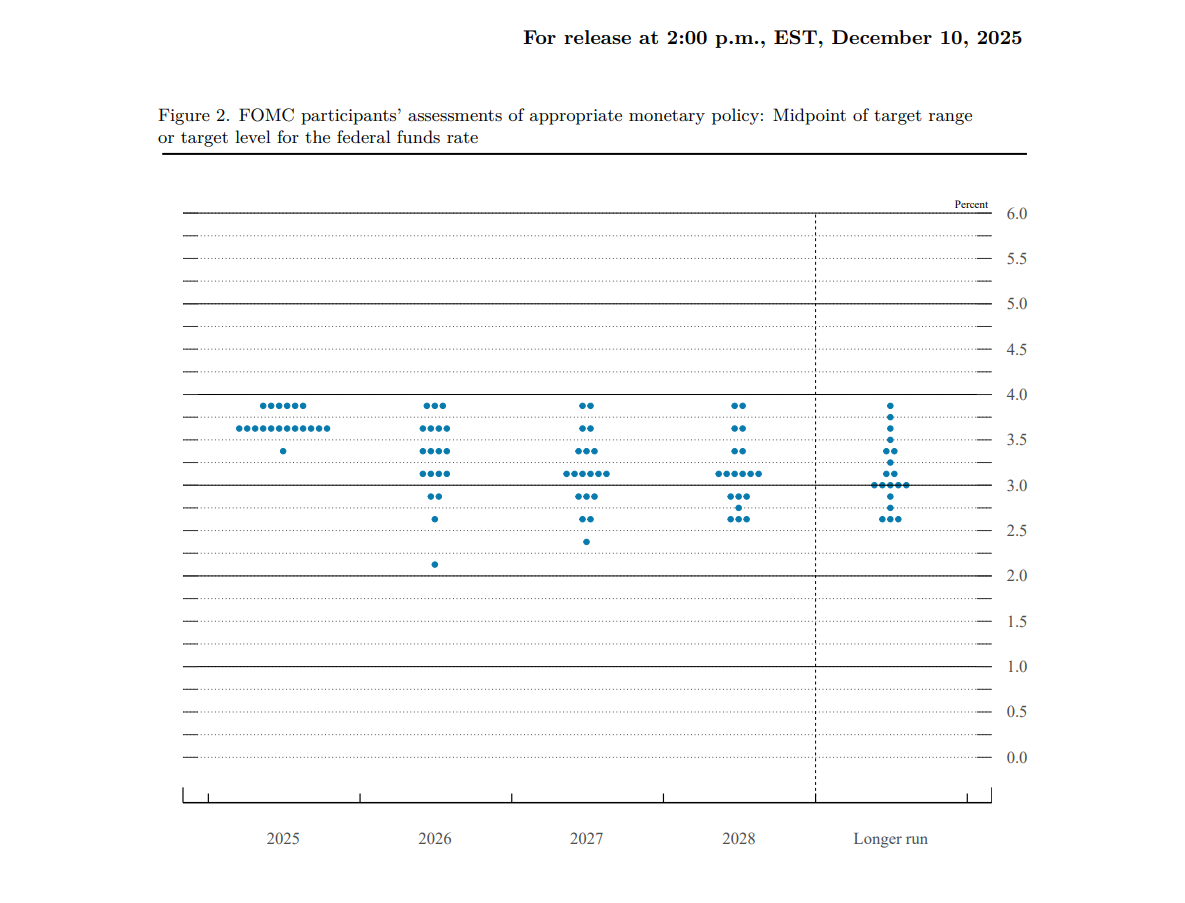
The Federal Reserve cut interest rates by 25 basis points, but the market interpreted the move as hawkish. Bitcoin is constrained by a structurally fragile range, making it difficult for the price to break through $100,000. Summary generated by Mars AI This summary was generated by the Mars AI model, and the accuracy and completeness of its content are still being iteratively updated.

Full text of the Federal Reserve decision: 25 basis point rate cut, purchase of $4 billion in Treasury bills within 30 days
The Federal Reserve cut interest rates by 25 basis points with a 9-3 vote. Two members supported keeping rates unchanged, while one supported a 50 basis point cut. In addition, the Federal Reserve has restarted bond purchases and will buy $40 billion in Treasury bills within 30 days to maintain adequate reserve supply.
HyENA officially launched: Perp DEX supported by Ethena and based on USDe collateral goes live on Hyperliquid
The launch of HyENA further expands the USDe ecosystem and brings institutional-grade margin efficiency to the on-chain perpetuals market.
Trending news
MoreCrypto prices
More





