
Digital Assets Move From Speculation To Essential Financial Infrastructure
According to Cointelegraph, cryptocurrency has repeatedly delivered where traditional banking systems failed during moments of crisis. Digital Chamber founder Perianne Boring explained how Bitcoin served as a safe haven during Cyprus's 2013 banking crisis. People turned to Bitcoin when EU bailout threats endangered their euro savings.
Afghanistan provided another example of crypto's real-world utility. When Taliban laws prevented women from opening bank accounts, Roya Mahboob's coding school used Bitcoin as a workaround solution. These women later fled Afghanistan with their Bitcoin savings intact, enabling them to restart their lives.
The regulatory landscape has shifted under the Trump administration. Paul Atkins replaced Gary Gensler as SEC chair, bringing pressure for clearer cryptocurrency rules. Boring stated that most cryptocurrencies are commodities and should be regulated by the CFTC, not the SEC.
Why This Regulatory Clarity Matters Now
Clear rules could allow the US to compete globally while ongoing uncertainty drives innovation offshore. According to Chainalysis, the United States jumped from fourth to second place in global crypto adoption rankings during 2025. This surge reflects institutional demand driven by regulatory clarity around Bitcoin ETFs and stablecoins.
The Asia-Pacific region saw 69% growth in crypto transaction volume, reaching $2.36 trillion from July 2024 to June 2025. Countries like India, Pakistan, and Vietnam drive this growth through both centralized and decentralized platforms. Grassroots adoption thrives where economic needs are pressing, even without comprehensive regulatory frameworks.
We recently reported that Switzerland leads with the highest Global Bitcoin Policy Index score at 85.2, followed by Malta and Germany. These countries developed balanced frameworks that address risks while enabling innovation. The index shows effective Bitcoin policies share common traits: clear legal classification and proportionate compliance requirements.
Industry Transformation Through Institutional Integration
SEC Chairman Paul Atkins announced "Project Crypto" on July 31, 2025, according to CNBC. This Commission-wide initiative aims to modernize securities regulation and position America as the global crypto leader. Atkins declared that crypto innovation has been stifled for several years due to regulatory uncertainty.
The new approach abandons regulation-by-enforcement tactics. Instead, the SEC will draft clear rules for crypto asset distribution, custody, and trading through public notice and comment periods. Institutional adoption reached new heights in 2025, with over $82.5 billion flowing into Bitcoin ETFs.
Corporate balance sheets added 2,500 Bitcoin in disclosed acquisitions during early 2025. Public pension funds in Michigan and Wisconsin now include digital assets among long-term holdings. According to Fintech Weekly, over 80% of surveyed asset managers plan to increase crypto allocations this year.
Stablecoins processed $850 billion in annual volume by 2025, with layer-2 solutions handling cross-border settlements. This infrastructure development reflects crypto's evolution from speculative asset to essential financial infrastructure component.
Disclaimer: The content of this article solely reflects the author's opinion and does not represent the platform in any capacity. This article is not intended to serve as a reference for making investment decisions.
You may also like
"Validator's Pendle" Pye raises $5 million, enabling SOL staking yields to be tokenized
There are truly no creative bottlenecks in the financialization of Web3.

DiDi has become a digital banking giant in Latin America
DiDi has successfully transformed into a digital banking giant in Latin America by addressing the lack of local financial infrastructure, building an independent payment and credit system, and achieving a leap from a ride-hailing platform to a financial powerhouse. Summary generated by Mars AI. This summary was produced by the Mars AI model, and its accuracy and completeness are still being iteratively improved.

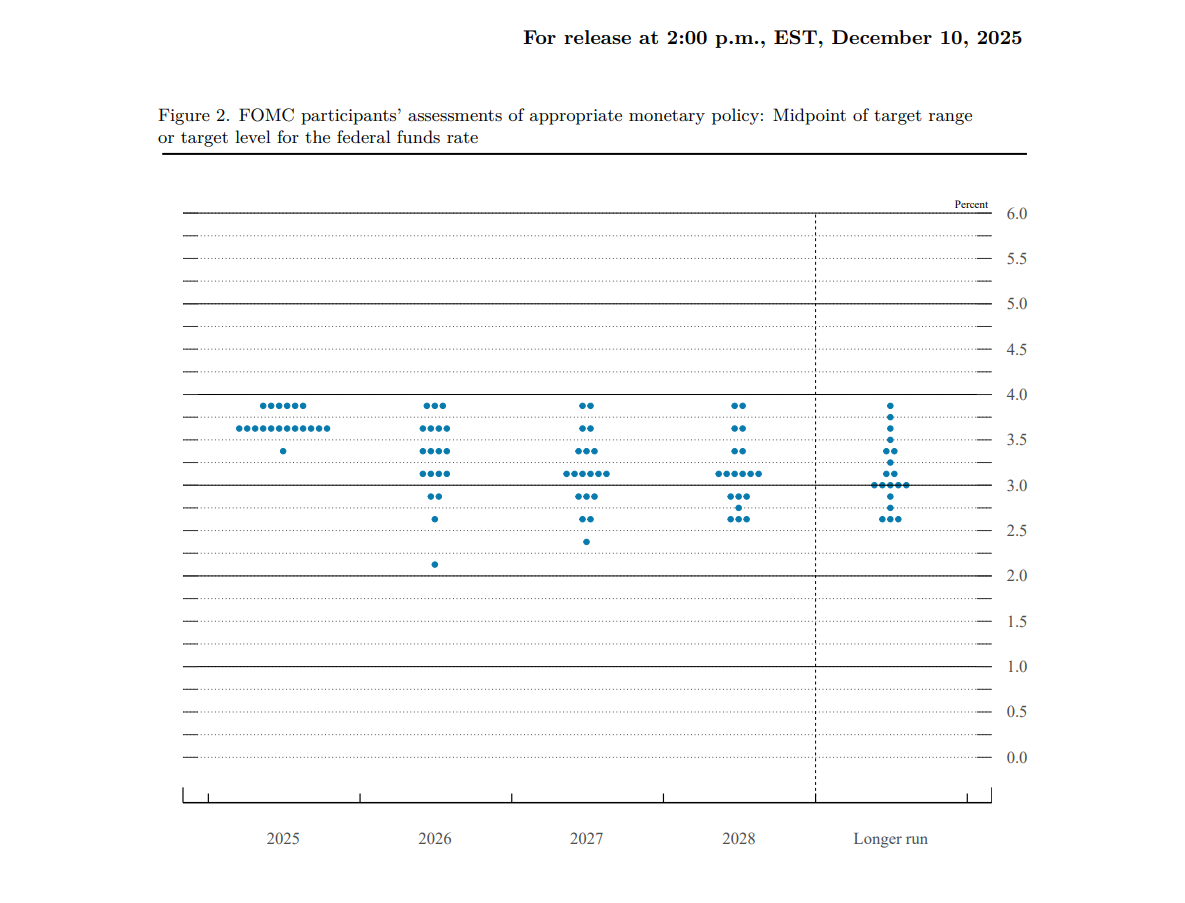
Fed rate cuts in conflict, but Bitcoin's "fragile zone" keeps BTC below $100,000
The Federal Reserve cut interest rates by 25 basis points, but the market interpreted the move as hawkish. Bitcoin is constrained by a structurally fragile range, making it difficult for the price to break through $100,000. Summary generated by Mars AI This summary was generated by the Mars AI model, and the accuracy and completeness of its content are still being iteratively updated.

Full text of the Federal Reserve decision: 25 basis point rate cut, purchase of $4 billion in Treasury bills within 30 days
The Federal Reserve cut interest rates by 25 basis points with a 9-3 vote. Two members supported keeping rates unchanged, while one supported a 50 basis point cut. In addition, the Federal Reserve has restarted bond purchases and will buy $40 billion in Treasury bills within 30 days to maintain adequate reserve supply.
Trending news
MoreCrypto prices
More





